Once you learn that no two Canary Islands are alike, one holiday stops feeling like enough. The archipelago rewards the curious traveller who strings a few islands together — a volcanic moonscape one day, a laurel-cloaked ravine the next, then endless dunes and turquoise shallows. Because the islands sit close but differ wildly in landscape and mood, island-hopping is the way to see the Canaries at their best. This guide covers which islands pair naturally, how to move between them by ferry or short flight, sample two-week routes, and how long each island really needs.
Which islands pair naturally
You don't have to visit all eight, and you certainly shouldn't try in one trip. The smart approach is to combine islands that are close together and complement each other. Three natural clusters stand out.
Tenerife + La Gomera
The classic first-timer's pairing. Base yourself in the south of Tenerife for beaches, resorts and the volcanic drama of Mount Teide, then take the short ferry from Los Cristianos to La Gomera for the ancient laurel forest of Garajonay and a slower, greener rhythm. The two feel like different worlds an hour apart.
Lanzarote + Fuerteventura
The eastern neighbours, separated by a narrow strait and one of the shortest, most frequent crossings in the islands. Lanzarote brings the black-earth vineyards, César Manrique's art and architecture and the fire mountains of Timanfaya; Fuerteventura answers with the archipelago's grandest sands, from Corralejo's dunes to the wild sweep of Sotavento. Nature and culture on one side, sun and sand on the other.
The western trio: La Palma + La Gomera + El Hierro
For seasoned island-hoppers, the quiet western islands are a revelation. La Palma has star-filled skies and the vast Caldera de Taburiente; La Gomera has its forests and whistled language; and remote El Hierro offers volcanic diving and end-of-the-world calm. All three connect to Tenerife by ferry, making Tenerife a natural hub for a green, uncrowded fortnight.
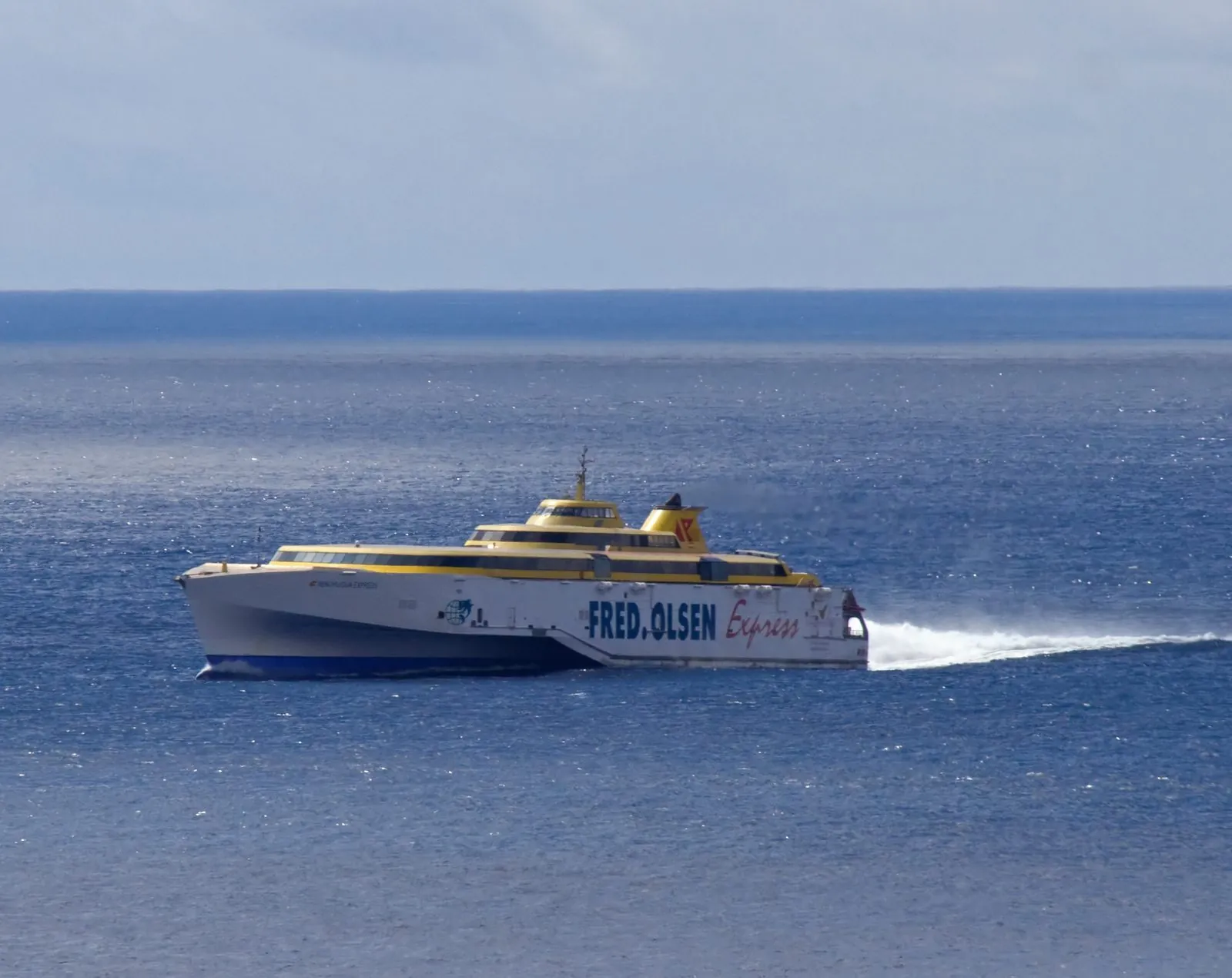
Photo: Tony Hisgett · CC BY 2.0 · Wikimedia Commons · scaled
Ferry or inter-island flight?
There are two ways to cross the water between islands: sea and air. Neither is "best" — it depends on the route and what you're carrying.
| Ferry | Inter-island flight | |
|---|---|---|
| Operators | Fast catamarans and conventional ships | Binter and Canaryfly (small turboprops) |
| Best for | Short hops, day trips, taking luggage or a car | Long distances between far-apart islands |
| Speed | Minutes to a few hours depending on route | Around half an hour in the air, plus airport time |
| Feel | Sea air, island views, easy foot-passenger fares | Quick but with check-in and transfers at both ends |
For neighbours like Lanzarote–Fuerteventura or Tenerife–La Gomera, the ferry is almost always the better choice — cheaper, more scenic and often quicker door-to-door. For a longer leap, say Gran Canaria to La Palma, a short flight can save half a day. Timetables, fares and vessels change with the season, so confirm current details with the operators and treat this as orientation only.
Book ferries and flights online in advance for the best fares and a guaranteed seat on busy summer sailings. On routes served by more than one company, always compare — times and prices differ.
Sample multi-island routes (10–14 days)
Two weeks is the sweet spot for a proper hopping trip: enough to enjoy two or three islands without living out of a suitcase. Here are three routes for different tastes.
The easy classic (10–12 days) — Tenerife & La Gomera
- Days 1–6, Tenerife: south-coast base for beaches and Costa Adeje, a day at Teide, the Anaga hills and the historic streets of La Laguna.
- Days 7–10, La Gomera: ferry from Los Cristianos, then Garajonay's forests, deep valleys and the pretty capital of San Sebastián.
- Days 11–12: back to Tenerife for a final beach day before flying home.
The eastern sun-and-culture loop (12–14 days) — Lanzarote & Fuerteventura
- Days 1–6, Lanzarote: Playa Blanca or Costa Teguise, plus Timanfaya, the wine country and Manrique's landmarks.
- Days 7–13, Fuerteventura: the short Playa Blanca–Corralejo ferry, then Corralejo and the beaches of the north and the vast Costa Calma–Sotavento south.
- Day 14: ferry or short flight back for your departure.
The green western adventure (14 days) — Tenerife, La Palma & El Hierro
- Days 1–4, Tenerife: Teide, the north coast and Puerto de la Cruz as a base.
- Days 5–9, La Palma: ferry or flight from Tenerife, then the Caldera, stargazing and volcanic coastlines.
- Days 10–14, El Hierro: the remotest island for diving, hiking and total quiet before heading home via Tenerife.
How long does each island need?
As a rough guide for a first visit, allow the following minimum before an island starts to feel rushed.
| Island | Suggested minimum | Why |
|---|---|---|
| Tenerife | 4–6 days | Largest island; Teide, two coasts, cities and beaches |
| Gran Canaria | 4–5 days | Dunes, mountains, capital and resorts in one |
| Lanzarote | 3–5 days | Volcanoes, art sites and beaches spread across the island |
| Fuerteventura | 3–5 days | Long drives between its finest, far-flung beaches |
| La Palma | 3–4 days | Hiking and stargazing reward a slower pace |
| La Gomera | 2–3 days | Small but mountainous; forests and coast |
| El Hierro | 2–3 days | Tiny and remote; diving and quiet trails |
Luggage, cars and practical tips
The golden rule of hopping is to travel light and rent fresh on each island. Most hire-car agreements forbid taking a vehicle between islands, so the standard advice is to drop your car and pick up another on arrival rather than ferry one over — usually cheaper and far less hassle. Our car hire guide covers the detail.
Never assume a hire car can cross on a ferry. Many contracts explicitly prohibit inter-island travel, and doing it without written consent can void your insurance. When in doubt, swap cars at each island.
- Pack in a soft bag you can carry easily on and off ferries and small aircraft.
- Leave slack in your schedule. Rough seas or a strong calima can occasionally delay crossings, so avoid same-day connections to your flight home.
- Base-and-daytrip is a gentle alternative to full hopping: stay put on one island and take day-return ferries to a neighbour.
Planning the logistics
Stitching flights, ferries and transfers into one smooth trip is the fiddly part. Our sister travel-logistics site is a handy planner for working out how to get between the islands. Once your crossings are mapped, read getting around the Canary Islands for what to do at each end, and if a fortnight feels like too much, our guide to one week on one island makes the case for going slow. However you split it, the moment the next island rises out of the Atlantic is worth every crossing.