El Hierro is the end of the Canary Islands — and, for a long time, the edge of the known world. The smallest, quietest and most westerly of the eight, it was where mapmakers once drew their prime meridian, believing there was nothing beyond. Today it remains gloriously off the beaten track: a rugged, volcanic little island with no mass tourism, no crowds and no resort strips, but with world-class scuba diving, wind-sculpted forests, natural rock pools and a pioneering push to run entirely on renewable energy. Come here to dive, to walk, and to experience the Canaries at their most peaceful.
Where Gran Canaria and Tenerife draw millions, El Hierro sees a tiny fraction of that — and the islanders like it that way. The whole island is a UNESCO Global Geopark and a UNESCO Biosphere Reserve, and it wears its "slow travel" identity with quiet pride.
Diving the Mar de las Calmas
El Hierro's greatest draw lies underwater. The Mar de las Calmas ("sea of calms") on the sheltered southwestern coast is a marine reserve regularly rated among the best dive sites in Europe: warm, astonishingly clear water, dramatic volcanic underwater landscapes of arches, caves and drop-offs, and abundant sea life from groupers and rays to the occasional whale shark or turtle. The village of La Restinga at the island's southern tip is the diving hub, with a cluster of dive schools running trips for every level. Even snorkellers get a lot from the clear, calm shallows here.
El Hierro's protected waters are famously clear and calm, but they are a working marine reserve — some sites require permits and go through the local dive centres. Book through a La Restinga operator, who will handle access and match dives to your experience.
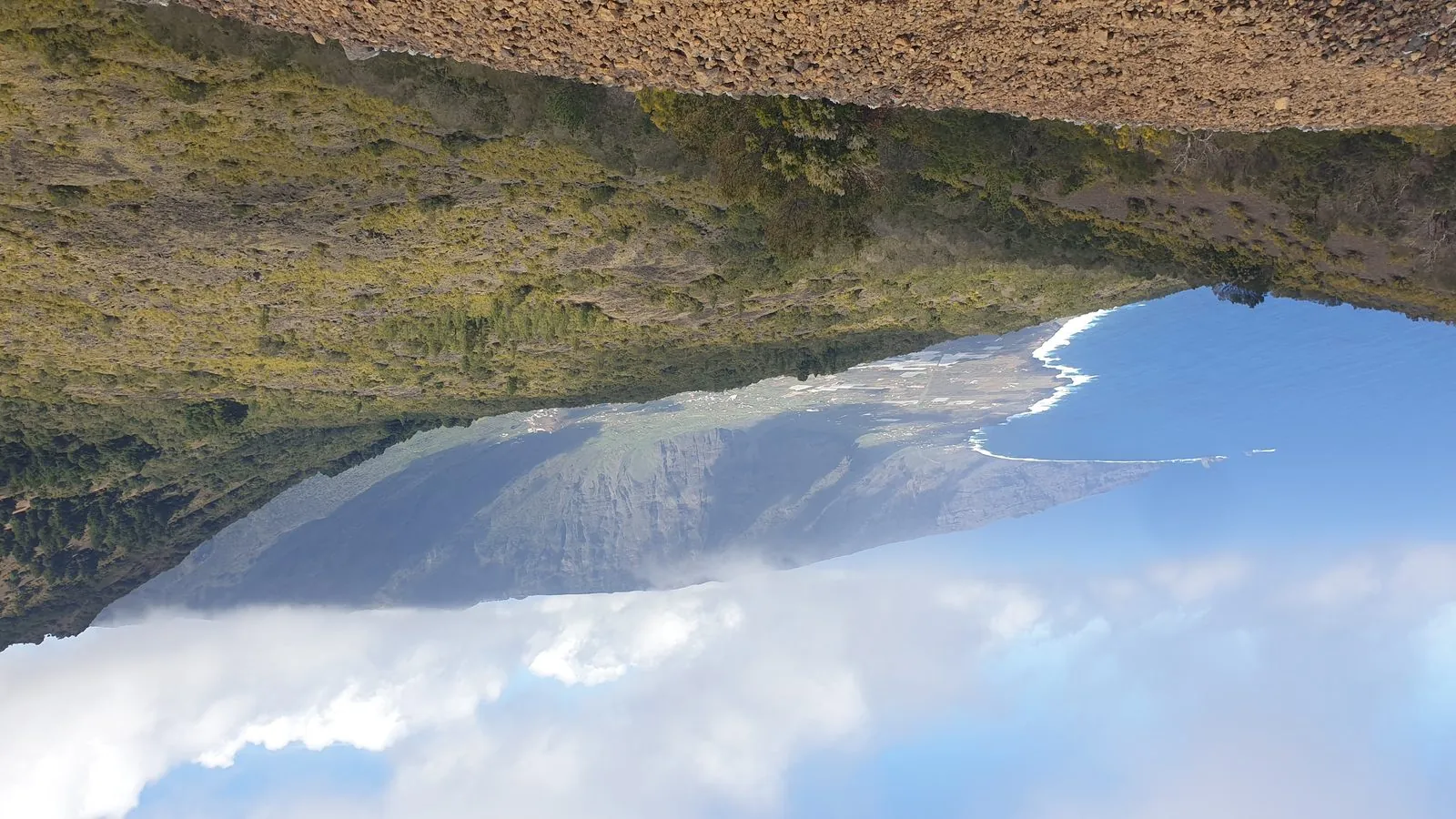
Photo: Erik del Toro Streb · CC BY-SA 4.0 · Wikimedia Commons · scaled
Wind-bent junipers and the Sabinar
Up on the exposed western plateau, the island's signature sight is El Sabinar: a stand of ancient sabina junipers bent almost flat to the ground by centuries of relentless trade winds, their trunks corkscrewed into extraordinary living sculptures. It is one of the most photographed spots on El Hierro and a vivid emblem of an island shaped by wind. Nearby viewpoints and the pilgrimage chapel of Nuestra Señora de los Reyes make the windswept high country worth a half-day's exploring.
El Golfo, rock pools and walking
The great green amphitheatre of El Golfo on the north coast — the collapsed remains of a vast volcano, its half-crater now a fertile, vineyard-dotted valley sweeping down to the sea — is the island's most striking landscape. Along its shore lie El Hierro's famous natural rock pools, where the Atlantic fills sheltered volcanic basins for calm, scenic bathing: La Maceta and Charco Azul are the best known, with sea pools and viewing platforms among the black lava. Inland, a network of trails — including old cobbled pilgrim paths — laces the island, rewarding walkers with pine forest, terraced fields and huge Atlantic horizons. This is prime, uncrowded hiking country.
The rock pools are exposed to Atlantic swell and are best enjoyed on calm days at lower tide. When the sea is up, waves break clean over the lava — check conditions locally, keep well back from the water's edge, and never swim in rough seas.
An island powered by wind and water
For its size, El Hierro punches far above its weight in ambition. The island built Gorona del Viento, a pioneering wind-and-water power station that pairs a wind farm with a pumped-storage reservoir in an old volcanic crater: when the wind blows, it powers homes and pumps water uphill; when it drops, that water runs back down through turbines. The goal — often achieved for long stretches — is to run the whole island on 100% renewable electricity. It has made this remote speck a genuine international model for sustainable island living, and it fits El Hierro's whole low-impact, in-tune-with-nature character.
Getting there and getting around
El Hierro has a small airport (code VDE) with short flights from Tenerife and Gran Canaria, and it is also linked by ferry from Los Cristianos on Tenerife, docking at the little port of La Estaca near the capital, Valverde. The crossing takes a couple of hours; our ferries between the islands guide has the practicalities, and the route-planning site Viamo can help you piece the wider trip together. Note that Valverde is the only Canarian capital not on the coast — it sits up in the hills against the weather. Once here, a hire car is more or less essential: distances are short but roads are steep and winding, and public transport is sparse.
Who El Hierro suits
El Hierro is for divers first and foremost — few places in Europe match the Mar de las Calmas — and for walkers drawn to empty trails and big landscapes. Above all it suits travellers chasing true quiet: no nightlife, no crowds, no resorts, just a small, self-reliant island living gently at the edge of the map. If that appeals, it completes a wild western trio with La Palma and La Gomera — and our best time to visit guide will help you pick your moment.