Tenerife is the biggest of the Canary Islands and, for many, the most spectacular. It has the sunny beach resorts and the year-round warmth you'd expect, but towering over everything is Mount Teide — at 3,715 metres, the highest peak in all of Spain and the third-tallest volcano on Earth measured from its ocean base. The result is an island of huge contrasts: a lively, developed south-west, a green and cultured north, ancient laurel forest in the far corners, and a volcanic national park up top that feels like another planet. If you want one island that does a bit of everything, this is it.
Mount Teide and its national park
You can't miss Teide — its snow-dusted winter cone is visible from much of the island and even from neighbouring islands. The road up climbs through pine forest into Teide National Park, a UNESCO World Heritage Site whose vast, high-altitude caldera of frozen lava fields, twisted rock and ochre-and-black desert is one of Spain's great natural spectacles. It's also a superb stargazing destination thanks to the clear, dark skies.
A cable car (teleférico) carries visitors from the roadside base station up to a viewing platform near the summit in about ten minutes, from where short trails lead to lookout points over the crater and out to sea. Standing on the very top — the summit cone itself — requires a free permit booked in advance through the national park authority, as numbers are strictly limited to protect the peak. It's genuinely worth the planning.
Teide is high and cold. Even when the coast is in shorts-and-sandals weather, the summit can be near or below freezing with strong wind and thinner air. Bring warm layers and closed shoes, take altitude gently, and book the cable car and any summit permit online well ahead — both sell out, and the cable car can close in high winds. Check current ticket prices and the free-permit rules on the official site before you travel.
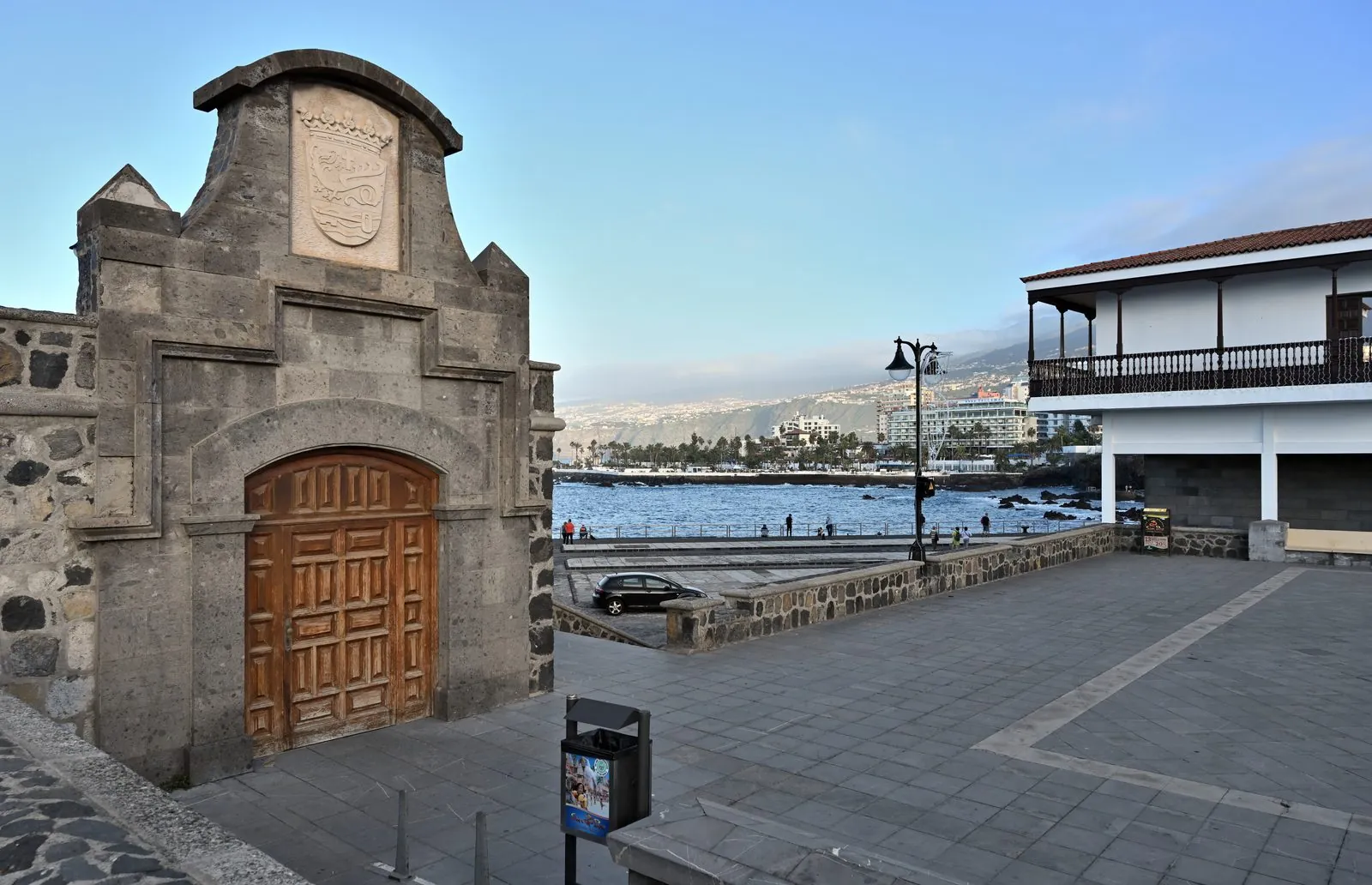
Photo: Cayambe · CC BY-SA 4.0 · Wikimedia Commons · scaled
The sunny south-west: Costa Adeje, Las Américas, Los Cristianos
Tenerife's tourism engine runs along the sunny, sheltered south-west coast, where three resorts blur into one long strip. Costa Adeje is the smartest end — polished promenades, good beaches and higher-end hotels; Playa de las Américas is the brash, lively heart with the nightlife and the buzz; and Los Cristianos, an old fishing town, keeps a more relaxed, family feel and is the main ferry port for the western islands. The beaches here are a mix of imported golden and natural dark sand, the sea is calm, and the sun is dependable almost year-round. It's an easy, well-oiled base for a first Canaries holiday. For quieter beach ideas across the island, browse our Tenerife beaches.
The greener north: Puerto de la Cruz, La Laguna and the Orotava valley
Cross to the north coast and Tenerife changes character entirely. The trade winds keep it greener, lusher and a little cloudier, and the towns feel more Spanish and more historic. Puerto de la Cruz was the island's original resort — an elegant seaside town with botanical gardens and the famous Lago Martiánez saltwater lido complex, designed by Lanzarote's César Manrique. Behind it, the fertile Orotava valley rolls up towards Teide in a patchwork of banana plantations and old estates, with the handsome historic town of La Orotava at its heart.
Nearby, San Cristóbal de La Laguna — the island's former capital — is a UNESCO World Heritage Site, its grid of colourful colonial mansions, churches and student cafés among the best-preserved historic centres in the Canaries. It's the cultural counterweight to the southern resorts, and an easy day out.
Wild Anaga and the black-sand coast
In the island's north-eastern tip, the Anaga mountains are a world apart: razor-sharp ridges cloaked in ancient laurisilva laurel forest — a relic subtropical woodland that once covered much of southern Europe — threaded with hiking trails, tiny hamlets and hidden black-sand coves. A UNESCO Biosphere Reserve, it's the place to see the "old", wild Tenerife, often wreathed in atmospheric mist.
Beaches here run from natural black volcanic sand to imported gold. The standout is Playa de las Teresitas near the capital, a palm-lined crescent created with pale sand shipped from the Sahara and sheltered by a breakwater — a local favourite. For something wilder, the natural black-sand Playa Bollullo below La Orotava rewards the short walk down with dramatic Atlantic surf.
Whale and dolphin watching
The deep, sheltered channel between Tenerife and neighbouring La Gomera is home to resident pods of pilot whales and bottlenose dolphins all year — one of the most reliable places in Europe to see cetaceans in the wild. Boat trips leave from the southern ports of Los Cristianos, Puerto Colón and Los Gigantes. Choose a smaller, responsible operator that keeps its distance and doesn't crowd the animals; it makes for a better, kinder trip. It's one of the island's genuine highlights and a firm favourite among the things to do.
Getting there and around
Tenerife is unusual in having two airports. Tenerife South (TFS) handles most international holiday flights and sits close to the main resorts; Tenerife North (TFN), near La Laguna, mainly serves inter-island and mainland routes and is handy for the north coast. For sorting flights, transfers and onward links, our sister site is a useful planner for figuring out the journeys between them.
A motorway rings much of the coast and the two ends of the island can feel a long way apart, so a hire car pays off if you plan to explore Teide, the north and Anaga — see our advice on car hire and getting around. The green TITSA buses cover the island well and cheaply if you'd rather not drive.
Who Tenerife suits
Tenerife suits almost everyone, which is why it's the most visited island. The south-west is ideal for families and first-timers who want reliable sun, calm beaches and lots of ready-made fun; the north appeals to travellers after culture, greenery and character; and Teide, Anaga and the whale-watching give active and outdoorsy visitors more than enough to fill a fortnight. Pair it with a ferry hop to La Gomera or compare it with Gran Canaria, then sort the details in Plan Your Trip.