Gran Canaria is the Canary Island people mean when they picture a winter-sun holiday — and yet it's far more varied than the postcard suggests. Locals call it un continente en miniatura, "a continent in miniature", and it earns the name: a sun-baked, resort-lined south of golden dunes and beach bars, a green, mountainous heart of pine forest and cloud, and a proper working city in the north. You can be sunbathing on a dune-backed beach at breakfast and standing in cool mountain air beside a 1,800-metre rock monolith by lunch. For first-timers, families and anyone chasing reliable warmth, it's the easiest of the islands to fall for.
A continent in miniature
Gran Canaria is roughly circular and rises to a mountainous centre, so the island changes completely depending on which way you face. The trade winds pile cloud against the north, keeping it greener and a touch cooler; the south sits in the rain shadow and stays drier, brighter and busier. That single geographic fact shapes everything — where the resorts are, where the locals live, and why a hire car turns one holiday into three.
It's the third-largest of the Canaries by area but among the best known, and home to around 850,000 people — roughly half of them in and around the capital. If you want the full picture before you book, compare it with its neighbours Tenerife and Lanzarote, or the beach-focused Fuerteventura.
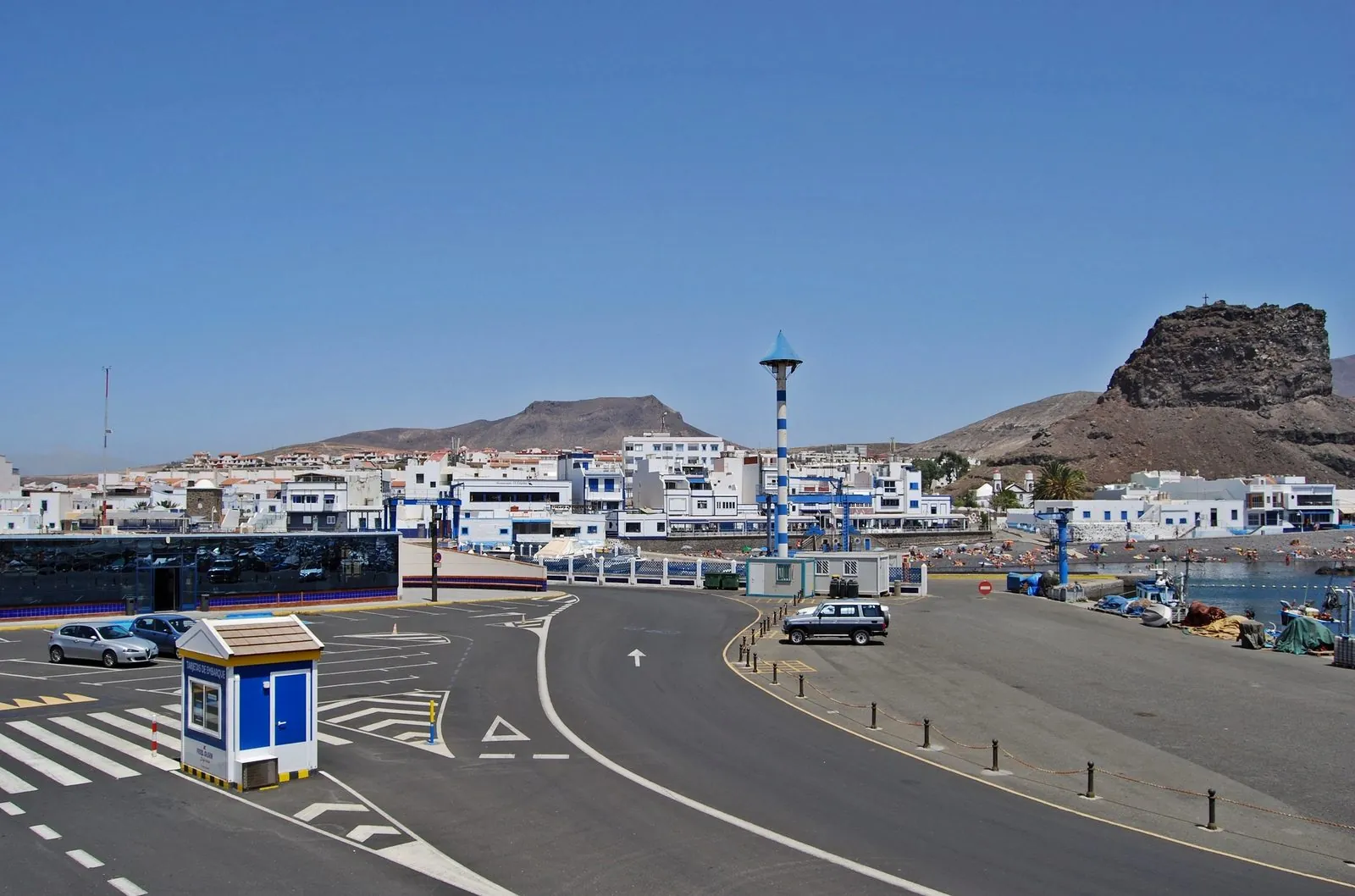
Photo: Felix König · CC BY 3.0 · Wikimedia Commons · scaled
The sunny south: dunes, resorts and calm bays
Almost all of Gran Canaria's package-holiday energy is concentrated on the south coast, and its centrepiece is the extraordinary Maspalomas dune field — hundreds of hectares of shifting Saharan-gold sand rolling down to the sea, backed by a lighthouse and a palm oasis. It's a protected nature reserve you can walk across barefoot. Right beside it, Playa del Inglés is the big, buzzing resort that put the island on the map: broad beaches, endless bars and restaurants, and the island's liveliest nightlife.
West along the coast the mood softens. Puerto Rico is a sheltered, family-friendly resort built around a sandy bay and a marina, and a hub for boat trips and watersports; the neighbouring man-made bay of Amadores has calm, shallow, turquoise water that's ideal for young children. Further on, Puerto de Mogán — nicknamed "Little Venice" for its flower-draped canals and footbridges — is the prettiest corner of the coast, with a working fishing harbour, a Friday market and a genuinely charming old town. The low-key resort of Arguineguín in between keeps its fishing-village feel and hosts a large Tuesday market.
The south really does get the sun. If your priority is guaranteed beach weather in winter, base yourself between Maspalomas and Puerto de Mogán and you'll rarely see a grey day, even when the north is under cloud.
The green interior: mountains, pines and Roque Nublo
Rent a car and you'll discover that the beach is only half the island. The centre rears up into a dramatic volcanic massif of ravines (barrancos), reservoirs and Canary pine forest, cooler and often draped in cloud. The island's natural symbol is Roque Nublo, a huge basalt monolith standing proud of the surrounding peaks; a straightforward walk from the roadside car park leads to its base, with vast views that on a clear day reach the cone of Mount Teide floating above the clouds on Tenerife.
Tucked into the highlands is Tejeda, regularly named one of Spain's prettiest villages — white houses spilling down a ridge, an almond-cake tradition, and mountain restaurants serving hearty Canarian stews. Roads up here are narrow and switchbacked but the scenery is superb; allow far more time than the distance suggests. For more ideas on getting out of the resort, see our things to do pages.
Mountain roads are spectacular but demanding — tight bends, blind corners and occasional cloud. Drive slowly, use lower gears on long descents, and don't attempt the interior after dark if you're not confident on winding roads.
Las Palmas: the buzzing northern capital
Many visitors never see the north, and they miss the island's most surprising asset. Las Palmas de Gran Canaria is a real Atlantic city of around 380,000 people — one of the largest in Spain — with a historic quarter, a serious food scene and one of the best city beaches in Europe. The cobbled old town of Vegueta is where the island's colonial history lives: the Cathedral of Santa Ana, the Casa de Colón (linked to Columbus, who called here on his voyages west) and buzzing tapas streets that come alive after dark.
The city's showpiece is Playa de las Canteras, a golden, gently curving beach running for roughly three kilometres right through town, protected by a natural offshore reef that calms the water for swimming and snorkelling. A wide promenade of cafés and restaurants runs its full length. Come for a day trip from the south and you'll understand why so many locals holiday at home.
Climate: sunny south, cloudier north
Gran Canaria is subtropical and mild all year — genuinely a place you can swim in December. The key thing to grasp is that "the weather" depends entirely on where you stand. The south coast is drier and sunnier; the north and the mountains catch more cloud and the occasional shower, especially in winter and during the summer panza de burro ("donkey's belly") of low grey cloud that can sit over Las Palmas. It's warmest from around August to October, while even the coolest winter months stay pleasantly warm on the coast. For a month-by-month view, see our best time to visit guide.
| Area | Character | Best for |
|---|---|---|
| South coast (Maspalomas, Puerto Rico, Mogán) | Dry, sunny, resort-lined | Winter sun, families, first-timers |
| Interior (Tejeda, Roque Nublo) | Cool, green, mountainous | Walking, driving, scenery |
| North (Las Palmas) | City life, sometimes cloudy | Food, culture, city beach |
Getting there and around
Gran Canaria Airport (LPA), on the east coast between the capital and the resorts, is one of the busiest in Spain, with direct flights from across the UK, Ireland and mainland Europe. For routes, transfers and connections, our sister travel-logistics site is a handy planner for working out how to get between places.
Once you land, the fast GC-1 motorway sweeps down the east coast, linking the airport to the southern resorts in well under an hour and to Las Palmas in the other direction. The green Global buses are cheap, frequent and reliable along the main corridors — a good way to reach Las Palmas or move between southern resorts. But to unlock the interior and the quieter corners, a hire car is strongly recommended; see our advice on car hire and getting around before you book. If you're island-hopping, note that it's usually cheaper to rent a fresh car on each island than to take one on the inter-island ferries.
Who Gran Canaria suits
It's the classic all-rounder. Families get calm bays, water parks and short transfers; first-timers get an easy, well-serviced south coast with everything in English; winter-sun seekers get the most reliable warmth in Europe; and anyone who wants a bit of nightlife has Playa del Inglés on the doorstep. Add a hire car for the mountains and a day in Las Palmas, and even seasoned travellers leave impressed. Ready to plan? Start with where to stay and browse the island's beaches.