Playa del Inglés is Gran Canaria's biggest, busiest and most unapologetically fun resort — a sprawling grid of hotels, apartment blocks and open-air shopping centres that runs right up to the edge of the famous Maspalomas dunes. This is the classic "cheap sun and a good time" Canaries holiday: warm almost every day of the year, packed with bars and restaurants, and priced for package tourists rather than the jet set. It looks and feels a little stuck in the 1970s and 80s — because that is exactly when most of it was built — but if you take it for what it is, it delivers.
What it's like
Playa del Inglés ("beach of the English", named long before the Brits actually arrived) grew up in the boom years of package tourism and never really lost that character. The layout is a low-rise sprawl of urbanisaciones — clusters of apartments and bungalows around pools — stitched together by wide avenues and the big open-plan shopping centres that are the resort's real social hubs. Don't expect a pretty old town or a harbour; the charm here is energy, value and reliability. The sun shines, the beer is cheap, the buffets are generous, and there is always somewhere open.
It's a resort that suits people who want everything on tap and don't mind a bit of faded concrete with their sunshine. Families, groups of friends, older couples on long winter stays and party-minded younger crowds all rub along here, largely because the resort is big enough to give each of them their own corner.
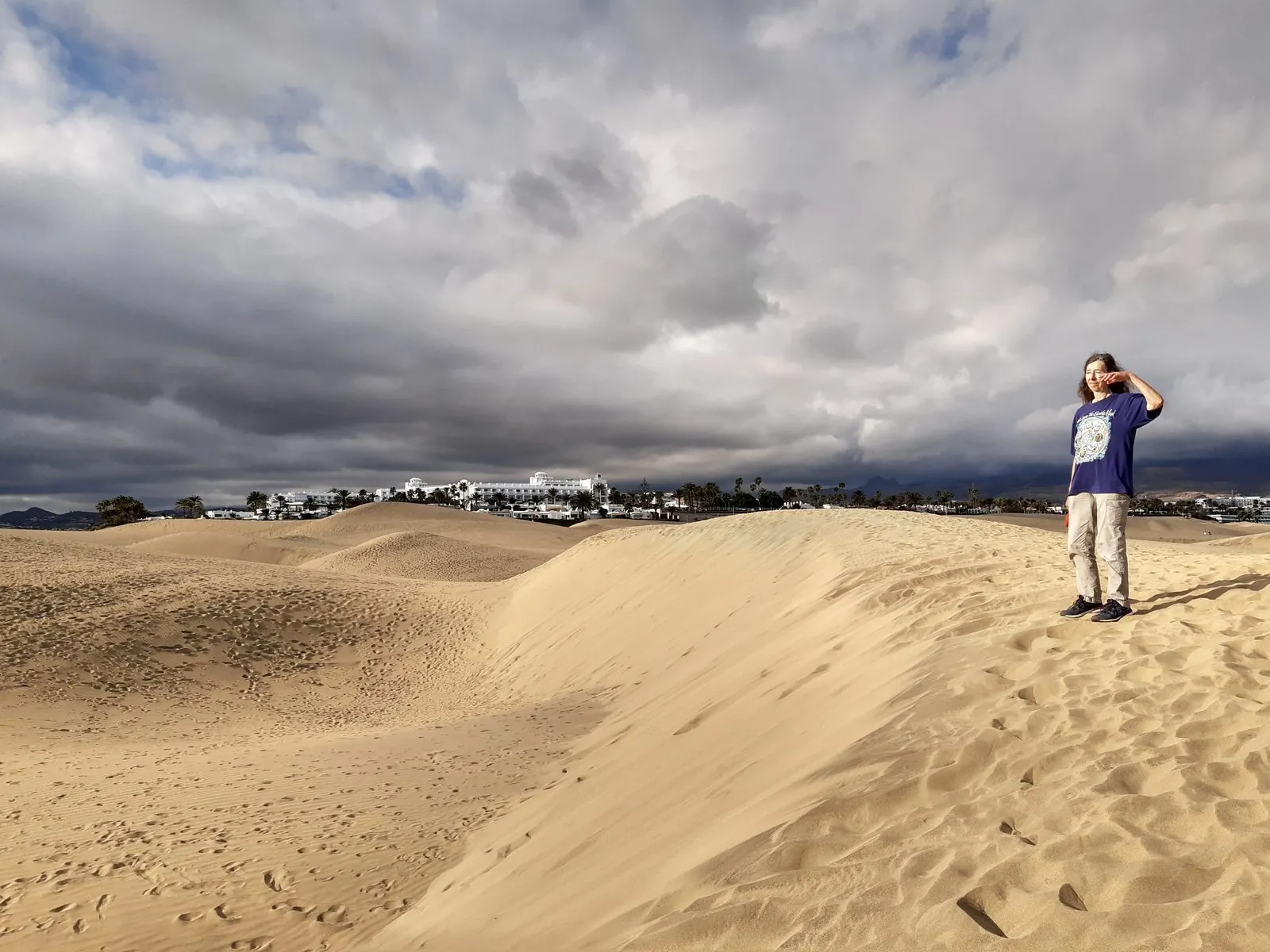
Photo: Gerda Arendt · CC BY-SA 4.0 · Wikimedia Commons · scaled
The beach and the dunes
The great redeeming glory of Playa del Inglés is its beach. The golden sand runs unbroken for kilometres and merges into the protected Maspalomas dune field — a genuinely remarkable rolling desert of sand that feels far bigger and wilder than a resort beach has any right to be. A wooden boardwalk and a series of ramps (bajadas) lead down from the cliff-top promenade to the sand. The further you walk from the entry points, the quieter and more natural it becomes, and parts of the dunes are well known as a naturist and gay-friendly area.
The dunes are a fragile protected reserve, not a playground — stick to the marked paths where they exist, don't pick the vegetation, and take your litter with you. There's very little shade, so bring water and go early or late in summer.
Where to stay and who it suits
Accommodation is Playa del Inglés's strong suit: there is a huge range, and because of the sheer volume of beds, prices are among the most competitive in the Canaries. You'll find everything from simple self-catering apartments and bungalow complexes to big all-inclusive hotels. Much of the stock is dated, so read recent reviews carefully — two complexes on the same street can be worlds apart. For a more polished, greener and quieter base, look next door at Maspalomas, which shares the same beach but has a calmer, more upmarket feel.
This resort is at its best for anyone who prioritises value, nightlife and convenience over scenery and sophistication. If you want charm and character, the harbour town of Puerto de Mogán further west is a different world; if you want a real Spanish city, head north to Las Palmas. See our where to stay guide for how the south's resorts compare.
Eating, shopping and nightlife
Life in Playa del Inglés revolves around its commercial centres — dated, multi-level shopping complexes that come alive after dark. The best known are the Yumbo Centrum, the Kasbah and Cita. By day they're a slightly tired warren of shops, mini-markets and cafés; by night they transform into a buzzing maze of bars, restaurants and clubs.
The Yumbo in particular is the heart of one of Europe's most established LGBTQ+ scenes. Its upper terraces are lined with gay bars and cabaret venues that draw a big international crowd, and the resort hosts a major Gran Canaria Pride each spring. It's welcoming, unpretentious and busy well into the early hours — though, like all the centres, plenty of it is family-friendly too, especially earlier in the evening.
For food, you'll find the full holiday-resort spread: British pubs doing full breakfasts and Sunday roasts, cheap-and-cheerful Italian and Chinese places, steakhouses, Indian restaurants and a growing number of decent Canarian and Spanish spots if you seek them out. Prices are gentle. To eat something genuinely local, try papas arrugadas with mojo or read our guide to Canarian food before you go.
You'll be approached by timeshare and "scratch-card" touts around the shopping centres promising free gifts or excursions. Politely walk on — the "prize" always leads to a high-pressure sales presentation.
Things to do beyond the beach
The south of Gran Canaria is stacked with family attractions, most of them a short drive or bus ride from the resort. Just up the hill are the water park Aqualand Maspalomas and the funfair Holiday World, with its landmark Ferris wheel. A little further out you'll find the wildlife and botanical gardens of Palmitos Park and the Wild West shows of Sioux City. Browse everything in our things to do section.
Getting there and around
Gran Canaria Airport (LPA) sits about 30 kilometres north of the resort, roughly a 25–35 minute drive. Taxis, pre-booked transfers and the direct airport bus lines all serve the south; if you want to plan the connection in detail, viamo's guide to airport transfers and getting around is a useful starting point.
Within the resort, most things are walkable, and a good local bus network (the yellow Guaguas Municipales and the intercity Global buses) links Playa del Inglés with the rest of the south coast and Las Palmas. You don't need a car to enjoy the resort itself, but hiring one for a day or two opens up the whole island — see our car hire guide and getting around tips.
Nearby
Playa del Inglés blends seamlessly into Maspalomas to the west — greener, quieter and more upscale, sharing the same magnificent beach. Continue along the coast and you reach the family sun-trap of Puerto Rico, the down-to-earth market town of Arguineguín, and the postcard-pretty Puerto de Mogán. To understand how it all fits together, and why so many visitors base themselves in the south, start with our island hub for Gran Canaria.