Fuerteventura is the Canary Islands at their most stripped-back and beautiful: a long, low, wind-brushed island fringed by some of the finest white-sand beaches in Europe. It is the second largest of the islands and, at barely 100 km off the coast of Africa, the closest to the Sahara — which is exactly why the sand is so pale, the light so clear and the horizons so wide. Come here for beaches you can walk for an hour without running out, warm Atlantic water, a serious wind-and-wave culture, and a slow, unhurried pace that the bigger islands lost long ago.
If Gran Canaria is the all-rounder and Lanzarote is the design-led volcanic island next door, Fuerteventura is the one people come back to for the sand and the calm. It is flatter and emptier than its neighbours, the resorts are low-rise by law and habit, and the whole island runs at the speed of a grazing goat.
The beaches — the whole point
Fuerteventura has more sand than the rest of the archipelago put together, and it is the real reason to come. The beaches split neatly into two great clusters, north and south, with wild, empty stretches in between.
The north: Corralejo and the dunes
The lively little town of Corralejo sits at the northern tip, and just south of it lie the Corralejo Dunes — a protected natural park of rolling white sand that meets a turquoise sea, backed by the volcanic cone of Montaña Roja. The beaches here, often called the Grandes Playas, run for kilometres: shallow, bright and gloriously open. Because it is a nature reserve, development is kept back from the shore, so even in high season you can walk until the crowds thin to nothing. Bring shade and water — there is very little of either out on the sand.
The south: Sotavento, Jandía and Cofete
The long Jandía peninsula in the south holds the island's showpiece beaches. Playa de Sotavento is a vast tidal beach famous with windsurfers and kitesurfers, where at low tide a shallow lagoon forms behind a sandbar — postcard stuff. Further along, the beaches around Morro Jable and the Jandía coast are broad and golden-white. For something wilder, cross the mountainous spine on a rough track to Playa de Cofete: a raw, several-kilometre sweep of sand backed by dark cliffs, with strong currents and almost no facilities. It is one of the most dramatic beaches in Spain, and getting there is half the adventure.
Fuerteventura's Atlantic-facing beaches can have powerful currents and undertow, and lifeguard cover is patchy on the wilder stretches. Swim where others swim, watch the flags, and take particular care at Cofete and other exposed west- and south-coast beaches.
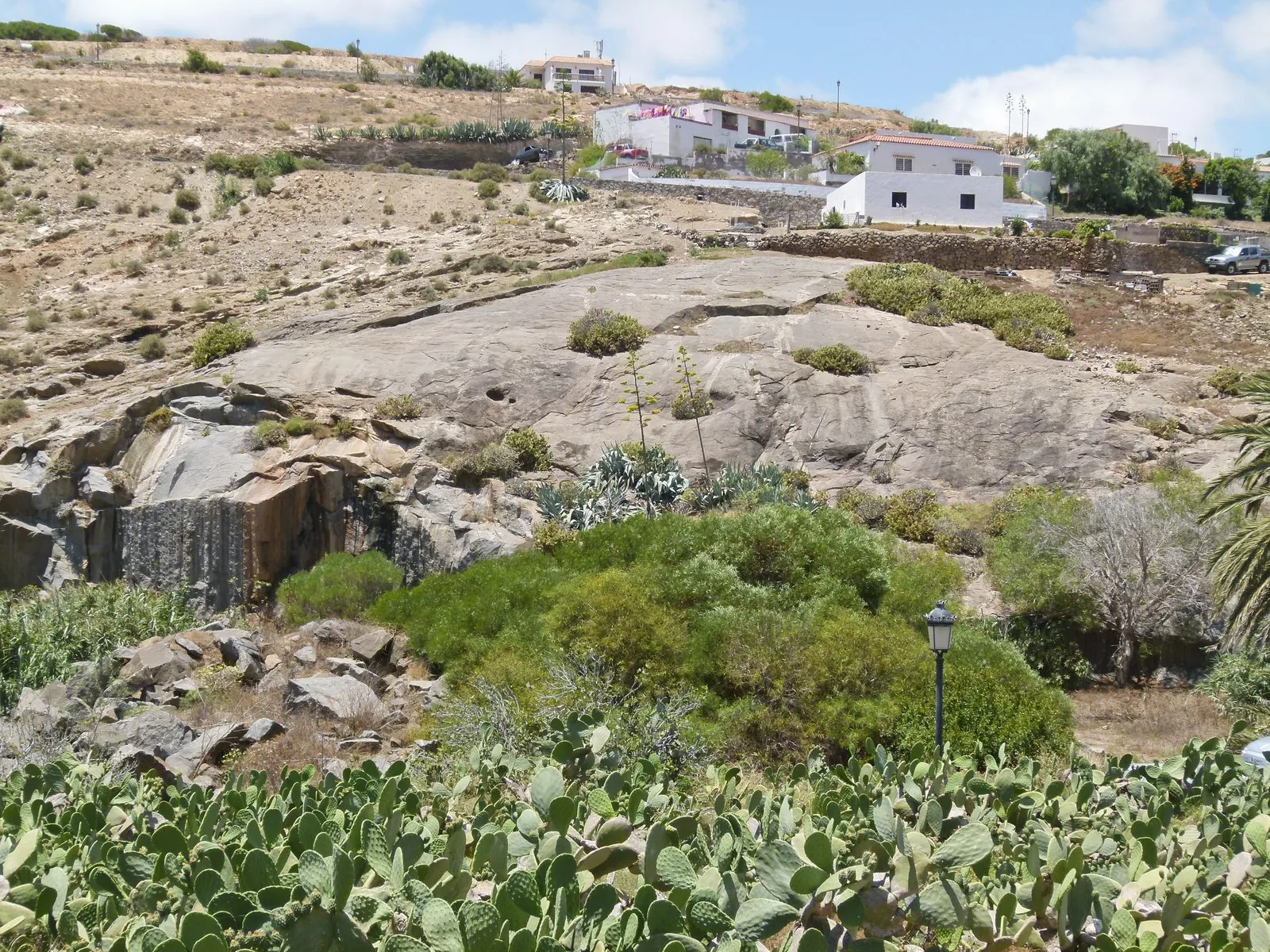
Photo: Norbert Nagel · CC BY-SA 3.0 · Wikimedia Commons · scaled
Wind, waves and watersports
The same trade winds that keep the island cool make it a world capital of wind- and kitesurfing. Sotavento in the south regularly hosts international windsurfing and kiteboarding competitions, while the reefs and beach breaks around Corralejo, El Cotillo and the north shore draw surfers of every level. Schools all over the island run lessons and hire out kit, so complete beginners are just as welcome as pros chasing the swell. Even if you never touch a board, watching dozens of kites arc over the lagoon at Sotavento is a fine way to spend an afternoon.
The wind is a feature, not a bug — but it is real. Fuerteventura (the name roughly means "strong wind") is breezier than the other islands, which keeps temperatures pleasant but can whip up the sand. A light windbreak, or a beach with a bit of shelter, makes lazy sunbathing days far more comfortable.
Isla de Lobos — the perfect day trip
A short hop by ferry from Corralejo lies Isla de Lobos, a tiny, uninhabited volcanic islet that is now a protected nature reserve. There are no cars, no hotels and no shops — just walking trails, a little lagoon of impossibly clear water at Las Lagunitas, a modest volcano to climb for the view, and a single small restaurant near the jetty. Visitor numbers are capped and you usually need to book a permit in advance, so plan ahead rather than turning up on spec. It makes an idyllic, low-key day away from the resorts.
Resorts and towns — low-rise and laid-back
Fuerteventura's resorts are deliberately modest, and that is their charm.
- Corralejo — the busiest and most characterful, with bars, restaurants, the dunes on the doorstep and ferries to Lanzarote and Lobos.
- Caleta de Fuste — a calm, purpose-built family resort near the airport, with a sheltered man-made bay that is great for young children.
- Costa Calma — quieter still, spread along the start of the Jandía beaches, popular with couples and windsurfers.
- Morro Jable — a former fishing town at the southern tip, backed by long golden beaches and a working harbour.
The island's capital, Puerto del Rosario, is a workaday port town rather than a tourist hub, but it is worth an hour or two for its open-air sculpture trail. For a sense of the old interior, the historic former capital of Betancuria, tucked into the hills, is a lovely inland detour by hire car.
Food: goats, cheese and the slow life
Fuerteventura is goat country — there are famously more goats than people — and the island's great culinary gift is Majorero, a firm, tangy goat's cheese with protected-origin status that many rate the best in the Canaries. Look for it plain, smoked, or rubbed with paprika or toasted corn (gofio). It turns up everywhere alongside the Canarian staples of papas arrugadas with mojo and simply grilled fresh fish. Round a meal off the local way with more cheese rather than a heavy pudding, and read up on the wider Canarian food scene before you go.
Getting there and getting around
Fuerteventura's airport (code FUE), just outside Puerto del Rosario, takes direct flights from across the UK, Ireland and northern Europe. The island is also well connected by ferry — Corralejo links to Playa Blanca on Lanzarote in around half an hour, making a two-island trip easy. For hopping to the other islands, our friends at the route-planning guide Viamo are a good place to sort the logistics, and our own ferries between the islands page has the practical detail.
Distances are long and public transport is thin outside the towns, so hiring a car is close to essential if you want to reach Cofete, El Cotillo or the interior. Roads are good and mercifully quiet.
Who Fuerteventura suits
Beach lovers will find no better island for pure, uncrowded sand. Surfers, windsurfers and kitesurfers get some of the most reliable conditions in Europe. Families are drawn to the shallow, sheltered bays at Caleta de Fuste and Corralejo. And anyone in search of peace and quiet — big skies, empty roads and nothing much to do but nothing — will feel instantly at home. If you are still deciding between the islands, weigh it against Gran Canaria and read our best time to visit guide first.