La Palma is the green heart of the Canary Islands — the steepest, lushest and arguably most beautiful of the eight, and one of the least spoiled by mass tourism. Nicknamed La Isla Bonita ("the pretty island"), it rises from black-sand beaches through banana plantations and laurel forest to a jagged volcanic ridge that tops 2,400 metres. This is an island for people who would rather lace up walking boots than laze by a pool: a place of world-class hiking, some of the clearest night skies on Earth, and a landscape still being reshaped by fire.
If Fuerteventura is about sand and Gran Canaria about buzz, La Palma is about nature at full volume. It sits in the western, greener half of the archipelago, and its northern slopes are so often draped in cloud that the forests drip year-round.
Caldera de Taburiente National Park
At the island's core is the Caldera de Taburiente, a vast erosion crater ringed by peaks and slashed by deep ravines, protected as a national park. Streams and waterfalls thread its forested floor, and the walls rise steeply on every side — from the Los Brecitos trailhead down through the caldera to the coast is one of the classic Canarian day-hikes. Pine forest, red rock and running water make it feel a world away from the sun-lounger Canaries. Come prepared: it is a serious mountain environment, and the weather at altitude can turn quickly.
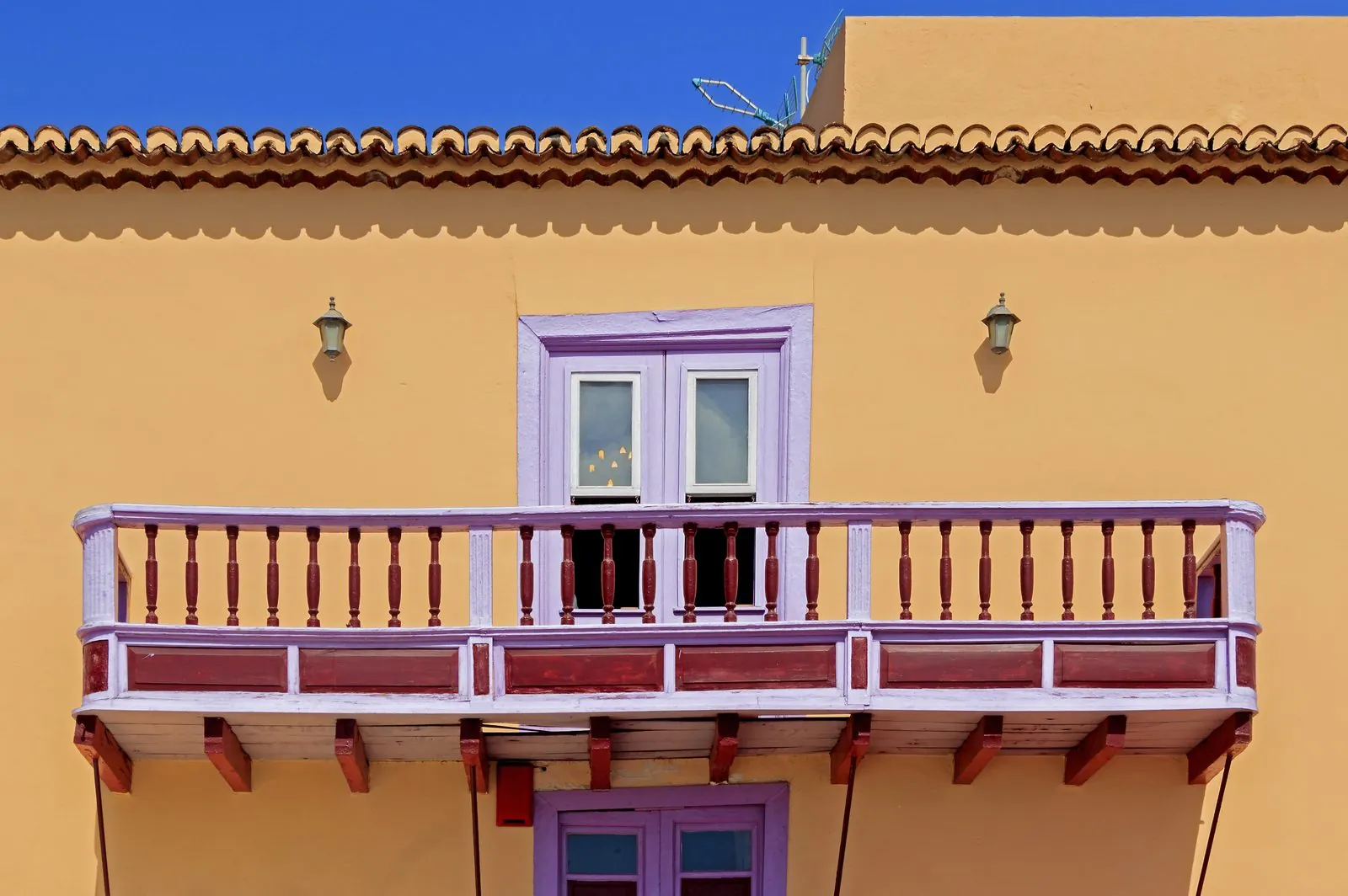
Photo: H. Zell · CC BY-SA 3.0 · Wikimedia Commons · scaled
Hiking: the Ruta de los Volcanes and beyond
La Palma is criss-crossed by an exceptional network of marked trails, and hiking is the main event. The star route is the Ruta de los Volcanes, a spectacular ridge walk along the volcanic spine of the Cumbre Vieja in the south, tracing a line of craters with the Atlantic falling away on both sides. Elsewhere, cool laurel-forest paths in the north and coastal trails to hidden coves give walkers of every level something to aim for. Distances are short but gradients are savage — this is an island where you climb and descend all day.
Many of the best walks are linear point-to-point routes rather than loops, so plan how you will get back — a taxi, a lift, or the island's bus network. Start early: the northern forests often cloud over by early afternoon, and the light in the caldera is at its finest in the morning.
Stargazing: one of the world's great night skies
La Palma has some of the darkest, clearest skies anywhere, protected by law and by the island's remoteness. On the summit at Roque de los Muchachos (the highest point, around 2,400 m) stands one of the most important astronomical observatories in the northern hemisphere, its domes strung along the crater rim above the clouds. The whole island is a designated Starlight Reserve, with lighting restrictions to keep the heavens dark. On a clear night the Milky Way is almost startlingly bright; guided stargazing evenings and viewpoints (miradores) make it easy to look up, no telescope required.
The observatory site and summit road are high, exposed and sometimes closed for weather or scientific reasons. Take warm layers even in summer — it can be near freezing at the top while the coast basks — and check access before driving up after dark.
The 2021 eruption — and the recovery
In the autumn of 2021 the Tajogaite volcano on the Cumbre Vieja ridge erupted for nearly three months, sending lava down the island's southwest and reshaping the coastline where it met the sea. It was a hard chapter for the communities of the Aridane valley. Today, La Palma has fully reopened to visitors, and much of the affected southwest has recovered: roads have been rebuilt, viewpoints let you take in the new lava fields and cones, and visiting is a genuine way to support the local economy. Seeing the raw, still-steaming landscape up close is a powerful reminder that these islands are young and very much alive. Please stick to marked areas and respect any closures — some ground stays hot and unstable for a long time.
Santa Cruz de La Palma and the coast
The capital, Santa Cruz de La Palma, is one of the loveliest small cities in the Canaries: a historic seafront town of cobbled streets, carved wooden balconies, grand churches and pastel façades, wrapped around a natural harbour. It rewards an unhurried wander. Around the island, the beaches are volcanic black sand — dramatic rather than golden — with good swimming spots at Puerto Naos and Los Cancajos and a scattering of natural seawater pools. Bananas are the island's great crop: terraced plantations cascade down almost every coastal slope, and you will see the plastic-shrouded fields everywhere you drive.
Getting there and getting around
La Palma's airport (code SPC), near Santa Cruz, takes flights from the Spanish mainland and other Canary Islands, plus a growing number of direct seasonal services from northern Europe. Many visitors connect via Tenerife. Ferries also link La Palma to Tenerife and the other western islands — see our ferries between the islands guide, and the route-planning site Viamo for piecing a multi-island trip together. Once here, a hire car is the best way to reach the trailheads and mountain viewpoints; roads are good but steep, narrow and endlessly winding, so allow more time than the map suggests.
Who La Palma suits
This is an island for hikers, who will find some of the finest walking in the Atlantic; for nature and forest lovers drawn to the caldera and the laurisilva; and for stargazers and astronomy fans, who simply won't find darker, clearer skies elsewhere in Europe. It suits travellers happy to trade beach resorts and nightlife for green mountains, small towns and genuine quiet. If that sounds like your kind of trip, pair it with our best time to visit guide and consider its equally wild western neighbours La Gomera and El Hierro.