Canarian food is honest, sunny and unexpectedly distinctive — a cuisine shaped by Atlantic fish, volcanic soil and centuries of ships passing between Europe, Africa and the Americas. It looks simple on the plate, but the flavours are big: garlicky mojo sauces, salt-crusted little potatoes, fresh-off-the-boat fish and slow-cooked country stews. Eat like a local and you'll spend very little for very good food — this is holiday cooking with real roots, not a resort buffet.
The islands sit closer to the Sahara than to Madrid, and the food reflects that in-between position: Spanish at heart, but with African, South American and old Guanche influences that you won't find on the mainland. Here's what to look for, and how to eat it well.
Papas arrugadas and mojo: the flavour of the islands
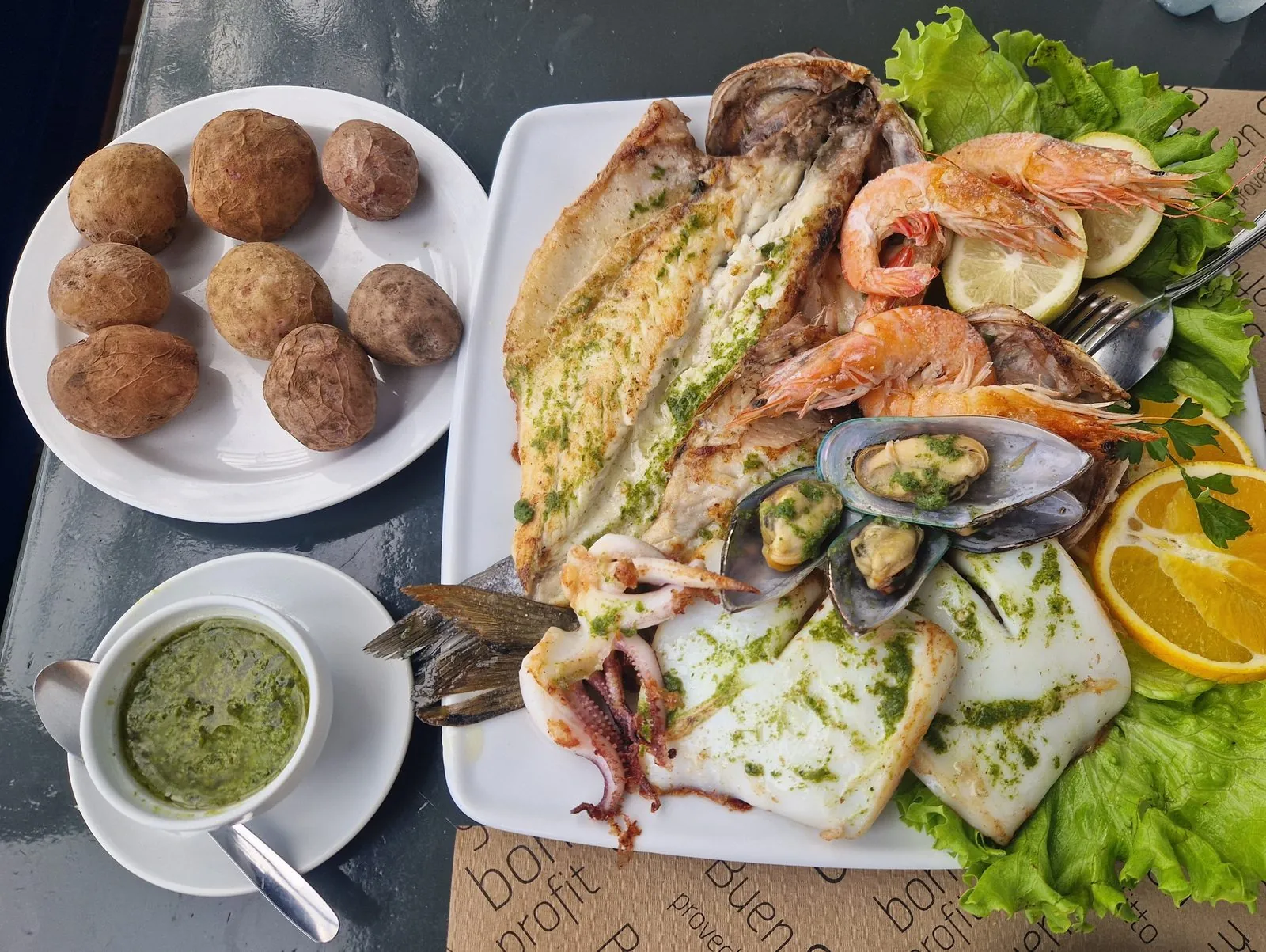
If Canarian food has a signature, it's papas arrugadas con mojo — small potatoes boiled hard in heavily salted water until the skins wrinkle and turn a dusty white, then served with two dipping sauces. Mojo rojo is red, warm and mildly spicy, built from paprika, garlic, cumin and a little local chilli; mojo verde is green and fresh, made with coriander or parsley. They appear with almost every meal, and they're the first thing most visitors fall for. We give them a whole guide of their own — see papas arrugadas and mojo for what they are and where to try the best.
Fish and seafood straight from the Atlantic
Surrounded by deep, cold ocean, the Canaries eat superbly fresh fish, usually grilled or fried whole and served with — of course — papas and mojo. The one to order is vieja (parrotfish), sweet and delicate and something of a local obsession; also look for cherne (a type of grouper/wreckfish) and sama. The classic one-pot dish is sancocho canario: salted fish poached and served with potatoes, sweet potato and a fierce mojo, traditionally eaten around Easter but on menus year-round.
For the best fish, head to a harbourside town where the boats still come in — the seafront restaurants of the capital Las Palmas or a working fishing port like Puerto de Mogán. Ask what's fresh that day and let the waiter steer you; the fish is usually priced by weight, so it's normal to check the price before it's cooked.
Fish is often sold and billed por kilo (by weight). There's nothing dodgy about it — just ask roughly what your chosen fish will come to before it hits the grill, so there are no surprises on the bill.
Gofio: the ancient island staple
Older than the Spanish conquest, gofio is toasted, finely milled grain (traditionally wheat or maize) that the indigenous Guanches lived on and Canarians still love. It turns up everywhere: stirred into stews and milk, kneaded into a dough called gofio amasado, whisked into desserts and ice cream, even given to babies and athletes as a nutritious staple. It tastes nutty and wholesome, and trying it is one of the most authentically Canarian things you can do at the table.
Meat, stews and mountain cooking
Away from the coast, the islands turn hearty. Conejo en salmorejo — rabbit marinated and slow-cooked in a garlicky, paprika-rich sauce (not to be confused with the cold Andalusian soup of the same name) — is the classic inland dish, a highland favourite on Gran Canaria and beyond. Carne de cabra (goat, usually stewed until meltingly tender) and ropa vieja (a chickpea-and-meat stew whose name means "old clothes") are the sort of warming plates you'll find in a mountain village restaurant, often alongside a bowl of puchero or bean stew.
Canary cheeses
The islands are serious cheese country, and Canarian cheeses win international awards. The star is Majorero, a firm, tangy goat's cheese from Fuerteventura — Spain's first goat's cheese to earn protected-origin status. From Gran Canaria comes queso de Flor de Guía, unusually curdled with the flower of a wild thistle, which gives it a slightly bitter, herbal edge. Try them young and fresh, or aged and rubbed with paprika or gofio. A wedge of local cheese with a glass of island wine is a perfect light lunch.
Tapas, snacks and sweet things
Canarians love to graze, and the tapas habit is strong. Order a few small plates to share: croquetas, grilled chorizo, a bowl of olives, marinated fish, and inevitably a plate of papas. Save room for dessert, because the islands have a proper sweet tooth. Bienmesabe — the name literally means "tastes good to me" — is a rich almond-and- honey cream, often spooned over ice cream. Príncipe Alberto is a chocolate, almond and cream dessert born on La Palma, and frangollo is a comforting cornmeal-and-milk pudding. Wash it down with the islands' distinctive wines, from bone-dry whites to the honeyed Malvasía sweet wines praised since Shakespeare's day — our Canary wine guide has the full story.
Where and how to eat like a local
The best-value, most authentic meals are often the least polished. On Tenerife especially, look out for a guachinche — a rustic, seasonal eatery, often run out of a farmhouse or garage in the wine-growing north, serving home cooking and the family's own young wine at rock-bottom prices. They're famously informal (limited menus, cash, opening hours that follow the wine harvest), and they're a wonderful window into real island life. Elsewhere, a tasca (traditional tavern) or a family restaurante away from the seafront promenade will nearly always beat the tourist-strip places on both price and flavour.
Two easy rules for eating well: walk one street back from the beachfront, and eat where local families are eating. If a place is full of Canarians at 2pm on a Sunday, you've found the right one.
Canarian cooking rewards the curious. Skip the international menus, order the vieja and the conejo, dunk everything in mojo, and finish with bienmesabe and a glass of Malvasía — and you'll taste an island cuisine that's every bit as memorable as the beaches. Browse more in our food and drink section, and read up on the islands' famous potatoes and mojo before you go.