Las Palmas de Gran Canaria is a proper Spanish city that also happens to have a superb city beach — and it offers a completely different holiday from the southern resorts. The capital of Gran Canaria and the largest city in the Canary Islands, Las Palmas sits at the island's far northern tip and is home to around 380,000 people — roughly half of everyone on the island. Here you get an atmospheric old town, one of Spain's great urban beaches, buzzing shopping streets, a big working port and the everyday rhythm of real Spanish life, all in one place.
What it's like
Founded in 1478, Las Palmas is one of the oldest cities in the Atlantic and was once a key stop on the trade routes between Europe, Africa and the Americas — Christopher Columbus called in on his way west. Today it's a lively, cosmopolitan port city that feels far more Spanish (and far less "holiday resort") than the sun-and-sand strips of the south. It stretches along a narrow isthmus with sea on both sides: the historic quarters and port at one end, the great sweep of city beach at the other, and busy shopping, business and residential districts in between.
Many visitors staying in the south come up for a day trip, but the city rewards a longer stay — or a whole holiday of its own for travellers who'd rather have culture, tapas and street life than a poolside all-inclusive.
Vegueta: the old town
The soul of the city is Vegueta, the beautifully preserved old quarter of cobbled streets, colonial mansions with carved wooden balconies, leafy squares and pavement cafés. Its centrepiece is the Cathedral of Santa Ana, whose tower you can climb for sweeping views over the rooftops, facing a handsome square watched over by bronze dogs (the "canes" that may have given the islands their name).
A few steps away is the Casa de Colón (Columbus House), a gorgeous building where the explorer is said to have stayed, now a museum on his voyages and the islands' links with the Americas. Nearby, the striking Canary Islands Museum (Museo Canario) houses the most important collection of the pre-Hispanic Guanche culture. Wander into the adjoining Triana district and you'll find grand old streets and the city's best traditional shopping.
Explore Vegueta on a Sunday morning, when parts of it turn pedestrian and locals fill the cafés, or in the early evening for the paseo. Round it off with tapas — the lanes around the Mercado de Vegueta market are a good hunting ground.
Las Canteras: the city beach
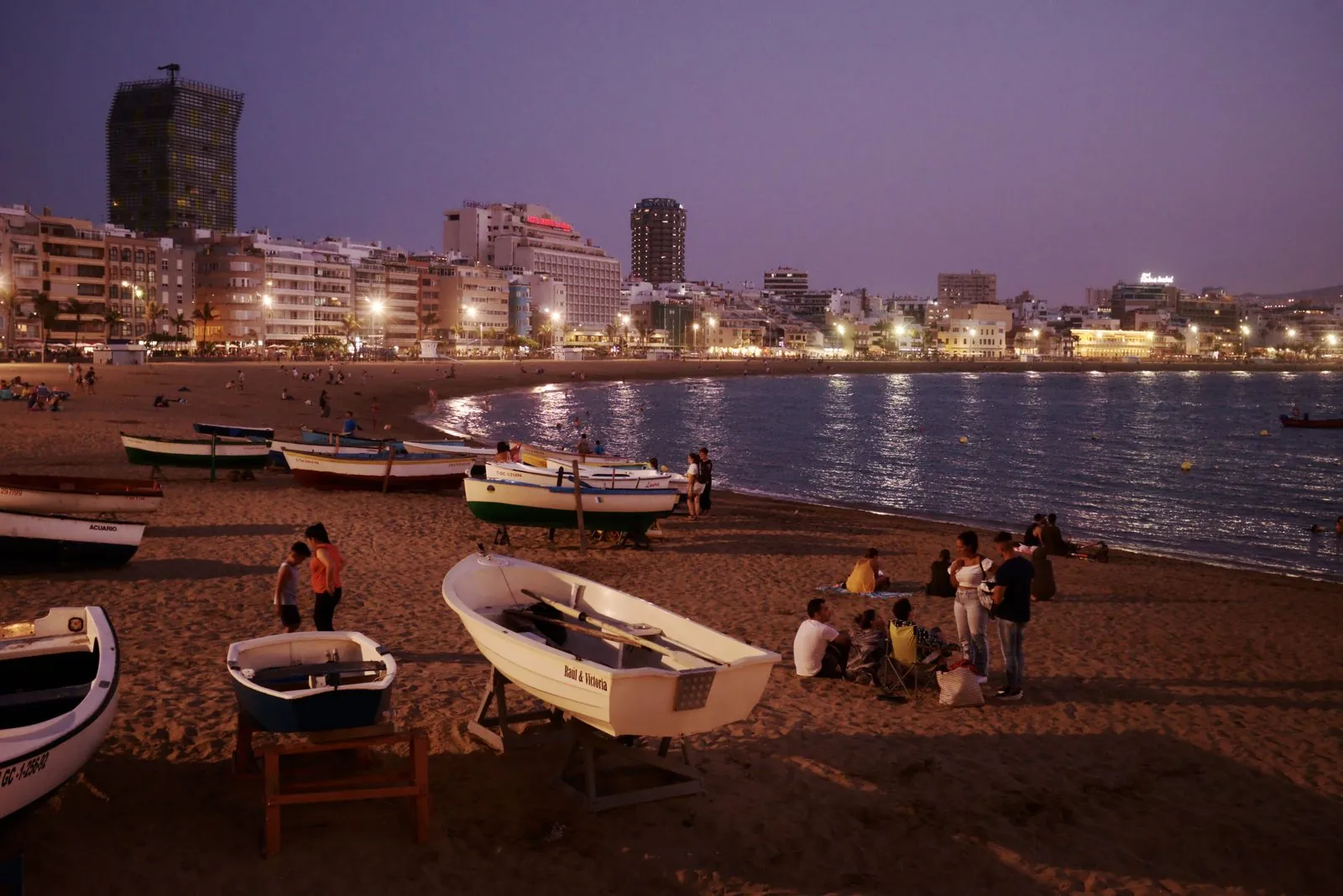
At the northern end of the isthmus lies Playa de las Canteras, and it's a genuine star: a golden-sand beach some three kilometres long, running right along the edge of the city and backed by a wide pedestrian promenade lined with cafés, bars and restaurants. A natural offshore reef, La Barra, tames the Atlantic swell across much of the bay, creating calm, shallow water that's lovely for swimming and snorkelling, while the far end draws surfers. It's regularly rated one of the best city beaches in the world — and, unusually, it's a beach where locals genuinely live and swim year-round, not just a resort strip. Browse more sands in our beaches section.
Carnival, culture and city life
Las Palmas throws one of Spain's biggest and most flamboyant carnivals each winter (usually around February–March) — weeks of costumes, music, drag galas and street parties that rival Tenerife's. Beyond carnival, the city has theatres, museums, the excellent Poema del Mar aquarium down by the port, concerts and a year-round dining and nightlife scene driven by locals rather than tourists. This is the place to experience the Canaries as the islanders themselves live it.
The port and where to stay
Las Palmas is one of the busiest ports in Spain — a hub for cargo, cruise ships and the inter-island ferries, and a base for the shopping-and-leisure complex around Puerto / Muelle Deportivo. Accommodation is city-style: business and boutique hotels, seafront hotels near Las Canteras, and apartments throughout, generally offering good value and a very different feel from a resort complex. The city suits culture-lovers, independent travellers, food and shopping enthusiasts, and anyone who finds a week by the pool a week too long. Sun-seeking families and package-holiday value-hunters are usually happier in the south around Playa del Inglés and Maspalomas. Our where to stay guide compares the two worlds.
Eating and drinking
As a real city, Las Palmas has the island's best and most varied dining — from old-school tapas bars and Canarian seafood restaurants to international kitchens reflecting its port-city mix. The area behind Las Canteras and the streets of Triana and Vegueta are full of good places to eat and drink. It's the ideal spot to dig into proper local cooking: read our guides to Canarian food and try papas arrugadas with mojo.
Getting there and around
Gran Canaria Airport (LPA) is around 25 kilometres south of the city, a 20–30 minute drive, with a fast, frequent express bus into the centre as well as taxis. The city is walkable in parts but long and thin, so the local buses (and the yellow Guaguas) are useful for hopping between Vegueta and Las Canteras. Las Palmas is also the island's main ferry port, with sailings to Tenerife, Fuerteventura, Lanzarote and beyond — see our guide to ferries between the islands and viamo's overview of getting between the islands if you're planning to island-hop.
Nearby
North of the city the wild Atlantic coast and the surf town of Las Palmas's outskirts give way, inland, to the dramatic mountains and ravines of Gran Canaria's interior — proof that there's a whole island to discover beyond the beaches. The southern resorts of Maspalomas and Puerto Rico are under an hour away down the motorway. Start planning the rest of your trip from our Gran Canaria hub.