Playa de las Canteras is that rare thing — a genuinely great beach in the middle of a city. Running for around three kilometres along the seafront of Las Palmas, the capital of Gran Canaria, it's a broad band of golden sand backed by a lively palm-lined promenade, and it's routinely rated among the finest urban beaches in Europe. Best of all, a natural offshore reef tames the Atlantic, giving swimmers a calm lagoon on one side and surfers proper waves on the other — all a short walk from shops, tapas bars and the old town.
La Barra: the reef that makes the beach
The magic ingredient is La Barra, a long natural rock reef lying parallel to the shore a little way out. At low tide it breaks the surface as a dark line across the bay, and it acts as a breakwater: the sheltered stretch behind it stays calm, shallow and warm, almost like a giant natural swimming pool. That's why families flock to the central section — you get sea swimming with none of the ocean's rough edges. Snorkellers explore the rocks and seagrass around the reef, where small fish gather in the clear, protected water.
The reef's sheltering effect is strongest at the central and northern end of the beach. Head there for the calmest, shallowest water — ideal with children or if you just want a gentle float.
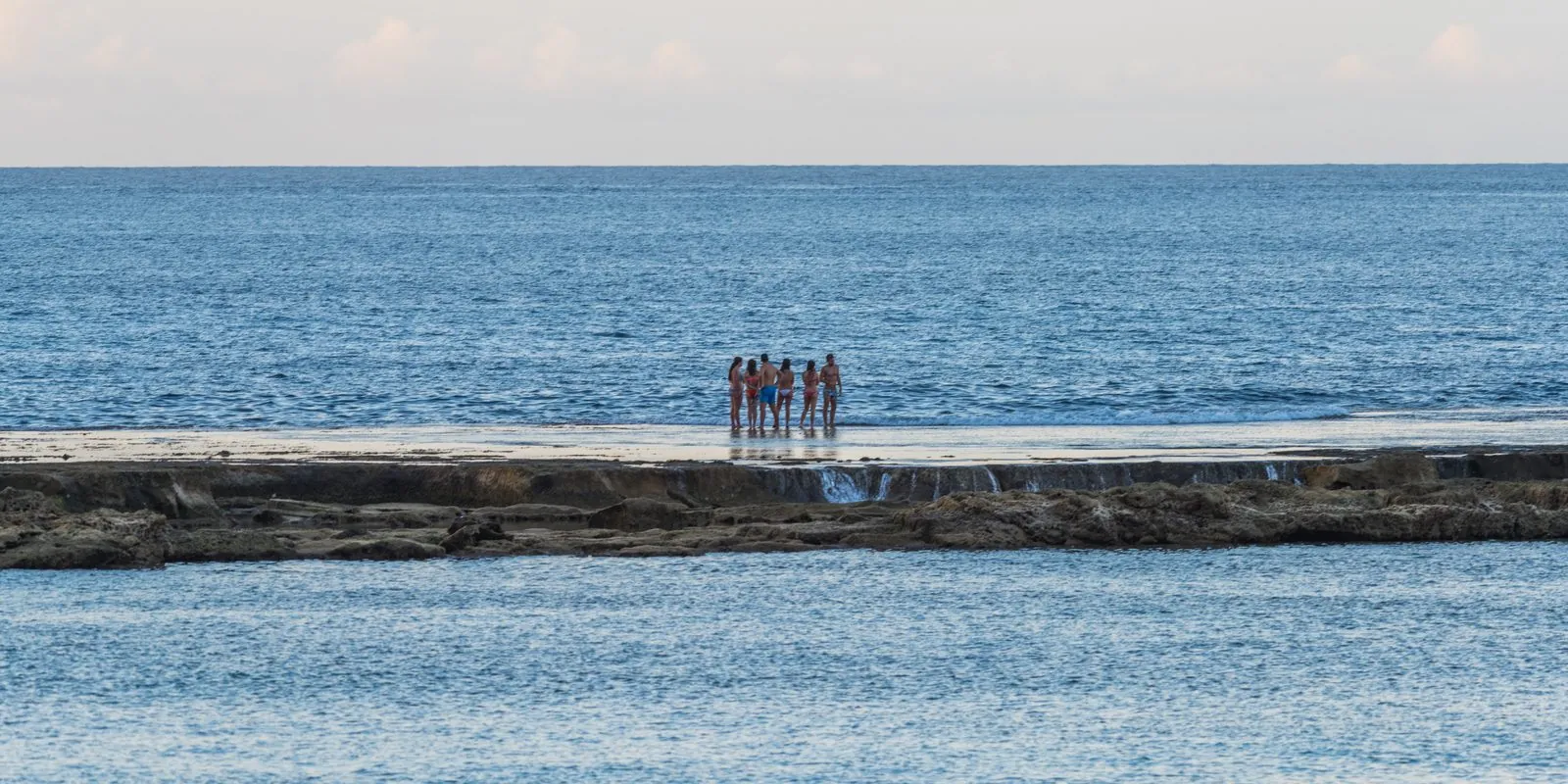
Photo: Bengt Nyman · CC BY-SA 4.0 · Wikimedia Commons · scaled
Surf at La Cícer
Walk to the southern end, known as La Cícer, and the mood changes completely. Here the reef no longer shields the shore, so the Atlantic rolls in with real waves. It's a well-loved surf and bodyboard spot, busy with surf schools and locals, and a good place to take a lesson or simply watch. One beach, two personalities: flat lagoon at one end, rideable surf at the other.
Respect the difference between the two ends. The calm central lagoon is fine for casual swimmers, but La Cícer has waves and currents better suited to surfers and strong swimmers. Follow the lifeguard flags and don't drift from the sheltered zone into the surf without meaning to.
The Paseo: promenade life
Behind the sand runs the Paseo de las Canteras, a wide pedestrian promenade that's the social spine of the beach. It's lined with cafés, ice-cream parlours, tapas bars, seafood restaurants and hotels, and it stays busy from morning coffee to late-evening stroll. This is a beach woven into daily city life rather than a resort strip — you'll see joggers, families, older locals taking their evening paseo and visitors alike. Sunsets from the promenade, especially near the Alfredo Kraus auditorium at the southern end, are a local ritual.
Getting there
Las Canteras is in the heart of Las Palmas, in the far north of the island — a very different setting from the southern resorts and typically around 45 minutes to an hour by road or bus from the south coast. Within the city it's easy to reach on foot, by local bus or by taxi, and the island's main bus station and the port are close by. Many visitors staying in the south make a day trip north to combine the beach with the historic Vegueta old town and the city's shops and museums.
What it's like to swim
In the reef-sheltered central stretch the swimming is calm and clean, shelving gently over sand — genuinely family-friendly and one of the reasons the beach is so cherished. Conditions still vary with the tide, since at high tide the reef is covered and the water deeper, so keep an eye on the lifeguards and the flags. At the La Cícer end, treat it as surf territory.
Facilities
As you'd expect from a city beach, facilities are excellent: showers, toilets, seasonal lifeguards, sunbed and parasol hire in places, and a solid accessibility set-up in the central section. Everything else — supermarkets, pharmacies, restaurants, hotels — is right behind you on the Paseo and surrounding streets. You never need to bring much, because the city has it all a few steps away.
Best for
Las Canteras is perfect for anyone who wants beach and city together: families after calm, safe swimming, foodies who like tapas by the sea, surfers heading for La Cícer, and travellers who want culture and a beach in the same day. It's the antithesis of an isolated cove — sociable, well served and full of local life. For pure resort sunshine and dunes, the south's beaches like Maspalomas and the calm bay of Amadores are the counterpoint.
Nearby
Beyond the sand, Las Palmas rewards exploring: the cobbled Vegueta quarter with its cathedral and the Columbus house, the Triana shopping streets, the port and a clutch of good museums. For where to stay in the capital and how the city fits into a trip, see our guides to Las Palmas and to Gran Canaria. Even if you're based in the south, this beach alone is worth the drive north.