Corralejo is Fuerteventura's most likeable town — a laid-back beach base where a real Canarian port grew a lively holiday heart without losing its soul. Strung along the island's northern tip, it looks across a narrow strait to Lanzarote and out to the little volcano-island of Lobos, and on its southern edge it runs straight into one of Europe's great natural wonders: kilometres of rolling white dunes tumbling into a turquoise sea. Add a genuine surf scene, a tangle of tapas bars and restaurants, and ferries that make two- and three-island trips easy, and you have a resort that suits almost everyone.
What it's like
Corralejo began as a fishing village, and the old core near the harbour still has that feel — low white houses, a working quay, seafood shacks and a small town beach where local families swim. Around it has grown a sprawling but low-rise resort: pedestrian streets of bars and shops, a long seafront promenade, and holiday apartments spreading back from the water. It manages to be busy and relaxed at the same time, more characterful and less packaged than the purpose-built resorts to the south. It is also the natural launch pad for exploring the rest of Fuerteventura, with the wild west-coast beaches and the interior an easy drive away.
The wind is part of the deal here — this is Fuerteventura, after all — which keeps the heat pleasant and the watersports world-class, but can whip up the sand on exposed beaches. Most days it is simply a fresh breeze that makes the sunshine bearable.
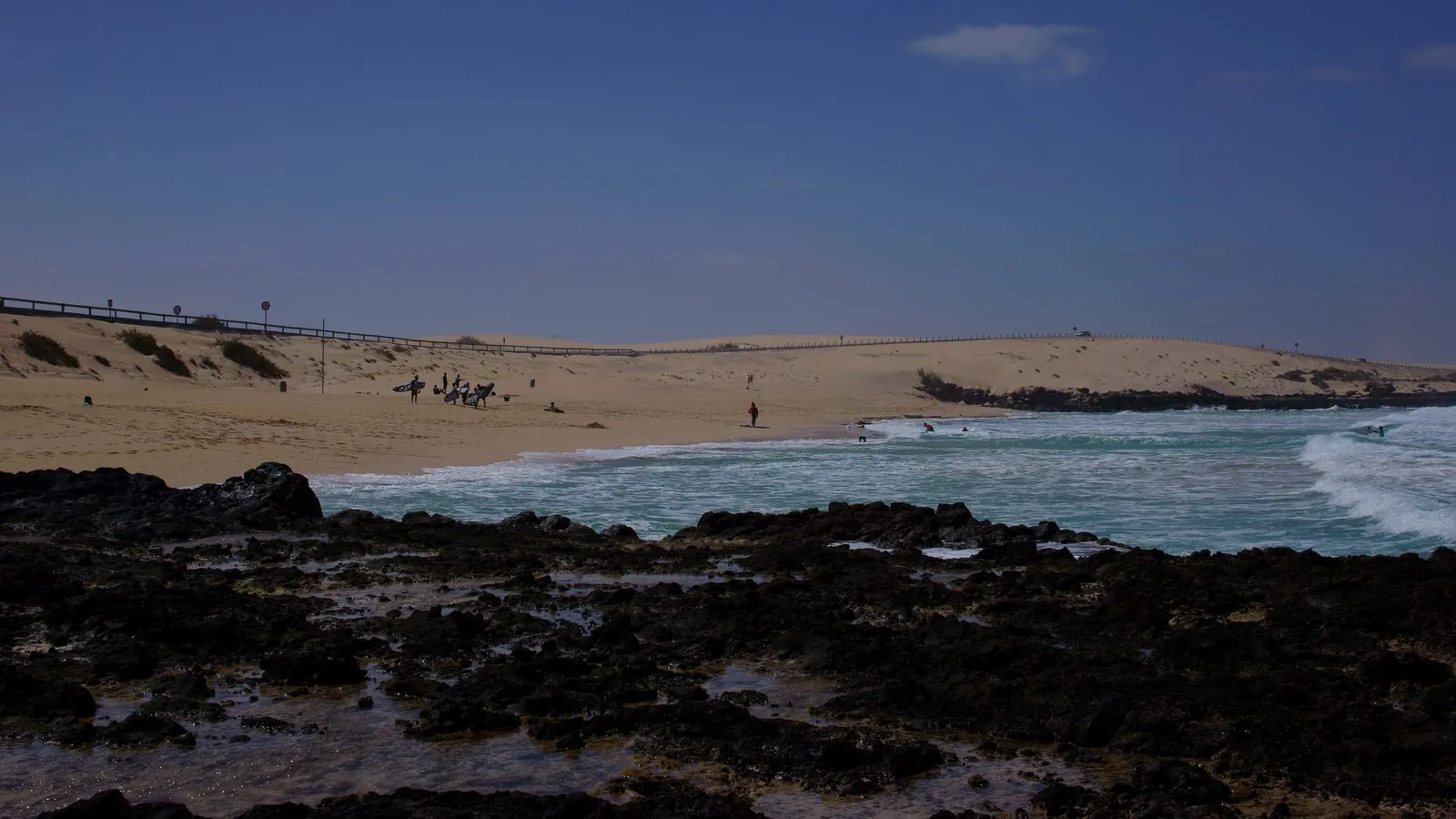
Photo: Jarek Prokop · CC BY 3.0 · Wikimedia Commons · scaled
The beaches
Corralejo has two very different kinds of beach. In town, a string of small, sheltered coves and the main town beach give you calm, shallow water within a two-minute walk of a coffee or a cold beer — perfect for a quick dip between errands.
The showstoppers, though, lie just south of town inside the Corralejo Dunes natural park: the Grandes Playas, a run of broad, pale-sand beaches backed by a Sahara-like sea of dunes and lapped by bright, clear water. Because the whole area is protected, development is held well back, so even in high season you can walk until the crowds melt away. There is very little shade or water out there, so come prepared.
The Grandes Playas face the open Atlantic and can have strong currents, undertow and shifting winds. Lifeguard cover is limited along the dunes — swim where others swim, watch the flags, and keep a close eye on children in the surf.
For a wilder, surf-battered contrast, the whitewashed town of El Cotillo on the north-west coast is a short drive away, with sheltered lagoons on one side and rolling breakers on the other.
Where to stay and who it suits
Corralejo offers the broadest choice of any Fuerteventura resort: big all-inclusive hotels out by the dunes, self-catering apartments in and around the centre, and smaller guesthouses in the old town. Staying near the dunes buys you space and those epic beaches on your doorstep; staying in the centre puts the bars, restaurants and harbour at your feet.
It suits a wide crowd — young couples and surfers drawn by the waves and the nightlife, families after sand and shallow coves, and older visitors who want a proper town to stroll rather than a hotel strip. If you prefer somewhere calmer and more contained, the family resort of Caleta de Fuste further south is a gentler alternative. Our where to stay guide weighs up the island's bases.
Eating and nightlife
Corralejo eats well. The harbour and old town are the place for fresh fish and seafood, while the main streets serve everything from Canarian and Spanish cooking to Italian, Indian and British-style pub food. Get into the island spirit with papas arrugadas and mojo and the local Majorero goat's cheese, and read up on the wider Canarian food scene before you go.
Evenings are sociable rather than raucous: busy tapas bars, live music, a cluster of pubs and a few late bars around the centre. It is livelier than most of Fuerteventura but a long way from the party strips of the bigger islands — you can find a buzzing night or a quiet drink by the water, whichever you are after.
Getting there and around
Fuerteventura's airport (code FUE) is about a 40-minute drive south, near the capital Puerto del Rosario, with direct flights from across the UK, Ireland and northern Europe. Corralejo is also a ferry hub: fast boats cross to Playa Blanca on Lanzarote in around half an hour, making a day trip — or a two-island holiday — genuinely easy. Smaller boats run out to Isla de Lobos, the tiny protected volcano-islet just offshore (visitor numbers are capped, so book ahead). Plan crossings with our ferries between the islands guide, and let the route-planning site Viamo help stitch the wider journey together.
The town itself is walkable, but Fuerteventura's distances are long and buses are thin outside the main routes, so hiring a car is close to essential if you want to reach El Cotillo, Cofete or the quiet interior.
Nearby
Beyond the dunes and Lobos, the north of the island rewards a hire car: the surf town of El Cotillo, the old villages of the interior, and the long empty roads that make Fuerteventura so restful to drive. When you are ready to plan the rest of the trip, start with our Fuerteventura island guide.