El Cotillo has the best of both worlds — sheltered turquoise lagoons for easy family swimming just north of the village, and wild, surf-battered west-coast beaches to the south, all wrapped around a laid-back old fishing town on the northwest tip of Fuerteventura. Where much of the island's coast is either tame or wild, El Cotillo gives you both within a few minutes' drive, plus fresh seafood and a refreshingly unpolished, bohemian charm. It's a firm favourite for anyone who wants variety in one relaxed spot.
How to get there
El Cotillo sits on the northwest coast, an easy drive from the resort of Corralejo across the top of the island, and reachable by local bus. Drivers will find parking around the village and near the main beaches, though the popular lagoons fill up on sunny days. From Fuerteventura's airport it's a straightforward transfer north. The village is small and walkable, with the sheltered lagoons a short distance to the north and the surf beaches just to the south.
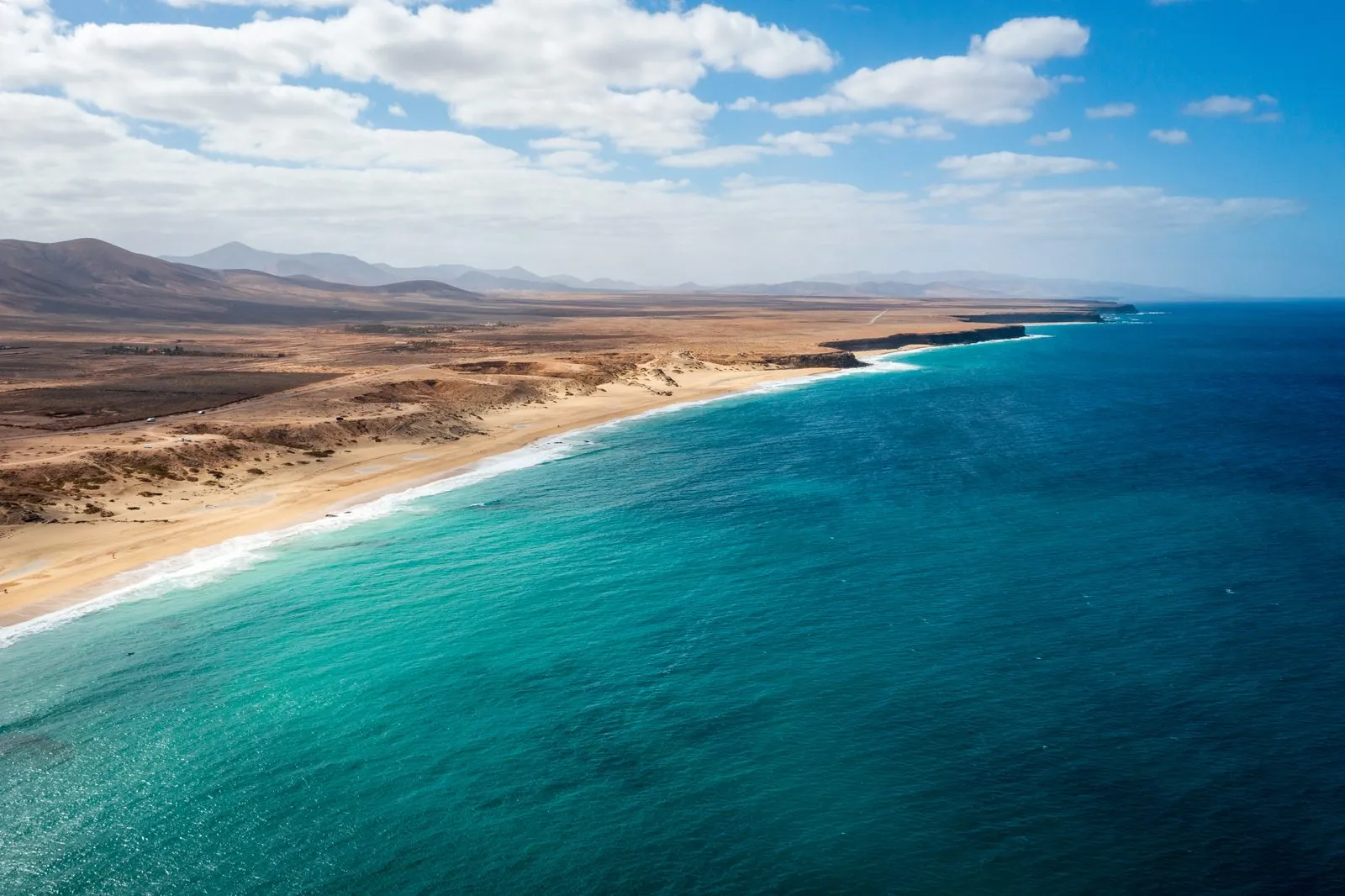
Photo: Dirk Vorderstraße · CC BY 2.0 · Wikimedia Commons · scaled
What it's like
There are two very different sides to El Cotillo. To the north lie Los Lagos — a string of shallow, sheltered lagoons and coves where reefs and rocks calm the Atlantic into clear, warm, turquoise pools that look almost tropical. To the south stretch the wild west-coast beaches, including Playa del Castillo and the long golden sweep locally known as Piedra Playa (the Playa del Castillo/Piedra Playa area), where big Atlantic waves roll in and the surfers gather. In between sits the village itself: a low-key old fishing port with a little harbour, a squat defensive tower, and a clutch of excellent seafood restaurants.
Head to the northern Los Lagos lagoons for calm, shallow, family swimming, and to the southern beaches for surf, big waves and dramatic sunsets. Having both so close is exactly what makes El Cotillo special.
Swimming and safety
Your experience depends entirely on which beach you choose. The northern lagoons are among the safest, calmest swimming spots in the north of the island — shallow, sheltered and clear, ideal for children and gentle paddling, though still keep an eye on the tide and little ones. The southern surf beaches are a different animal, with strong waves and currents that suit surfers and strong swimmers rather than casual bathers. Lifeguard cover is limited, so read each beach honestly and pick the right one for your group.
Know your beach. The southern surf beaches (Playa del Castillo / Piedra Playa) have powerful waves and rip currents and are not for relaxed swimming — they're best left to surfers and confident swimmers. For safe bathing, stick to the sheltered northern lagoons and watch children around the water.
Facilities
El Cotillo keeps things simple but sufficient. The village has a good spread of casual restaurants, cafés, bars and small shops, with its seafood a real draw, and there are surf schools serving the west-coast breaks. Out at the lagoons and the surf beaches themselves, facilities are limited and shade is scarce, so bring water and sun protection for a long day. It's a place with just enough to keep you comfortable and none of the big-resort gloss — which is precisely its appeal.
Best for whom
El Cotillo suits almost everyone, which is its great strength: families and gentle swimmers love the calm northern lagoons, surfers and thrill-seekers head for the southern waves, and food lovers come for the seafood and the mellow village mood. It's ideal for travellers who want both safe paddling and wild coast in one base, and who prefer character over polish. Those set on a big serviced resort beach may want more amenities — but for variety and charm, El Cotillo is a gem.
Nearby
The lively resort of Corralejo, with its great dunes, restaurants and ferry links, is an easy drive away across the north of the island, and from there boats reach the little island of Lobos and the neighbouring island of Lanzarote. The whole quiet, scenic northwest coast rewards exploring. For where to stay and the best of the island — including its many other beaches — see our full guide to Fuerteventura.