Costa Calma is where Fuerteventura's great southern beaches begin — a quiet, spread-out resort of low-rise hotels set among gardens and backed by the vast pale sands of the Jandía coast. There is no old town here and no real centre to speak of; instead you get sunshine, space and one of the longest, most beautiful beaches in the Canaries on your doorstep. It draws sun-seekers who want room to breathe and, above all, windsurfers and kitesurfers, for the shallow lagoon of Sotavento just down the coast is one of the finest boardsports arenas on Earth. If your idea of a holiday is a big beach, big skies and not much to do, Costa Calma delivers.
What it's like
Costa Calma sits at the northern end of the Jandía peninsula, the long finger of land that forms Fuerteventura's south. Unlike a traditional town, it was developed as a low-key holiday zone: hotels and apartment complexes scattered among greenery and connected by quiet roads, with small shopping centres and clusters of restaurants rather than a single lively hub. The effect is relaxed and slightly dispersed — you tend to settle into your hotel and its stretch of beach rather than roam a buzzing resort strip. That spread-out calm is exactly what its name promises and what its regulars come back for.
The trade winds blow reliably here, keeping temperatures comfortable and powering the watersports, but they can carry sand on the most exposed stretches. For sunbathing, a sheltered spot or a light windbreak makes lazy days far more pleasant.
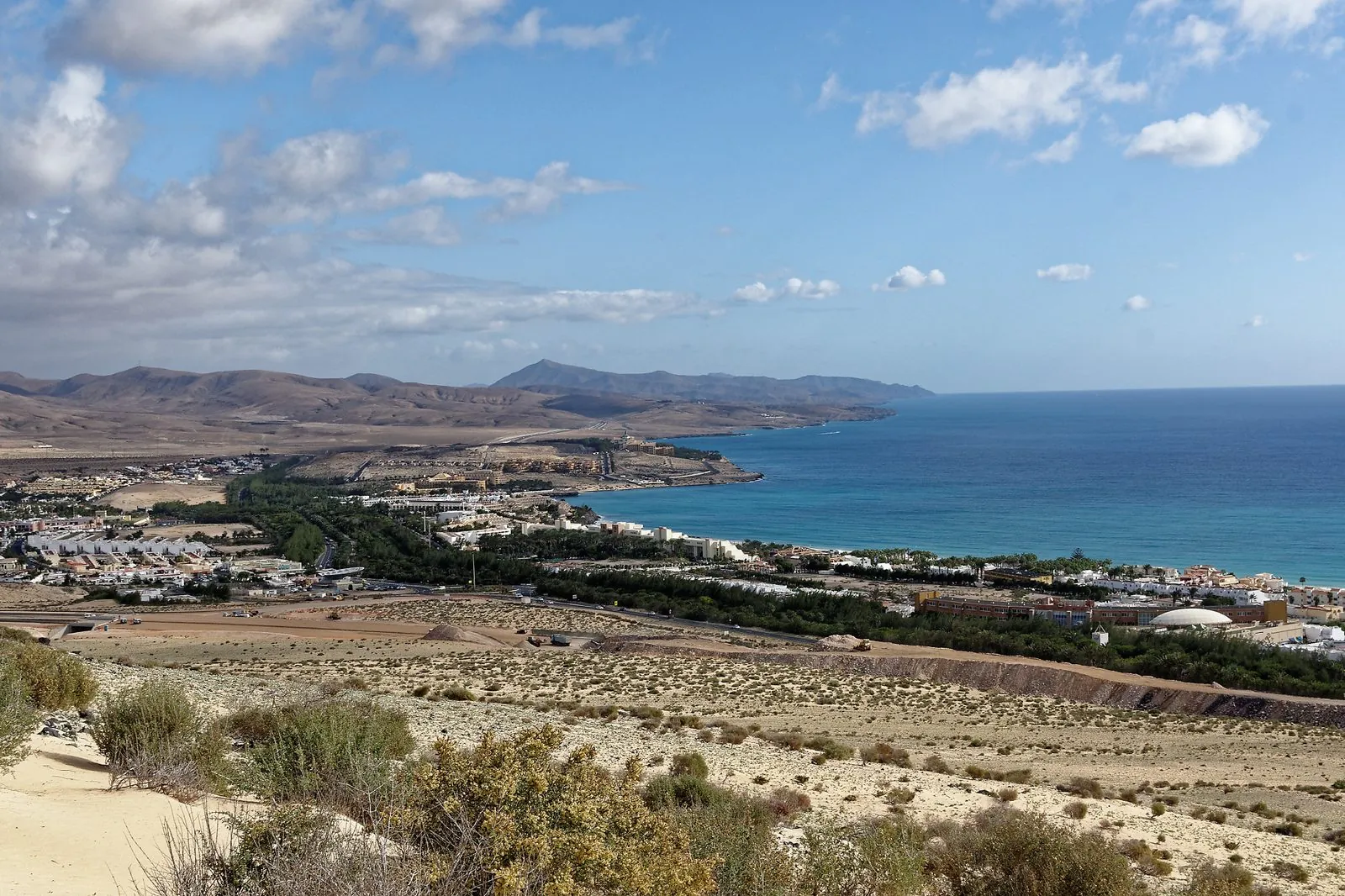
Photo: Martin Lemke · CC BY-SA 4.0 · Wikimedia Commons · scaled
The beach
Costa Calma's own beach is a broad, gently shelving band of pale sand and clear water, and it is only the beginning. Running south from the resort lies Playa de Sotavento — part of the vast Jandía beach system — a genuinely enormous tidal beach where, at low water, a shallow turquoise lagoon forms behind a sandbar. It is postcard-perfect and famous the world over. The sheer scale means that even in high season you can walk until the crowds thin to almost nothing.
The Jandía beaches face the open Atlantic and can have strong currents, undertow and powerful winds, and lifeguard cover is patchy along the wilder stretches. Take local advice, watch the flags, and be especially careful when the surf is up or the tide is turning.
Wind, waves and watersports
Sotavento is a world capital of windsurfing and kitesurfing, regularly hosting international competitions, and its shallow, flat lagoon is a dream for beginners and experts alike. Schools along the coast run lessons and hire out kit, so you can try it for the first time or chase the swell as a pro. Even if you never touch a board, watching dozens of sails and kites arc over the lagoon is a fine way to pass an afternoon. It all makes Costa Calma a natural home for an active, watersports-focused holiday.
Conditions vary hugely with the tide at Sotavento — the famous lagoon only forms at low water, and the wind is strongest in the afternoon. Check the tide and wind before you head out, whether you are sailing or just after the classic lagoon photo.
Where to stay and who it suits
Accommodation is mostly larger hotels — many all-inclusive — and apartment complexes, set back among gardens with easy beach access. Because things are spread out, it pays to pick a base that suits you: close to the beach for swimming and boards, or nearer a shopping centre for restaurants and shops.
Costa Calma suits windsurfers and kitesurfers, sun-worshippers and couples who want peace, space and a big beach rather than nightlife. Families enjoy the shallow, warm water, though the resort's spread-out layout means less of a compact "everything on the doorstep" feel than Caleta de Fuste up the coast. For a livelier southern base with a proper town and harbour, Morro Jable sits at the far tip of the peninsula. Compare bases in our where to stay guide.
Eating and nightlife
Dining centres on the resort's shopping complexes and hotels, with a mix of Canarian and Spanish cooking, Italian, international and holiday favourites. Seek out the local Majorero goat's cheese and the Canarian staples of papas arrugadas and mojo, part of the wider Canarian food scene. Nightlife is low-key — a relaxed dinner, a drink at a hotel bar or a quiet local spot — in keeping with the resort's calm character. Anyone after a lively night out is in the wrong place, and happily so.
Getting there and around
Fuerteventura's airport (code FUE), near the capital Puerto del Rosario, is roughly an hour's drive north and takes direct flights from across the UK, Ireland and northern Europe. Within Costa Calma things are spread out, so a short walk or taxi hop between your hotel, the beach and the shops is normal.
To get the most from the south — reaching Morro Jable, the wild Cofete coast or the northern dunes — hiring a car is close to essential, as buses are limited and distances long. For onward island-hopping, our ferries between the islands guide covers the crossings, including the Gran Canaria ferry from nearby Morro Jable.
Nearby
South down the peninsula lie Morro Jable and the huge Jandía beaches, and beyond them the raw, cliff-backed sands of Cofete for the adventurous. North, the road runs up the empty east coast toward the island's centre. Plan the rest of your trip with our Fuerteventura island guide and our best time to visit page.