Morro Jable is Fuerteventura at its southern tip — an old fishing town that grew into a relaxed resort, wrapped around a working harbour and backed by the huge golden beaches of Jandía. Unlike the purpose-built resorts up the coast, it has a real old quarter of narrow streets and Canarian houses at its heart, giving it more character and a stronger sense of place. From its harbour a ferry sails across the open Atlantic to Gran Canaria, and behind the town a rough mountain track leads over to Cofete, one of the wildest and most spectacular beaches in Spain. It is the natural base for the far south — and for anyone who wants their sunshine served with a side of adventure.
What it's like
Morro Jable divides into two: the old town, a cluster of white houses and small squares climbing up a ravine behind the harbour, and the newer resort strip of hotels and apartments spreading along the coast toward Costa Calma. The old core still feels like the fishing port it once was, with local bars and family restaurants, while the beachfront caters to holidaymakers with a long promenade and easy access to the sand. The mix gives Morro Jable more soul than the resorts further north, without losing the comforts you want on a beach holiday. It is the last town of any size on the peninsula, so it also feels like a proper destination rather than a stopover.
As everywhere on Fuerteventura, the trade winds blow, keeping the heat pleasant and the beaches breezy — glorious for walking, sometimes brisk for lying still.
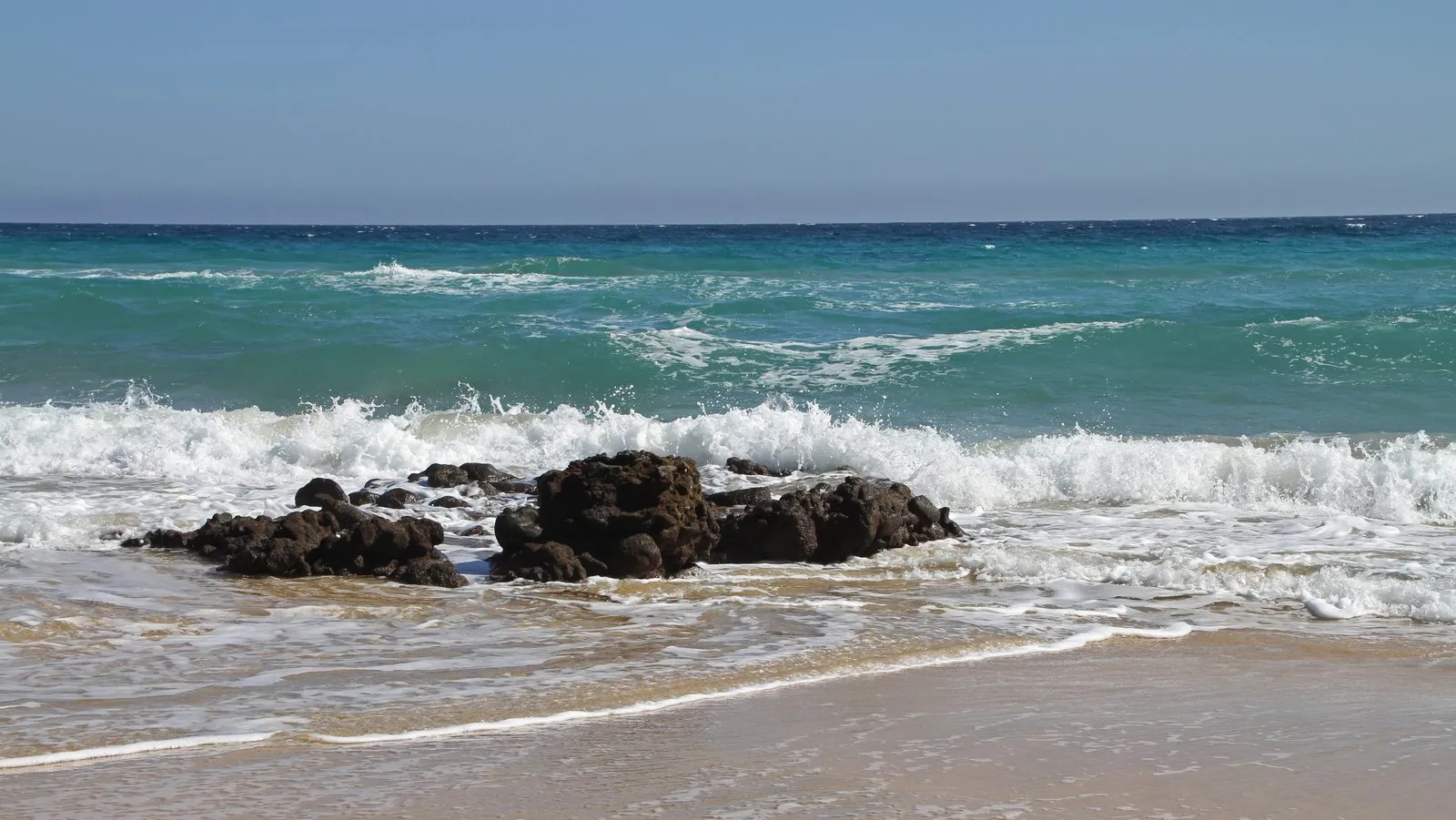
Photo: Gerd Eichmann · CC BY 4.0 · Wikimedia Commons · scaled
The beach
The town sits at the southern end of the vast Jandía beach system: a run of broad, pale-gold sand and clear, warm water stretching for kilometres up the coast. The beaches right by Morro Jable are wide, gently shelving and among the finest on the island, with a lighthouse standing sentinel near the harbour. There is space to walk for as long as you like, and the sheer scale keeps things feeling open even in high season.
The Jandía and Cofete beaches face the open Atlantic and can have powerful currents, undertow and strong winds, with limited lifeguard cover on the wilder stretches. Swim where others swim, watch the flags, and take particular care at exposed and unpatrolled beaches.
For something on another scale entirely, the raw sweep of Playa de Cofete lies over the mountains behind town — a several-kilometre wilderness of sand beneath dark cliffs, reached by a rough track and rewarding the effort with one of the most dramatic beach landscapes in the Canaries.
Where to stay and who it suits
Accommodation ranges from big beachfront hotels — many all-inclusive — along the resort strip to simpler apartments and guesthouses in and around the old town. Staying near the beach buys you sand and sea on the doorstep; staying up in the old quarter puts you among local life and the town's best little restaurants.
Morro Jable suits travellers who want a real town as well as a great beach, families drawn to the long shallow sands, and adventurers using it as a springboard to Cofete and the wild south. Those after a calmer, more spread-out base often choose Costa Calma just up the coast, while Corralejo in the north offers more nightlife. Compare them in our where to stay guide.
Eating and nightlife
The old town and harbour are the place for fresh fish and seafood straight off the boats, alongside Canarian and Spanish cooking; the resort strip adds the usual international and family-friendly choices. Look out for the island's prized Majorero goat's cheese and the Canarian staples of papas arrugadas and mojo, part of the wider Canarian food scene. Evenings are gentle — a harbourside dinner, a stroll along the promenade, a quiet drink — rather than a party. It is a place to wind down, not stay up.
Getting there and around
Morro Jable is at the far south of the island, roughly a 90-minute drive from Fuerteventura's airport (code FUE) near Puerto del Rosario, which takes direct flights from across the UK, Ireland and northern Europe. The town's real distinction is its harbour: a passenger ferry runs from here across to Gran Canaria, making a two-island trip or a day out genuinely feasible. Plan the crossing with our ferries between the islands guide, and let the route-planning site Viamo help piece the wider journey together.
The town is walkable, but reaching Cofete or exploring the peninsula means hiring a car — and the Cofete track in particular is rough and unsurfaced, so check your rental terms and drive with care, or take an organised excursion instead.
Nearby
Behind the town, the Jandía mountains and the wild coast at Cofete — with its lonely beach and curious Villa Winter — are the great local adventure. North along the peninsula lie Costa Calma and the windsurfers' lagoon at Sotavento. To plan the rest of your holiday, start with our Fuerteventura island guide.