Costa Teguise is Lanzarote's calm, purpose-built family resort — and one of the island's most quietly stylish. Laid out in the 1970s and 80s with a guiding hand from the artist César Manrique, it was designed from the start to blend into Lanzarote's volcanic landscape: low white buildings, generous green spaces and a series of sheltered, sandy beaches. It's relaxed, easy and reliable — a resort that suits families and windsurfers alike.
What it's like
Unlike resorts that grew up piecemeal, Costa Teguise was master-planned, and it shows in the sense of order and space. Manrique's influence gave it its consistent look — whitewashed, low-rise buildings with green paintwork, palm-lined avenues, and public sculpture and landscaping woven through the town. It sits on the east coast just north of the capital, Arrecife, and has a gentle, unhurried feel that appeals to repeat visitors.
The heart of the resort is the Pueblo Marinero, a pretty village-style square of white buildings — itself a Manrique design — ringed by bars and restaurants and home to a popular weekly evening market. It gives the resort a focal point and a bit of Canarian character amid the holiday amenities.
Being on the east coast, Costa Teguise catches more of the trade winds than the sheltered south, which keeps it fresh even at the height of summer and is exactly why windsurfers love it. The flip side is that beach days can be breezier here than in Playa Blanca — worth knowing if a totally still sunbathing spot is your priority. The sunshine, though, is every bit as reliable as elsewhere on this famously dry island.
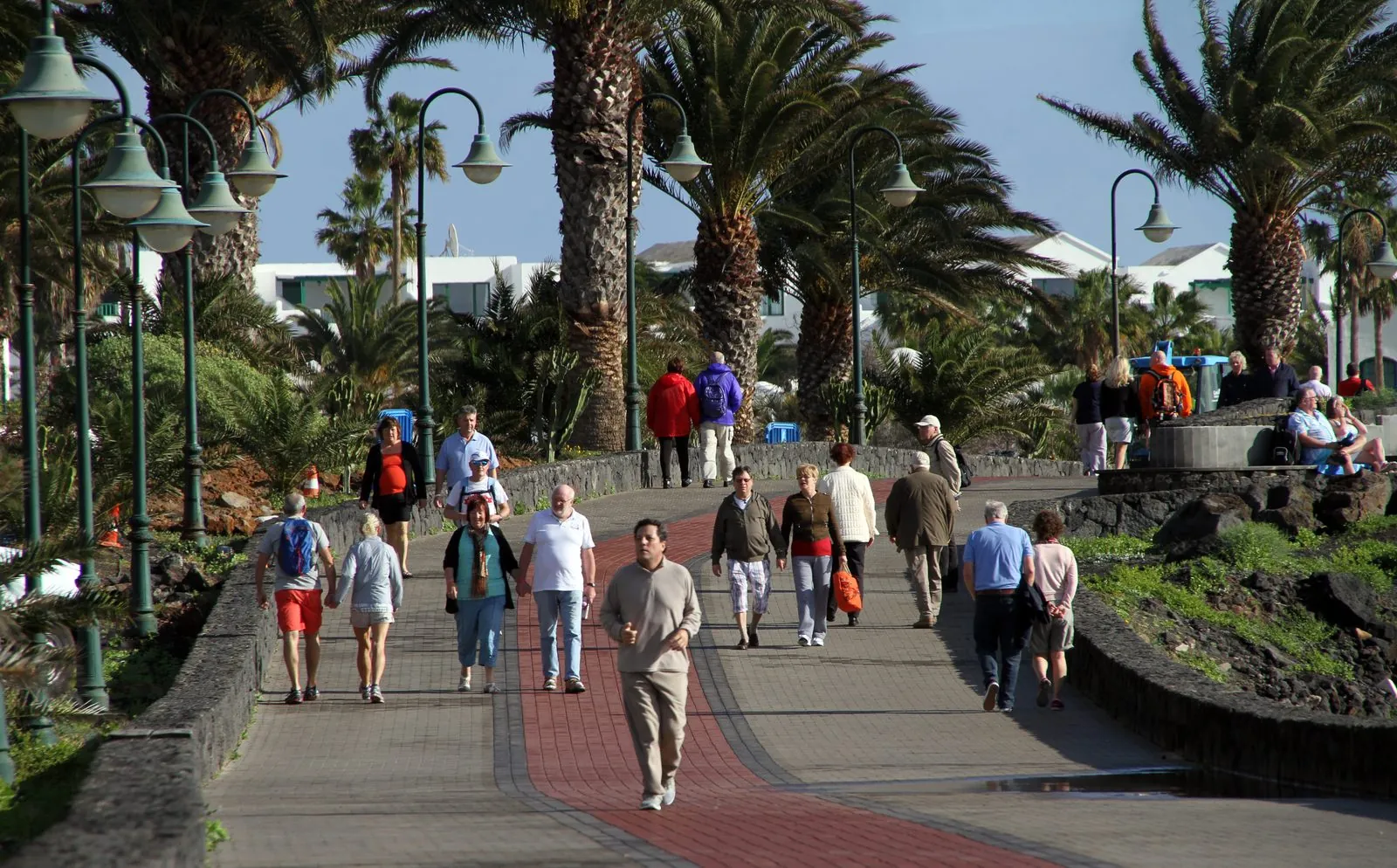
Photo: Gerd Eichmann · CC BY 4.0 · Wikimedia Commons · scaled
The beaches and windsurfing
Costa Teguise has a run of sheltered, golden-sand beaches. The main one, Playa de las Cucharas, is a broad, gently curving bay that's the resort's social hub — safe and sandy for families at one end, and famous for windsurfing at the other. Reliable trade winds and easy conditions have made it one of the best-known windsurfing spots in the Canaries, with schools on hand for lessons and hire. Smaller, quieter coves lie within easy walking distance for those who want calmer water. Browse more of the island's coast in our beaches section.
Playa de las Cucharas is a great place to learn to windsurf, with schools right on the sand — but the same wind that makes it fun can whip up the beach, so pack a windbreak if you're after a lazy sunbathing day.
For more on the water, see our guide to boat trips and watersports.
Things to do
Costa Teguise works well as a springboard for the island. Golfers have a course right on the edge of the resort, there's a small aquapark for younger children, and the calm bays are good for snorkelling and kayaking as well as windsurfing. The weekly evening market at the Pueblo Marinero is a pleasant browse, and the resort's flat, well-linked layout makes it easy to potter about on foot or by bike.
The bigger draws, though, are a short drive away. Lanzarote packs an extraordinary amount into a small island — volcanic national park, wine country, sea caves and cliff-top viewpoints — and Costa Teguise's central position on the east coast puts most of it within easy reach for a day out. A hire car pays for itself quickly here.
Where to stay and who it suits
Accommodation is a low-rise mix of family hotels, aparthotels and apartment complexes, much of it built around the beaches and the resort centre, and generally good value. The whole place is geared towards easy, self-contained family holidays.
Costa Teguise particularly suits families with children, couples wanting a quiet base, and windsurfers. It's calmer and more spread out than lively Puerto del Carmen, and closer to the capital than smart Playa Blanca in the south. Our where to stay guide compares the island's resorts.
Eating and evenings
Restaurants cluster around the Pueblo Marinero and the beaches, offering the usual broad holiday range — Canarian and Spanish, Italian, international and family favourites. Look out for local dishes like papas arrugadas with mojo and a glass of Lanzarote wine from the island's volcanic vineyards. Evenings are low-key and family-friendly — bars with live music, the weekly market at the Pueblo Marinero, and relaxed dinners rather than clubbing.
Getting there and around
Lanzarote Airport (ACE) is a short drive south, just beyond the capital Arrecife, so transfers are quick. The resort is compact and walkable, with taxis and local buses for longer trips, though a hire car is the best way to reach Timanfaya, the Manrique sites and the north of the island. Our getting around guide covers the details.
Nearby
The capital Arrecife, with its lagoon beach and lively town life, is just down the coast. Costa Teguise is also a good base for the island's must-see sights: the fire mountains of Timanfaya National Park, the old town of Teguise with its famous Sunday market, and the extraordinary art-and-nature sites created by César Manrique — the Jameos del Agua, the Cueva de los Verdes and his own cliff-top gardens. Start with our Lanzarote hub to plan the rest of your trip.