San Cristóbal de La Laguna is the most beautiful town in the Canaries — and one of the most surprising. Tenerife's elegant former capital, set on a green upland plain a short way inland from the coast, is a UNESCO World Heritage Site: a perfectly preserved grid of colourful colonial streets, grand mansions, churches and a buzzing university. It's not a beach resort at all, but it's the island's finest day out — and an atmospheric, cultured place to base yourself.
What it's like
La Laguna was founded at the end of the 15th century as the island's first capital, and its unfortified, orderly grid of streets became the template for countless colonial cities across the Americas — the very reason it earned its UNESCO listing. Wandering the historic centre today, you pass block after block of handsome townhouses in ochre, blue, green and terracotta, many with beautiful carved wooden balconies and cool interior patios.
What lifts it above a mere museum-piece is the energy. This is home to Tenerife's main university, so the streets hum with students, independent shops, cafés and a lively bar and tapas scene. Add a large pedestrianised centre and you have a town that's a pleasure to walk and genuinely alive. It sits higher and greener than the coast, so it's noticeably cooler — bring a layer.
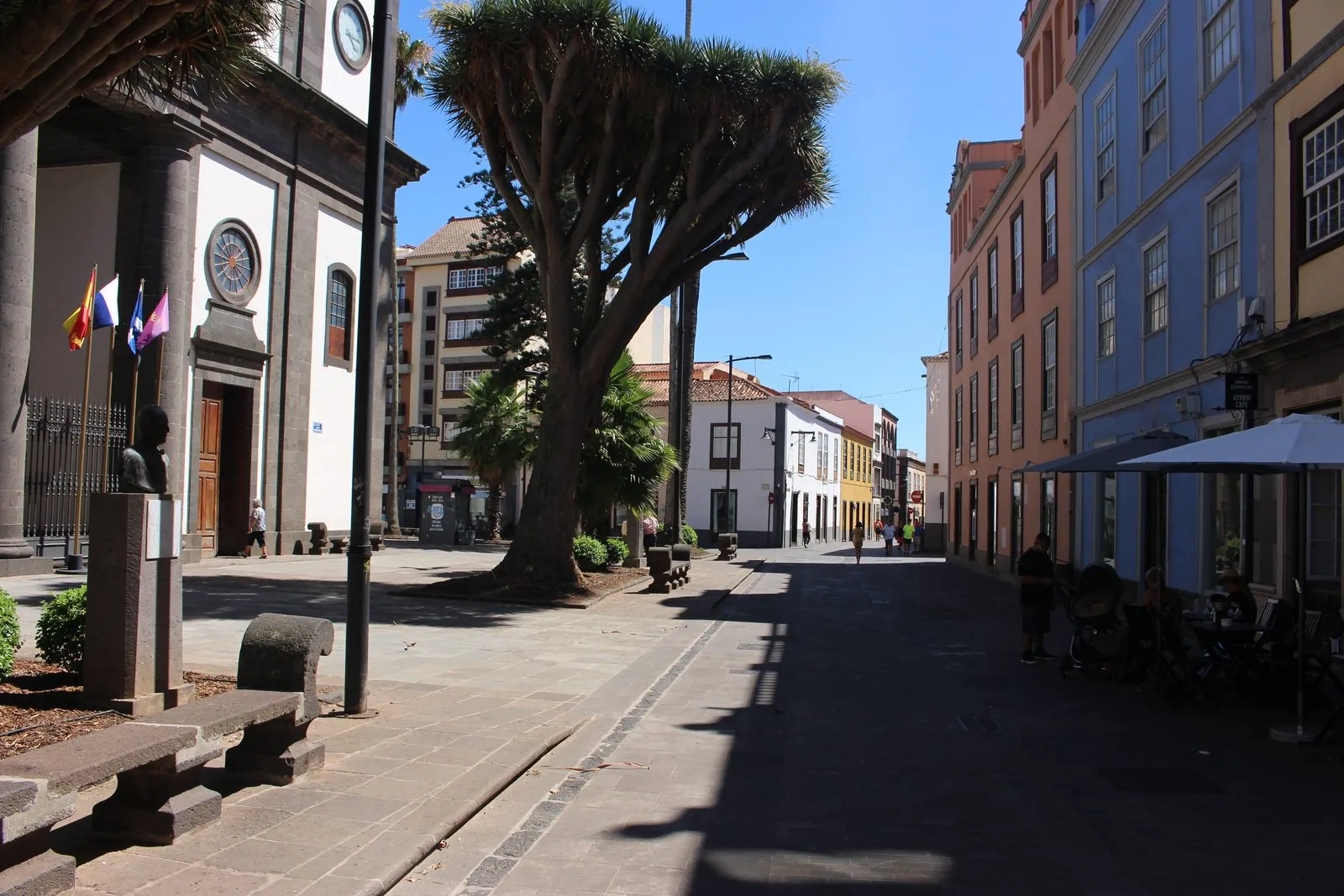
Photo: ArticCynda · CC BY-SA 4.0 · Wikimedia Commons · scaled
What to see
The joy of La Laguna is simply strolling the old town, but a few landmarks anchor a visit. The Cathedral and the older church of the Concepción, with its tower you can sometimes climb for rooftop views, are the main religious monuments. The grand former mansions — several open as museums or civic buildings — show off the wealth of the colonial era, and the main streets of Calle Obispo Rey Redondo (La Carrera) and Calle San Agustín are lined with the finest façades.
La Laguna is made for aimless wandering — leave the map in your pocket and simply follow the prettiest streets, ducking into courtyards and churches as you go. The grid layout means you'll never get truly lost.
It's also a rewarding place after dark, when students and locals fill the tapas bars. See more ideas across the island in our things to do section.
La Laguna is also a town of museums and quiet corners. There's a history and anthropology museum, a science and cosmos museum on the edge of town, and plenty of leafy plazas where you can sit with a coffee and watch the town go by. If your visit falls in late spring, the Corpus Christi celebrations see the streets carpeted with intricate patterns made from coloured volcanic sand and flower petals — one of the north's most striking traditions. At around 600 metres above sea level, the town is cooler and often cloudier than the coast, which keeps it green and comfortable even in high summer.
A base for the north
La Laguna's position, just above the capital and at the foot of the Anaga mountains, makes it a natural jumping-off point for exploring the greener, wilder half of Tenerife. From here you can strike out into the laurel forests of Anaga, drop down to the dramatic northern beaches, or follow the coast west to Puerto de la Cruz and the Orotava Valley. With the tram into Santa Cruz and good bus links, it's one of the easiest places on the island to explore without being tied to a hire car — though a car opens up the mountain villages beautifully.
Where to stay and who it suits
La Laguna isn't a conventional resort — there are no beaches and no sunbed strips — so accommodation is a smaller, more characterful mix of boutique hotels in restored old buildings, guesthouses and apartments. Staying here means trading beach-on-the-doorstep for atmosphere, culture and a real Canarian town.
It suits independent travellers, culture-lovers, foodies and anyone using a hire car to explore the north and the mountains rather than lie on a beach. Many visitors prefer to stay on the coast at Puerto de la Cruz and come to La Laguna for the day — an easy trip. Our where to stay guide weighs up the options across the island.
Eating and drinking
La Laguna is one of the best places to eat on Tenerife, thanks to its student energy and proximity to the fertile north. The old town is thick with tapas bars and guachinches, the latter being the traditional, informal family eateries of the surrounding wine country — cheap, cheerful and serving hearty home cooking with local Canary wine. This is the place to work through Canarian classics like papas arrugadas with mojo and grilled meats, ideally on a crawl from bar to bar.
Come hungry: an evening spent hopping between La Laguna's tapas bars is one of Tenerife's great, unshowy pleasures.
Getting there and around
La Laguna sits just inland from the capital Santa Cruz, and the two are linked by Tenerife's tram as well as frequent buses (guaguas), making car-free visits easy. Tenerife North Airport (TFN) is right beside the town, so it's often the first or last place visitors see. The historic centre is compact and made for walking. Our getting around guide covers the tram, buses and car hire.
Nearby
La Laguna is the gateway to the wild Anaga mountains, a UNESCO Biosphere of misty laurel forests, ridge-top villages and remote black-sand beaches like Benijo — one of the island's most dramatic corners. The green resort town of Puerto de la Cruz and the capital Santa Cruz are both close, and Teide is a longer drive up into the highlands. Start with our Tenerife hub to plan the rest of your trip.