A guachinche is the most authentic meal you can eat on Tenerife — a rough-and-ready, family-run eatery where a wine-growing household opens its doors, pours its own home-made wine, and serves a short, cheap menu of hearty island cooking. There are no frills, often no printed menu, and sometimes no sign at all. Find a real one and you'll eat like a local for a fraction of resort prices, surrounded by Canarian families doing exactly the same.
Guachinches are a tradition unique to Tenerife, concentrated in the green wine country of the north. They're seasonal, informal and gloriously unpretentious — and they're one of the great food experiences of the Canary Islands. Here's how they work and how to spot the real thing.
What is a guachinche?
The idea is simple and old: a wine-producing family with a surplus opens a room of their house, garage, garden or farm building to sell their own wine directly, and offers a little food to go with it. Historically they operated only for a few months after the harvest, until the family's wine ran out for the year — then they closed until the next vintage. That seasonal, "open till the wine's gone" spirit is still the heart of the tradition.
The food is deliberately limited — often just a handful of dishes chalked on a board or reeled off by whoever's cooking. Expect Canarian home cooking at its most honest:
- Carne fiesta — marinated fried pork, a guachinche signature.
- Costillas con papas y piña — pork ribs stewed with potatoes and corn on the cob.
- Papas arrugadas con mojo — the wrinkled salt potatoes with red and green sauces.
- Escaldón de gofio, garbanzas (chickpea stew), tortilla, grilled local cheese and simple salads.
And to drink? The family's own wine, usually young, cloudy, served cold in a small tumbler and astonishingly cheap. It won't always be polished, but it's the real, living product of the land you're sitting on.
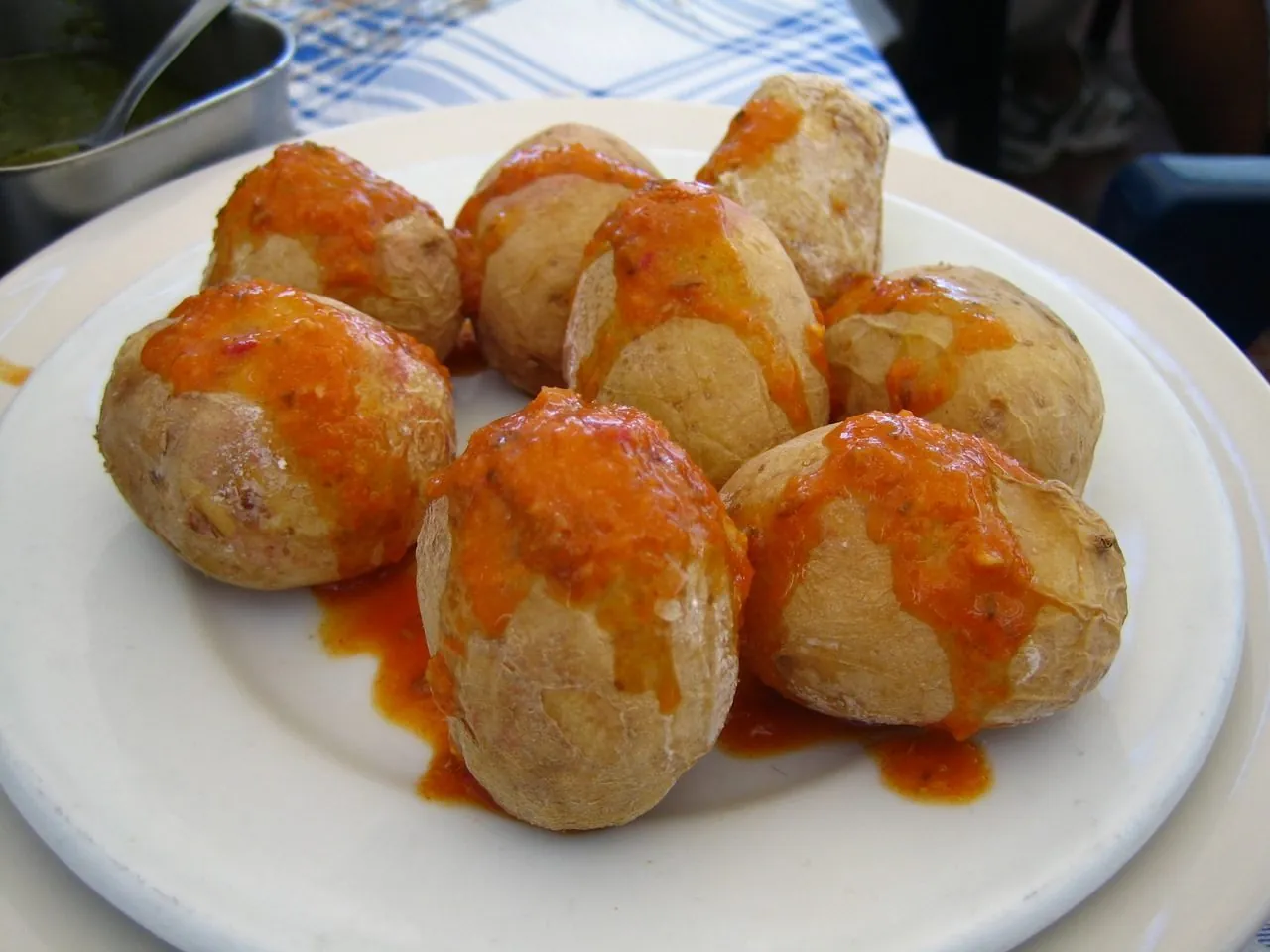
Photo: Fer.. · CC BY 2.0 · Wikimedia Commons · converted
The heartland: the Orotava and Acentejo wine country
Guachinches cluster in the lush volcanic hills of northern Tenerife — the Orotava Valley and the Acentejo district (around La Matanza and La Victoria), and the slopes above La Laguna. This is Tacoronte-Acentejo and Valle de la Orotava wine country, where vines grow in dark volcanic soil and the landscape is a world away from the sunny southern beaches. Winding up these back roads in search of a hand-painted "guachinche" sign is half the fun.
To understand what's in your glass — the island's volcanic Listán grapes and unusual vine-training — read our guide to Canary wine. The wine and the guachinche are two halves of the same story.
Go for lunch at a weekend, when more are open and the atmosphere is liveliest. Bring cash (most don't take cards), a relaxed attitude, and don't expect to book — you turn up, share a table, and see what's cooking.
Real guachinche or tourist imitation?
As the tradition became famous, plenty of ordinary restaurants started calling themselves "guachinches" to cash in. A true one has telltale signs — and knowing them saves you from an overpriced disappointment.
| The real thing | A tourist imitation |
|---|---|
| Serves the family's own home-made wine | Offers a full wine list of bottled labels |
| Very short menu, chalked up or spoken | Long printed, multilingual menu |
| In the northern hills, often part of a home or farm | On a beach promenade or tourist strip |
| Cash only, shared tables, minimal décor | Card machines, table service, "rustic" styling |
| Open seasonally / irregular hours | Open every day, all year, all day |
A helpful rule of thumb: officially, a genuine guachinche must sell its own wine and offer only a limited food menu. If the "guachinche" is on the south-coast seafront with a laminated menu in five languages, it's a restaurant wearing the name as costume. That doesn't make it bad — just not the real experience.
Because true guachinches are seasonal and informal, opening hours are unpredictable and many aren't on the usual booking apps. Check locally, ask around, and have a back-up plan — part of the charm is that you can't fully rely on them.
Tapas culture in the Canaries
Beyond guachinches, the wider Canarian way of eating is sociable and small-plate. In a tasca (traditional tavern) or a bar de tapas, you order a drink and graze on a spread of little dishes meant for sharing — perfect for trying lots of local flavours in one sitting. Classics to order include grilled or fried local fish, chunks of Canarian cheese with mojo, chickpea and meat stews, pulpo (octopus), croquettes, and of course papas arrugadas.
The rhythm is unhurried: locals eat late, linger long, and treat the meal as the evening's entertainment. Unlike parts of mainland Spain, tapas here usually aren't free with a drink, but they're generous and cheap, and they're the best way to eat broadly and cheaply while you explore.
Making the most of it
If you do one food outing on Tenerife, make it a lunch in the northern wine country: a real guachinche, a jug of the family's wine, a plate of carne fiesta and papas, and an afternoon with no rush in it. Pair it with a drive through the Orotava Valley or a stop in beautiful La Laguna, and you'll have seen a side of the island most visitors never reach. For the bigger picture of what to eat across the archipelago, browse our full guide to Canarian food.