Garajonay National Park is a living fragment of a lost world. Crowning the misty highlands at the centre of La Gomera, this UNESCO World Heritage site protects the finest laurel cloud forest — the ancient laurisilva — anywhere on Earth. Fed by trade winds that keep it perpetually damp and often wrapped in cloud, it's a dripping, green, primeval woodland of moss-hung laurels and giant ferns that once covered swathes of the Mediterranean millions of years ago. Cool, tranquil and deeply atmospheric, Garajonay is the reason walkers cross the water to La Gomera — and a magical antidote to the sun-and-sand Canaries.
A forest older than the ice ages
The laurisilva is a relic. This kind of subtropical evergreen cloud forest blanketed southern Europe and North Africa in the Tertiary period, long before the ice ages froze it out almost everywhere. It clung on across a few Atlantic islands, and nowhere better than here: Garajonay preserves the largest and best-conserved stretch left in the world, which is why UNESCO listed it in 1986. Beneath the canopy you'll find gnarled laurels, tree heath draped in lichen, ferns taller than a person and a hush broken only by dripping water and birdsong — including the island's endemic pigeons. Walking through it feels like stepping back tens of millions of years.
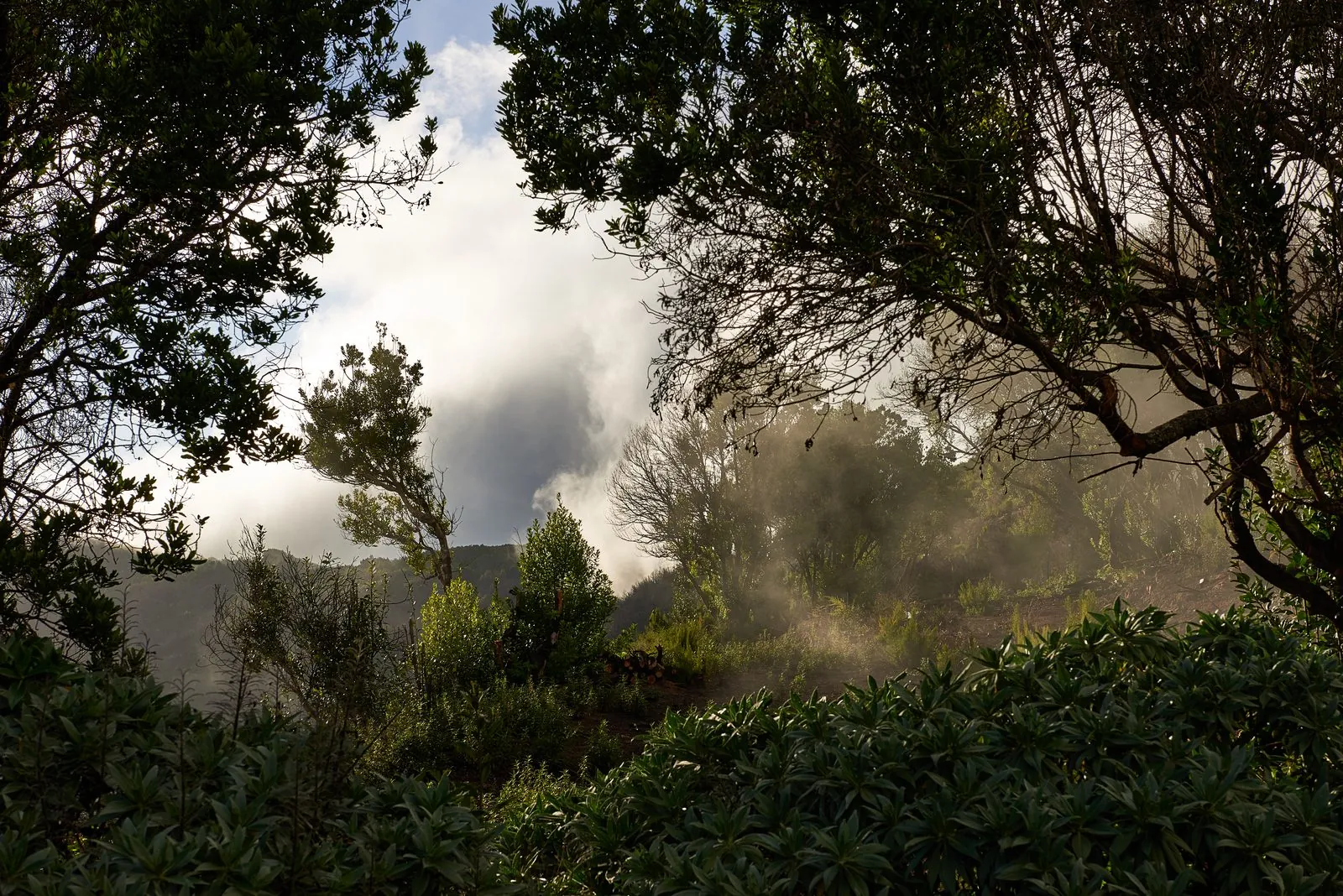
Photo: Stefan Koehler · CC BY-SA 4.0 · Wikimedia Commons · scaled
How the trade winds feed it
Garajonay exists because of the weather. The northeast trade winds push moist Atlantic air against La Gomera's high central plateau, where it cools and condenses into a near-permanent blanket of low cloud — the famous mar de nubes, or "sea of clouds." The forest literally combs moisture straight out of this mist, a process called horizontal rain, so the trees stay wet and the springs keep flowing even when little proper rain falls. It's a beautifully self-sustaining system, and it explains the sudden shift you feel as you climb from the sunny, arid coast into the cool green heart of the island.
Dress for the mountains, not the beach. The high forest is often 10–15°C cooler than the coast, frequently damp and misty, and the light under the canopy is dim even at midday. Bring a warm layer, a waterproof and shoes with grip — the paths get muddy and slippery — plus water and snacks, as facilities inside the park are limited.
Walking trails
Garajonay is made for walking, threaded with a superb network of waymarked hiking paths that range from short forest loops to long traverses linking the highland villages. Gentle, well-made trails such as those around Laguna Grande and El Cedro let anyone reasonably mobile experience the cloud forest without a hard climb, while more ambitious routes drop down through the ravines toward the coast. Several classic walks follow ancient paths once used by shepherds and villagers, and along the way you may hear silbo gomero, the astonishing whistled language locals developed to communicate across La Gomera's deep valleys — itself a UNESCO listed cultural treasure.
Alto de Garajonay
The park's high point, Alto de Garajonay at 1,487 m, is the summit of the whole island. A short, straightforward walk leads to the top, where — on one of the clear days when the cloud drops below you — the view is unforgettable: across the sea of cloud to the great cone of Mount Teide on Tenerife, and on exceptional days to La Palma and El Hierro as well. The little laguna Grande area nearby, with its visitor information and a restaurant, makes a natural base for exploring.
Respect the forest. This is a strictly protected national park and a fire-sensitive one — a devastating wildfire scarred part of it in 2012. Keep to marked paths, never light fires or barbecues, take all litter with you, and don't pick plants. Check current trail conditions at a visitor centre before setting off, as paths can close after storms.
Getting there: arriving by ferry
La Gomera has only a small airport with limited flights, so almost everyone arrives by ferry. Fast catamarans cross from Los Cristianos in southern Tenerife to San Sebastián de La Gomera in well under an hour, running several times a day — an easy, scenic hop that makes the island a very doable day trip, though it truly deserves an overnight or more. Check current timetables, fares and how to combine boats and buses in our guide to ferries between the islands, and note that sailings can be disrupted in rough winter seas.
From the port at San Sebastián, the park sits high in the island's centre, roughly 30–45 minutes' drive up winding mountain roads. A hire car — picked up on La Gomera or brought over on the ferry — gives you the freedom to reach the trailheads and viewpoints; the two main visitor centres (Juego de Bolas in the north and the information point at Laguna Grande) are the best places to orient yourself, grab a map and check which walks are open.
Climb from the sunny coast into a dripping, cloud-fed forest older than the ice ages — Garajonay is the Canaries' great green secret.
Pair the forest with the pretty capital of San Sebastián, the palm-filled Valle Gran Rey and a plate of the island's famous almogrote cheese spread, and you have one of the finest days out in the whole archipelago — a world away from the resorts, and all the better for it.