The Canary Islands are one of Europe's great walking destinations — and most visitors never realise it, picturing beaches rather than trails. Yet within a short drive of the resorts you can climb through pine forest to a volcanic summit, wander a misty laurel jungle that feels prehistoric, or edge along a knife-thin ridge above the clouds. Seven small islands pack in an astonishing range of landscapes, from Spain's highest peak to lush ravines and lava deserts, and the mild year-round climate means you can walk almost any month. If you like the outdoors, pack your boots.
Each island has its own character underfoot, so the best walk for you depends partly on where you're staying and partly on how much you want to sweat. Here's how the highlights stack up.
The best walks, island by island
Tenerife
- Mount Teide — the big one: Spain's highest peak at 3,715 m, ringed by a surreal national-park caldera of coloured rock. You can walk trails across the crater floor, or tackle the summit itself (which needs a free permit for the final cone). High, exposed and unforgettable.
- Anaga rural park — the green, ancient north-east: laurel "cloud forest", deep ravines and villages linked by old footpaths. Cool, shady and magical, a complete contrast to Teide.
- Masca — the dramatic gorge walk down from a cliff-hanging hamlet to the sea. Spectacular but demanding, and access can be regulated, so check the current rules before you plan it.
La Palma
- Caldera de Taburiente — an enormous forested crater on the "green island", laced with waterfalls and pine. The descent into the caldera and the ridge routes above it are classic La Palma days out.
La Gomera
- Garajonay national park — a UNESCO-listed laurisilva forest draped in moss and mist, with gentle-to-moderate trails through some of the oldest woodland in Europe. La Gomera is a walkers' island through and through.
Gran Canaria
- Roque Nublo — a short, rewarding climb to a giant volcanic monolith in the island's cool central highlands, with huge views (Teide floats on the horizon on clear days).
- Barranco de Guayadeque — a beautiful palm-filled ravine of cave houses and old terraces, with easy valley walks and a couple of cave restaurants for afterwards.
The other islands add more: Lanzarote and Fuerteventura offer volcanic and coastal walking (and Lanzarote's Timanfaya is best seen on official routes), while tiny El Hierro is a quiet, dramatic hiker's secret.
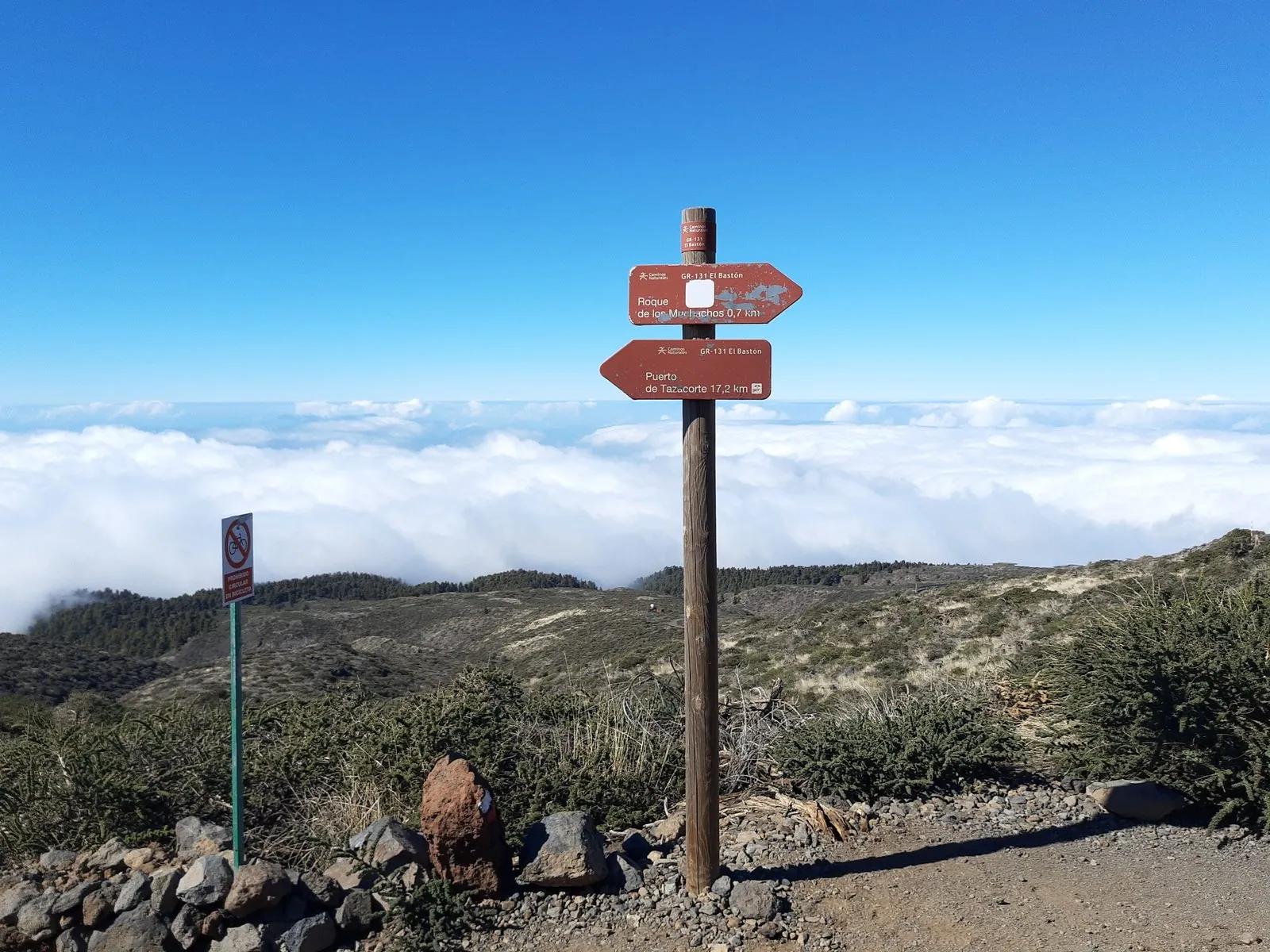
Photo: Gerda Arendt · CC BY-SA 4.0 · Wikimedia Commons · scaled
Difficulty and when to go
Trails run the full range. Forest and valley walks in Anaga, Garajonay and Guayadeque can be gentle half-days; Roque Nublo is short but steep near the top; Masca and the Teide summit are serious undertakings that reward preparation. Always check the length, ascent and current access rules for your chosen route.
Thanks to the subtropical climate you can walk year-round, but the season shapes the experience. Spring (roughly Feb–May) brings wildflowers and comfortable temperatures; autumn is warm and stable. High summer can be hot and hazy at altitude, and the north of each island is greener and cloudier than the sunny south. See our best time to visit guide for the seasonal detail.
Safety — take it seriously
The Canary sun and terrain catch people out. Carry more water than you think you need (there are few refill points on the trail), wear a hat and high-factor sun cream, and start early to avoid the midday heat. Proper walking shoes or boots with grip are essential — the volcanic rock and loose scree are unforgiving in trainers. At altitude on Teide it can be cold, windy and even icy while the coast is warm, so pack layers. Tell someone your route, check the weather (cloud can roll in fast in the north), and don't underestimate a "short" walk with big ascent.
Guided or self-guided?
Well-marked, popular trails like Roque Nublo, the Anaga forest loops and the Garajonay paths are easy to do self-guided with a good map or app and sensible preparation — this is how most independent walkers explore the islands. A hire car makes reaching the trailheads far easier, as many start high in the mountains where buses are sparse.
A guided walk is worth it for the tougher or trickier routes — the Teide summit, the Masca gorge, or the deeper Caldera de Taburiente descents — where local knowledge, transport logistics and safety cover genuinely add value. Guides also bring the geology, plants and history to life, which turns a good walk into a great one.
Island-hopper's tip: if hiking is your priority, base yourself on La Palma, La Gomera or the green north of Tenerife rather than the southern beach resorts — you'll be far closer to the best trails. Our island-hopping itineraries can help you combine a couple of walkers' islands in one trip.
From a lunar volcano summit to a moss-hung ancient forest, the Canaries offer a lifetime of walking in a week's flight range — go prepared, respect the sun and the rock, and you'll discover the islands most beach visitors never see. Start with an island guide or browse more things to do to build your trip.