The best places to eat in Fuerteventura are the goat and cheese kitchens of the inland villages, the fish restaurants on the working harbours from El Cotillo to Puertito de la Cruz, and a short list of good tables inside the resorts, led by one restaurant in Costa Calma that the Michelin Guide has picked out. This is not an island of famous chefs. It is an island where plain food, done well, is easy to find once you know which part of the map to drive to.
One number sets the scene. When we checked the Michelin Guide's Canary Islands selection in November 2026, it listed eight restaurants on Lanzarote, a short ferry ride to the north, and exactly one on Fuerteventura. That is not a verdict on the food. It reflects an island that is long, thinly populated and spread out, with its tourism split between two ends and its cooking rooted in farms and fishing villages rather than in ambitious dining rooms.
So this page works by area. For what to order — the Majorero cheese, kid goat, the fish names and the gofio — read our page on Fuerteventura's own dishes; here the question is where to sit down.
Plan around the distances
Fuerteventura is about a hundred kilometres from end to end, and the drive from Corralejo in the north to Morro Jable in the south takes well over an hour. That shapes everything. If you are staying in the north, the El Cotillo harbour and the inland villages are easy lunches, while the far south is a full day out. If you are in the Jandía resorts, Puertito de la Cruz and Cofete are on your doorstep, but Betancuria is a long drive over the mountains.
The practical answer is to pair each meal with a day's sightseeing rather than driving across the island for dinner. Lunch is the main meal in the villages anyway, and many inland kitchens are geared to the midday trade. A hire car makes this possible; the island's buses link the towns but reach very few of the places on this page at the hours you would want.
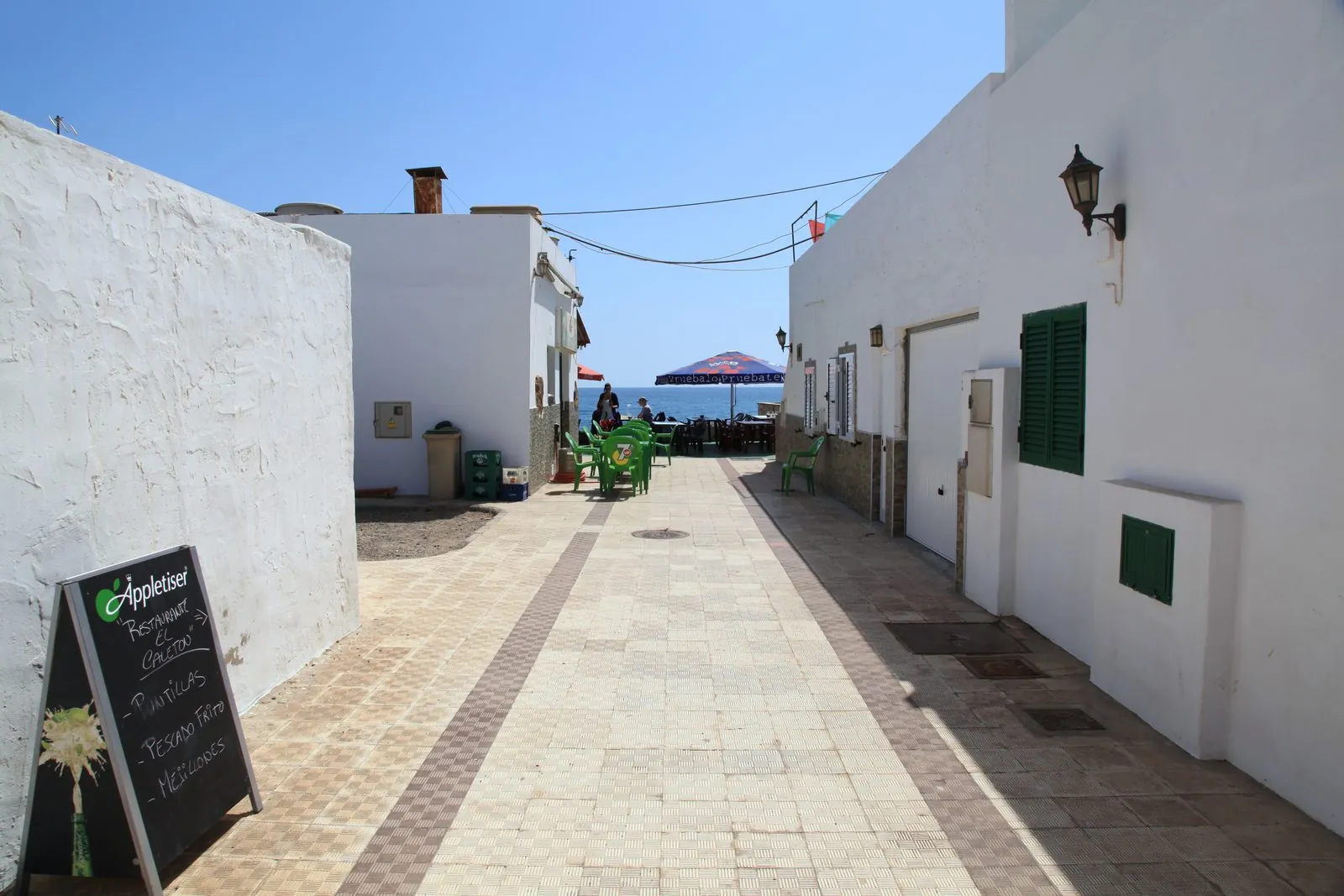
Photo: Frank Vincentz · CC BY-SA 3.0 · Wikimedia Commons · scaled
Corralejo: the old harbour, not the main street
Corralejo has more restaurants than anywhere else on the island, and most of them line the main avenue and the streets running down to the sea. Many are aimed squarely at visitors and serve the same international menu. The part worth seeking out is the old fishing quarter around the harbour and the small beaches behind it, where a few restaurants still grill the day's catch and the tables face the water and the island of Lobos.
Lobos itself is a lunch option of a different kind. There is a small seasonal restaurant by the fishermen's huts on the island, famous for simple fish and paella, but it does not always open and space is limited. Our page on Isla de Lobos covers the ferry and the visitor permit; take a picnic as insurance and treat a table there as a bonus.
El Cotillo and Lajares: the north-west coast
On the north-west coast, El Cotillo is the island's best-loved fish lunch. The restaurants sit around and above the old harbour, some on terraces over the rocks, and the evening light from the west makes this one of the few places on the island where dinner with a sunset is the point. Fish is sold by weight, the menus are short, and the better places tell you what came in that day without being asked.
Inland, the village of Lajares has grown into the surfers' and remote workers' village of the north, with cafés, bakeries and casual restaurants that do brunch, bowls and pizza rather than goat stew. It is the place for a good breakfast on the way to the beach, and the one part of the island where vegetarian options are easy.
The interior: Betancuria and the goat villages
The island's own cooking lives inland. Betancuria, the old capital in a valley among the hills, has a cluster of restaurants serving goat stew, roast kid, Majorero cheese grilled with mojo and the big potajes, mostly to coach parties and day-trippers at lunchtime. Because the village lives on that midday trade, it empties in the afternoon, and kitchens close earlier than you might expect: arrive before two rather than at four.
The quieter alternatives are close by. The palm valley of Vega de Río Palmas, just south of Betancuria, has a couple of roadside restaurants that feel more local, and the towns of Antigua, La Oliva and Pájara all have bars and family restaurants around their churches where the weekday menú del día is the cheapest proper lunch on the island. Look for a blackboard rather than a laminated menu, and for goat on it.
Make Betancuria lunch, not dinner. The drive over the mountain from either coast is the best on the island in daylight and slow after dark, and the village restaurants are built around a lunchtime crowd. Eat there at one, walk round the old church, and drive back while the light is good.
The west coast and the east-coast harbours
At Ajuy, below the black cliffs on the west coast, a few simple restaurants serve grilled fish to people coming up from the caves, and that is exactly the right meal for the place. Expect plastic chairs and good fish, and expect it to be busy around one.
The east coast has two quieter options. Las Playitas, a whitewashed fishing village near Gran Tarajal, has a short seafront of fish restaurants that serve mostly locals and visitors from the nearby hotels, and Gran Tarajal itself is a working town where the restaurants are priced for residents. Puerto del Rosario, the capital, is not pretty, but it is where islanders eat during the week, and the bars near the port and the town centre are the cheapest reliable meals on Fuerteventura.
Costa Calma: the one Michelin-listed table
The restaurant the inspectors chose is El Pellizco by Rigoberto Almeida, just off the long beach at Costa Calma. The chef is Cuban with Canary roots — his grandparents were from Tenerife — and the cooking blends Caribbean memories with island produce. When we checked in November 2026, the Michelin entry described two set menus only, named La Majorera and La Guantanamera, served on a large white terrace.
It is the obvious special-occasion dinner if you are staying anywhere in the south of the island, and the only one on Fuerteventura with that outside recognition. Book ahead and check the current days of service when you do. For context on how rare a listing is here, see the archipelago's Michelin restaurants, almost all of which are on Tenerife and Gran Canaria.
Morro Jable and Puertito de la Cruz: the far south
Morro Jable has two personalities. The long hotel strip along the beach towards Jandía is the usual resort mix, while the old town above the harbour, with its fishing port at the end of the bay, is where the fish restaurants are and where the town still feels Canarian. Walk past the first row of promenade restaurants and up into the streets behind.
Beyond Morro Jable the road turns into a dirt track that runs out to the lighthouse at the island's tip. Just before it lies the fishing hamlet of Puertito de la Cruz, a few houses and a handful of fish restaurants that are the reason many people make the drive; a plate of grilled fish there, with the Atlantic a few metres away, is the picture many visitors take home. Our page on Punta de Jandía and Puertito de la Cruz describes the track, and the turn-off to Cofete, where a single restaurant serves the beach.
Read your hire contract before the Jandía track. The road to Puertito de la Cruz is unpaved, and many rental agreements exclude damage on dirt roads from the insurance, however much excess cover you have bought. Check the small print, or book a jeep tour instead; our guide to car hire excess insurance explains what is usually excluded.
Caleta de Fuste and the resort promenades
Caleta de Fuste, near the airport, and the Jandía strip are mostly hotel country, with a lot of half-board guests and restaurants that cater for the evenings they are not eating in. The same rules hold as on every Canary island: a short menu, fish on ice rather than in photographs, a list of daily specials, and a few Spanish-speaking tables are good signs. Caleta's marina is the best part of the resort to look, and a short drive to the fishing villages up and down the east coast usually beats the promenade.
Timing helps too. Lunch in local restaurants runs from about 13:00 to 15:30 and is the main event; dinner starts late by British standards, and some village places do not open in the evening at all. Many family restaurants close one day a week, often Monday, and prices for fish sold by weight should be checked before it goes on the grill. Our page on holiday prices keeps a wider set of numbers than any restaurant list.
Where to eat on Fuerteventura, in short
Take one long goat lunch inland, ideally in Betancuria or one of the villages around it; one fish lunch on a harbour, at El Cotillo in the north or Puertito de la Cruz in the south; and one dinner at El Pellizco if your budget and your base allow. Fill the gaps with a menú del día in a working town and breakfast in Lajares.
That is a short list for a big island, and that is the honest shape of Fuerteventura's food scene: a handful of very good things, spread across a long, windy map. The island guide covers what to do on the drives in between.