Betancuria is the prettiest, most peaceful corner of Fuerteventura — a tiny whitewashed village cradled in the mountains that was once the island's capital. Founded in 1404 and named after the Norman conqueror Jean de Béthencourt, it sits inland in a green fold of volcanic hills, a world away from the wind-blasted beaches and dunes most visitors come for. There's no nightlife and no resort here, just cobbled lanes, a beautiful old church, a couple of small museums and a slow, sun-warmed calm that makes it the loveliest half-day out on the island.
What it's like
After the flat, sandy expanses around Corralejo and the coast, the drive up into the Betancuria massif is a surprise: winding roads, terraced hillsides, palm-filled ravines and, in a good year, unexpected patches of green. The village itself is barely more than a few streets of low, dazzling-white houses with green and blue shutters, dotted with craft shops, art galleries and a handful of restaurants serving hearty Canarian food. It feels less like a tourist attraction and more like a village that has quietly kept its dignity for six centuries.
Because it lies at altitude and sheltered inland, Betancuria is often a touch cooler and calmer than the coast — a welcome relief on a blustery Fuerteventura afternoon. Wander without a plan: the pleasure here is simply strolling the lanes, poking into workshops and finding a shady terrace for a long lunch.
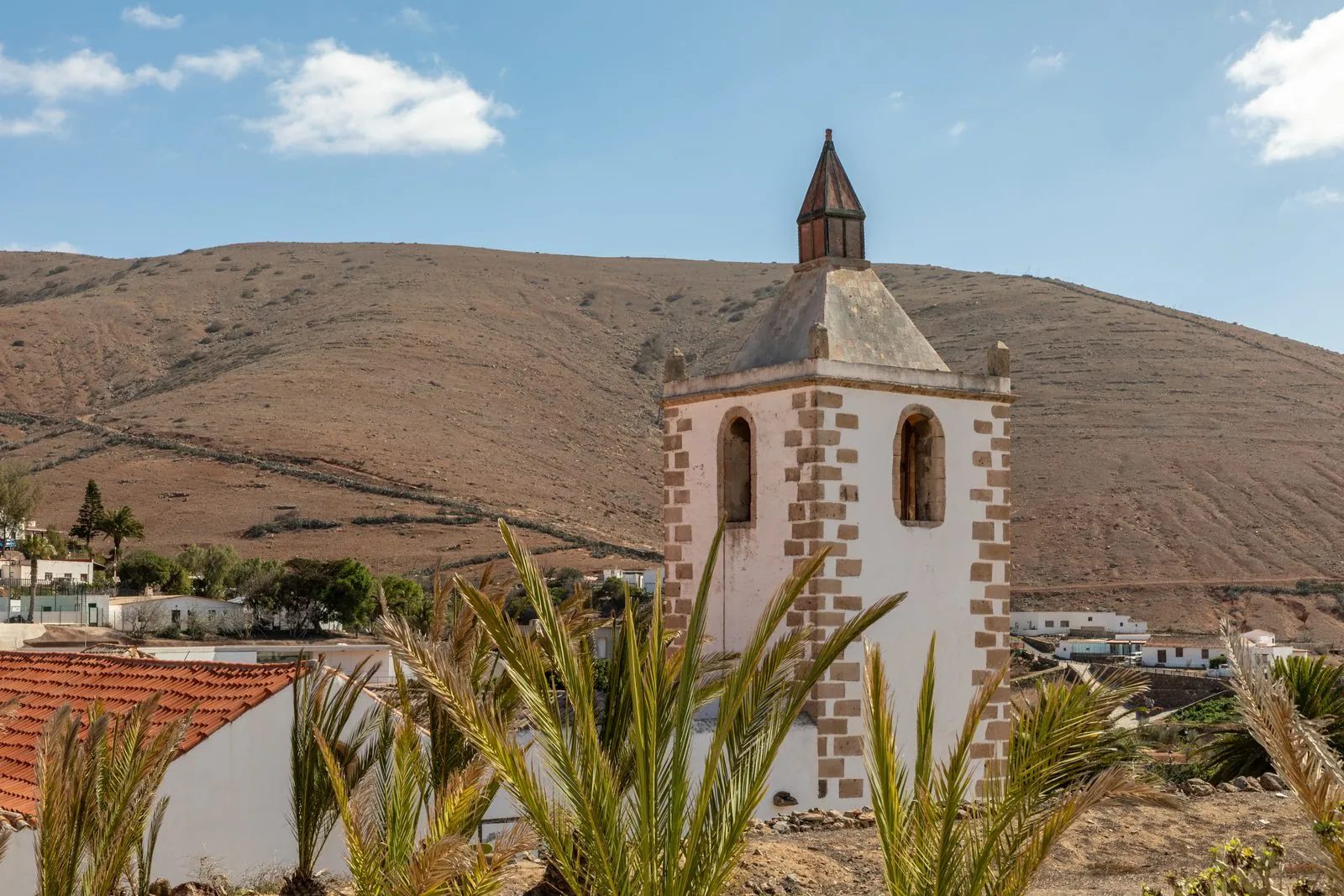
Photo: Dietmar Rabich · CC BY-SA 4.0 · Wikimedia Commons · scaled
What to see
The church of Santa María
The heart of the village is the Iglesia de Santa María de Betancuria, a handsome church rebuilt in the 17th century after Berber pirates sacked the original — a reminder that this "safe" inland capital was chosen precisely to hide from raiders, though even here they eventually reached. Step inside for a richly carved wooden ceiling, a gilded altarpiece and a hushed, cool interior. A small admission usually covers the church and its little religious-art museum; check locally for current opening times, as hours are limited.
The museums
For such a small place, Betancuria packs in a surprising amount of history. The Casa Santa María and the archaeology museum tell the story of the island's original inhabitants, the Majos (or Maho) people, and of the Norman conquest. Displays are modest but genuinely interesting, and they turn a pretty village stroll into a proper sense of how deep Fuerteventura's past runs.
Combine the village with a mountain drive. The road between Betancuria and Pájara passes the famous Mirador de Morro Velosa, a viewpoint designed by Canarian artist-architect César Manrique with sweeping views over the badlands — a natural stop on any tour of the island's interior.
The giant statues of Guize and Ayose
A short drive from the village, on the mountain pass, stand two enormous bronze figures gazing out over the valley: Guize and Ayose, the two aboriginal kings who once ruled the island's northern and southern halves before the conquest. Larger than life and starkly dramatic against the bare hills, they're one of Fuerteventura's most photographed sights and a favourite roadside stop. There's a small viewpoint and parking, so it's easy to pull in for a few minutes and a photo.
Nearby you may also hear of Idafe and other echoes of the island's pre-Hispanic heritage — the whole Betancuria area is steeped in the world of the people who lived here long before Europeans arrived.
Practical tips
Betancuria is very much a daytime destination — most shops, museums and restaurants keep short hours and things wind down by late afternoon, so aim to arrive mid-morning and enjoy a leisurely lunch. Wear comfortable shoes for the cobbles, bring a light layer as the hills can be breezy, and don't expect big-resort facilities: this is a place to slow down, not to shop or party.
You'll really want your own transport. Public buses to Betancuria are infrequent and awkward, so the practical way to visit is by hire car or on an organised island tour. The mountain roads are well surfaced but winding, with plenty of bends and viewpoints — take it slowly and enjoy the scenery.
Nearby
Betancuria sits neatly on a circular tour of Fuerteventura's interior. To the south, the village of Pájara has its own lovely church with a curiously Aztec-looking carved doorway; to the north-west, the sleepy old fishing port of Ajuy has a dramatic black-sand beach and sea caves. Many visitors thread Betancuria into a bigger loop that includes the mountain viewpoints and a coastal stop, making a full and varied day out.
Base yourself in the lively dunes-and-surf town of Corralejo in the north and the drive down is an easy morning's outing; from the resorts of the south it's a longer but rewarding run inland. Either way, Betancuria offers a completely different side of the island from the beaches — proof that there's far more to Fuerteventura than sand and sunshine.
Come for the beaches, but give Betancuria an afternoon — it's the quiet historic soul of Fuerteventura, and the drive alone is worth it.
Pair it with a day of sightseeing or slot it into a slower, exploring kind of holiday. For many visitors, this hushed little white village turns out to be the surprise highlight of the trip — the moment Fuerteventura stops being just a beach and starts telling its story.