La Oliva is the historic heart of northern Fuerteventura — a low, sun-bleached old town of dark-stone churches and grand colonial houses, set on the wide volcanic plains that roll towards the surf villages and dunes of the far north. Once the island's seat of power, it wears its history in a handful of dignified monuments rather than crowds and souvenir shops, and makes a quiet, characterful counterpoint to the beaches a short drive away.
Most visitors to this corner of Fuerteventura come for the sand and surf, but La Oliva is where you feel the island's older story — the great houses of its colonial rulers, its whitewashed churches, and the flat, windswept farmland that shaped island life long before tourism arrived.
What it's like
La Oliva sits inland on the broad northern plain, a spread-out town of single-storey houses in a landscape of ochre earth, dry-stone walls and distant volcanic cones. It's arid and elemental — Fuerteventura is the driest and flattest of the main islands — and the town has a calm, timeworn feel, more workaday Canarian than tourist-facing. There are no beaches here and little in the way of resort trappings; the appeal is history, atmosphere and a base among real island life.
What makes La Oliva stand out is its cluster of historic buildings, unusually grand for such a small place. From the late 17th century it was the residence of the island's military governors, and that heritage still defines it.
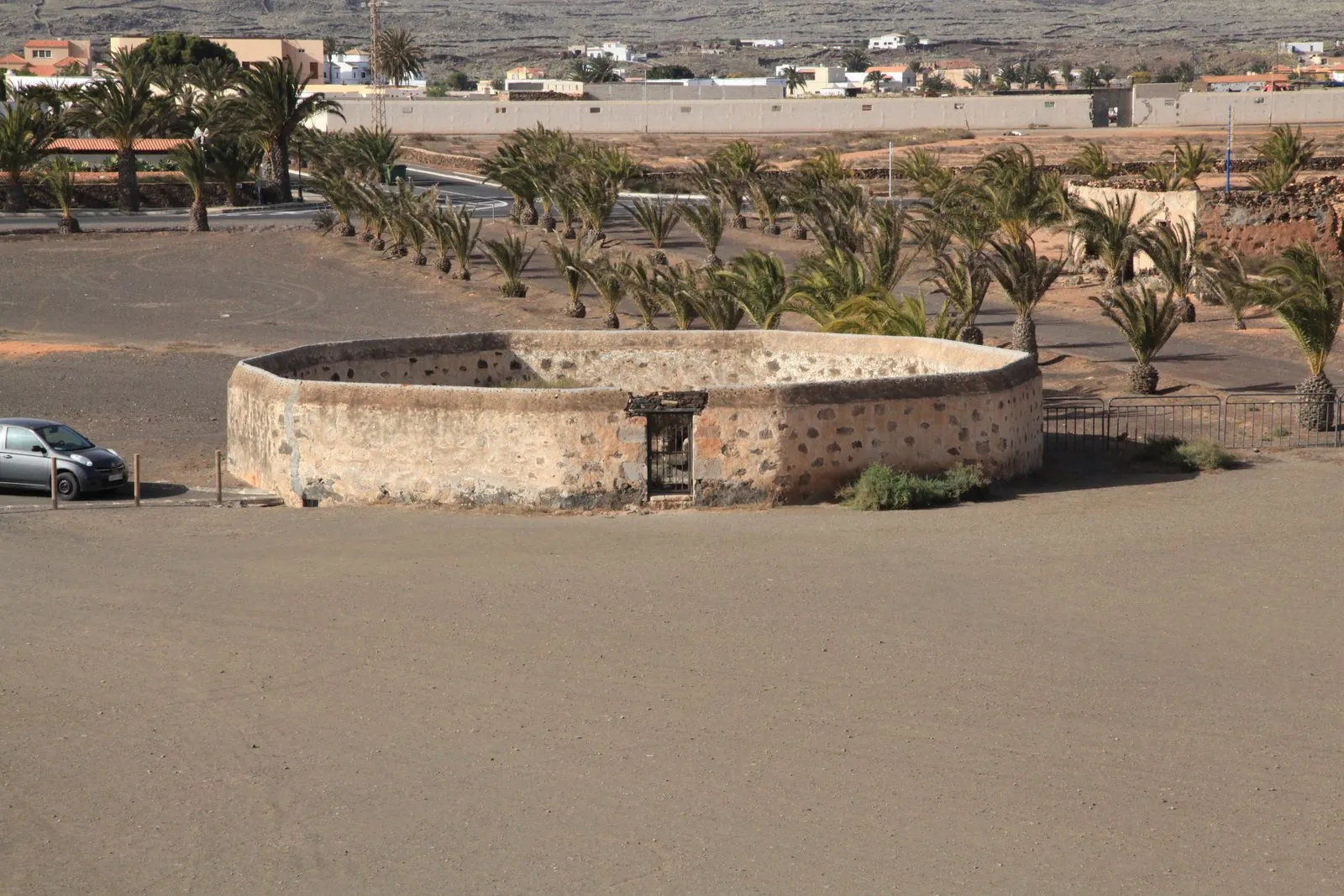
Photo: Frank Vincentz · CC BY-SA 3.0 · Wikimedia Commons · scaled
The historic sights
The town's landmark is the Casa de los Coroneles (House of the Colonels), a large 18th-century mansion that was home to the military commanders who effectively ruled Fuerteventura for generations. With its battlemented façade, carved wooden balconies and many windows, it's one of the finest examples of Canarian colonial architecture and now serves as a cultural and exhibition space — check current opening days locally before visiting.
Nearby stands the Iglesia de Nuestra Señora de la Candelaria, a handsome 18th-century church of dark volcanic stone with a striking bell tower, holding notable religious art. La Oliva is also home to art galleries and a former grain store, the Casa del Coronel's surrounding buildings, and the nearby Centro de Arte Canario. Together they make the town a rewarding half-day of history and culture.
Opening hours for La Oliva's historic houses and galleries can be limited and seasonal. Check locally or with the island tourist office before making a special trip, and treat any times you read online as a guide, not a guarantee.
Where to stay and who it suits
La Oliva itself is low-key on accommodation — a scattering of guesthouses and rural cottages rather than resort hotels. Most visitors stay on the coast and drive in, or choose one of the nearby northern villages. It suits independent travellers who want history and authenticity, and those using the north as a base for beaches and surf while enjoying a quieter, more local setting.
The obvious beach base nearby is the lively resort of Corralejo, with its great dunes and buzzy seafront, while the bohemian fishing village of El Cotillo offers gorgeous lagoons and a laid-back scene on the west coast. Our where to stay guide helps you pick.
Eating and nightlife
Food around La Oliva is honest, rural Canarian cooking. This is prime country for Majorero goat's cheese — Fuerteventura's celebrated, protected cheese, made from the milk of the island's hardy goats and worth seeking out young, semi-cured or aged; read more in our Canary cheese guide. Village restaurants serve grilled goat, fresh fish from the coast, hearty stews and papas arrugadas with mojo. Nightlife is minimal here — evenings are about a good dinner — with the bars and buzz found over in Corralejo.
Getting there and around
La Oliva lies in the north of Fuerteventura, a short drive inland from the coast — roughly 15 minutes from Corralejo and well under an hour from the airport near Puerto del Rosario. A hire car is the practical way to explore this spread-out corner of the island and to combine the town with the northern beaches and surf spots; see our guides to car hire and getting around the islands. Buses (guaguas) connect the main towns but a car gives you the freedom the north deserves.
Nearby
La Oliva sits at the centre of the island's best northern day trips. Just up the road is the surf-and-craft village of Lajares, and beyond it El Cotillo with its turquoise lagoons and wild west-coast beaches. To the north-east, Corralejo spreads along the coast beside the vast Grandes Playas dunes, with boat trips out to the little island of Isla de Lobos. Start with our Fuerteventura hub to weave the history of La Oliva into a beach-and-surf trip.