Playa de Ajuy is Fuerteventura's most dramatic black-sand beach — a wild scoop of dark volcanic sand below a tiny whitewashed fishing village on the island's rugged west coast. Framed by towering ochre cliffs and pounded by big Atlantic surf, it's a place of raw power and real character, and the gateway to the celebrated Ajuy sea caves carved into the headland alongside. If you want to feel the untamed side of Fuerteventura, this is the beach that delivers.
How to get there
Ajuy lies on the west coast, reached by a winding road down from the historic interior near Pájara. A hire car is the practical way to get here: the road drops through arid, folded hills before arriving at the small village clustered above the beach, where there's parking near the front. The drive pairs beautifully with a visit to the old island capital region — many people combine Ajuy with Betancuria, the enchanting historic town in the mountains inland. Take the bends slowly; the reward is one of the island's most atmospheric corners.
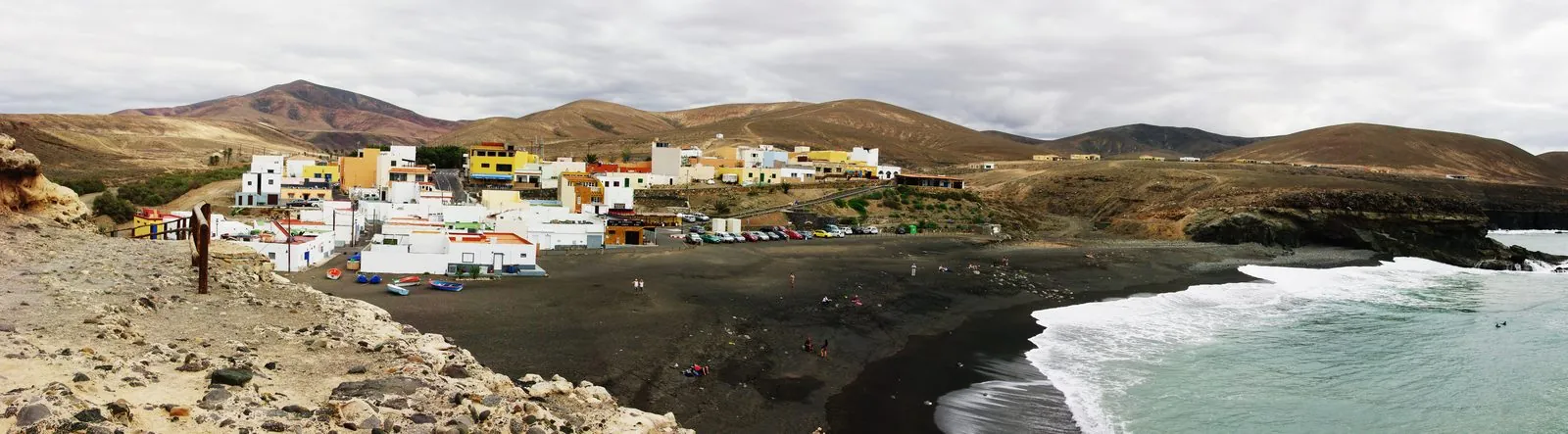
Photo: Balou46 · CC BY-SA 3.0 · Wikimedia Commons · scaled
What it's like
Ajuy is all about drama. The sand is deep charcoal-black, the cliffs behind rise in bands of ochre and cream, and the ocean rolls in with real force, sending spray up the dark shore. The little village of white houses and fresh-fish restaurants gives it a genuine, lived-in Canarian feel, far removed from the resort strips. A signposted coastal path leads from the north end of the beach up and around to the famous Cuevas de Ajuy — vast sea caves eroded into some of the oldest exposed rock in the Canaries, well worth the short, scenic walk.
Stand on the black sand as the Atlantic thunders in and you understand why the old islanders spoke of this coast with such respect.
Swimming and safety
This is emphatically not a gentle swimming beach. Ajuy faces the open Atlantic head-on, and the combination of powerful waves, shore break and currents makes the water genuinely hazardous much of the time. It's a place to admire the surf, paddle at the very edge on calm days with great care, and take photographs — not to swim out. There are no lifeguards to rely on, and the sea can turn quickly.
Take the sea seriously here. Big waves, strong shore break and currents make swimming dangerous on most days, and there are usually no lifeguards. Stay well back from the water's edge when the surf is up, never turn your back on the ocean, and keep children close.
Facilities
Ajuy is a village beach, not a resort, so keep expectations modest and you'll enjoy it all the more. The main draw beyond the sand and caves is the cluster of seafood restaurants in the village, where you can eat fresh fish looking out over the black beach — a memorable lunch. There's parking, and basic amenities in the village, but little in the way of sunbeds, shops or shade on the beach itself. Bring water, sun protection and sturdy shoes for the cave walk, which crosses uneven ground and steps.
Best for whom
Ajuy is for explorers and scenery-lovers — walkers keen to see the sea caves, foodies after a fresh-fish lunch by a wild beach, and anyone who prefers dramatic, authentic places to polished resorts. It's a wonderful half-day out, especially paired with the mountain villages inland. It's the wrong choice for a lazy swimming-and-sunbeds beach day or for families wanting safe shallows; the island's sheltered southern and eastern beaches suit that far better.
Nearby
Ajuy pairs perfectly with Fuerteventura's beautiful interior. Just inland, the historic mountain town of Betancuria — the island's ancient capital — rewards a wander through its old streets and church, with dramatic viewpoints along the way. The road there winds through some of the island's finest scenery. For beaches at the other end of the spectrum, the calm resort sands of the south and east make an easy contrast. To plan the rest of your trip, see our full guide to Fuerteventura.