Garafía is La Palma at its wildest and most remote — a scattered municipality of deep ravines, ancient dragon trees and some of the darkest, clearest night skies in the world, spread across the rugged, little-visited north-west of the island. There's no resort, no crowds and barely a straight road: just dramatic green-and-black scenery, tiny hamlets and a profound sense of getting away from it all.
Come for solitude, spectacular hiking, and stargazing beneath skies protected by law, high on the shoulder of the mountain that carries the world-famous observatory. It's the quiet, untamed heart of La Palma — an island already known as the greenest and most vertical of the Canaries.
What it's like
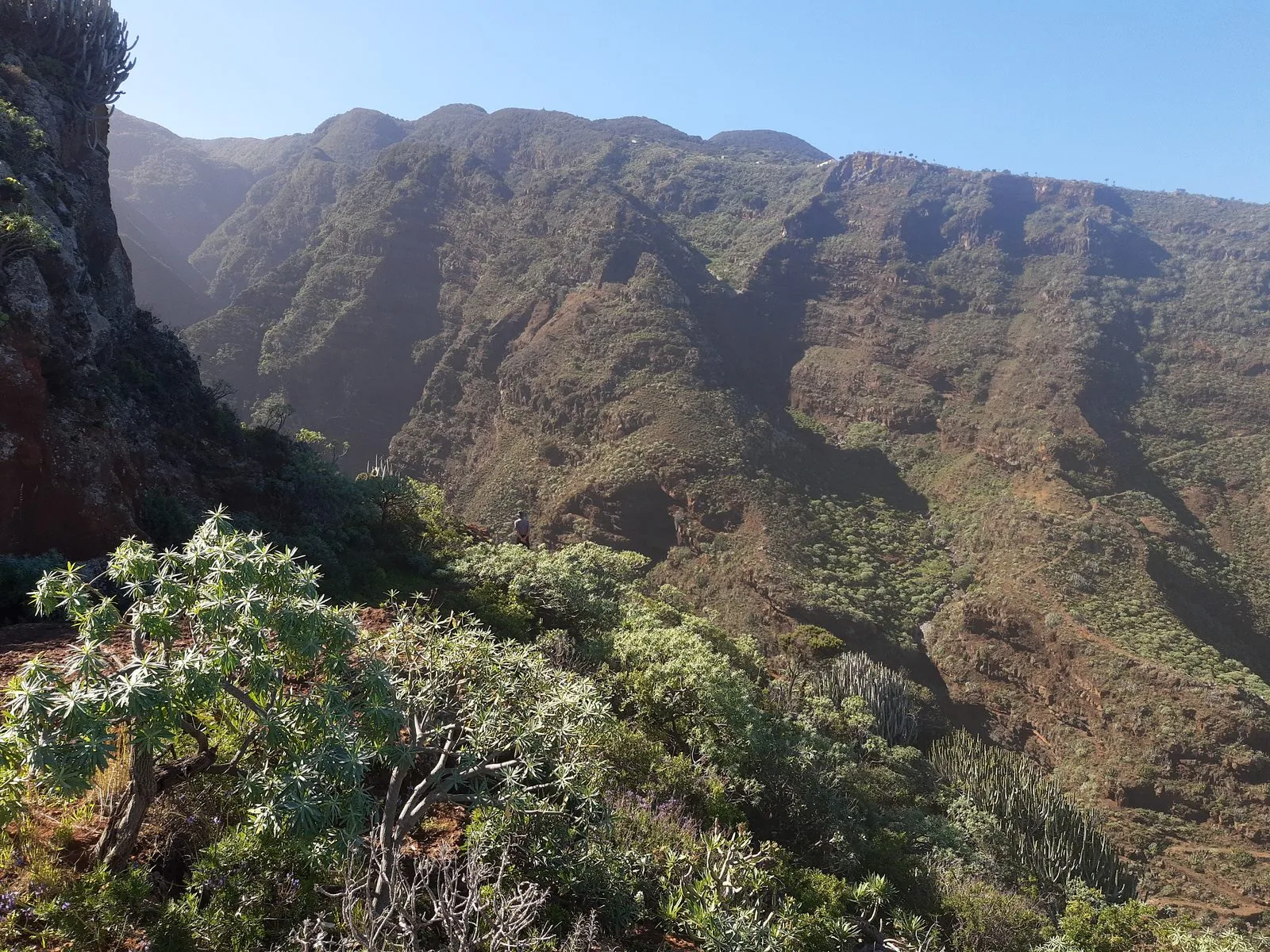
Garafía sprawls across the north-west of La Palma, a land of plunging barrancos (ravines), laurel-forested slopes and a rugged coastline of black cliffs and hidden coves. It's one of the least populated and most isolated corners of the entire archipelago — the roads are winding and slow, the villages small and far apart, and the pace of life gentle and traditional. The main settlement, Santo Domingo de Garafía, is a modest cluster of white houses around a church, perched above the sea.
This is emphatically not a beach-holiday destination. The appeal is the raw landscape, the silence, the walking and the skies. It draws hikers, nature lovers and astronomy enthusiasts rather than sun-and-sand tourists, and rewards anyone happy to trade convenience for genuine wilderness and a slower, older rhythm of island life.
What to see and do
Dark skies and the Roque de los Muchachos
Garafía shares its high ground with the Roque de los Muchachos, the 2,426-metre summit that is both La Palma's highest point and home to one of the world's great astronomical observatories. La Palma is a designated Starlight Reserve, with strict laws limiting light pollution, and the skies above Garafía are astonishingly dark and clear. On a moonless night the Milky Way blazes overhead. Our guides to the Roque de los Muchachos and to stargazing in the Canary Islands explain how to make the most of it.
The drive up to the Roque is long, high and winding, and the summit is cold even in summer — bring warm layers, a torch and a full tank of fuel. For serious stargazing, a local astronomy guide or organised tour will get you far more from the night sky.
Ancient dragon trees
The north-west is famous for its dragon trees (dragos), the strange, umbrella-crowned survivors that are a Canarian icon. Garafía shelters some of the most impressive and ancient specimens on La Palma, growing wild on the slopes and in the ravines — twisted, primeval and unforgettable. Our feature on the Canarian dragon tree tells their curious story.
Hiking the ravines and coast
Garafía is superb walking country. Old trails (caminos reales) thread through the ravines, along the wild coast and up into the laurel forest, past springs, hamlets and viewpoints of real grandeur. Routes range from gentle coastal strolls to demanding descents into deep barrancos. It's a highlight of hiking on La Palma, and much of it is blissfully free of other walkers.
Where to stay and eat
Accommodation is limited to rural cottages (casas rurales), small guesthouses and farm stays — perfect for travellers seeking peace, dark skies and walking rather than nightlife. A car and a spirit of self-sufficiency are essential; this is a place to unplug.
Eating is honest, hearty mountain and country fare in the local restaurants and bars: goat, fresh cheese, La Palma wines, and papas arrugadas with mojo. The island's cuisine is rich and distinctive — read more in our Canarian food guide.
Getting there and around
Garafía is one of the harder places on La Palma to reach, roughly an hour and a quarter's drive from the airport and the capital, Santa Cruz de la Palma, on winding mountain and coastal roads. A hire car is essential — public transport in this remote district is minimal, and the sights are scattered across a large, rugged area. Drive carefully, allow plenty of time, and see our guides to getting around and car hire.
Nearby
Garafía adjoins some of La Palma's finest country. Along the north coast lies Barlovento, another quiet, green municipality with viewpoints and a lake; inland rise the peaks around the Roque and the great crater of the Caldera de Taburiente National Park; and the enchanting laurel forest of Los Tilos lies to the east. Start with our La Palma hub to build the rest of your trip around this wild, star-filled corner.