Tucked into a deep, dripping gorge on the green north-east of La Palma, Los Tilos is the jewel of the island's ancient laurel forest — a lost world of tree ferns, moss and running water. This UNESCO Biosphere heartland, set in the Barranco del Agua, is where you'll find the famous Los Tilos waterfall and the thrilling Marcos y Cordero tunnel walk. Cool, lush and utterly unlike the sun-baked south, it is one of the most magical corners of La Palma.
The laurel forest — a living fossil
La Palma is nicknamed La Isla Bonita, the pretty island, and Los Tilos is a big part of why. The laurisilva (laurel forest) that fills these ravines is a survivor from the age of the dinosaurs — a subtropical cloud forest that once covered much of southern Europe and North Africa and now clings on only in the Canaries, Madeira and the Azores. Fed by the trade-wind clouds that snag on the northern hills, it is a world of towering laurels, gnarled trunks, giant tree ferns, dripping moss and springs bubbling from the rock. Los Tilos was the first part of La Palma to be recognised by UNESCO, and the whole island now holds Biosphere Reserve status.
Walking here feels like stepping into a rainforest: green light filtering through the canopy, the constant sound of water, and air so damp and cool it can be hard to believe you're on a holiday island in the Atlantic.
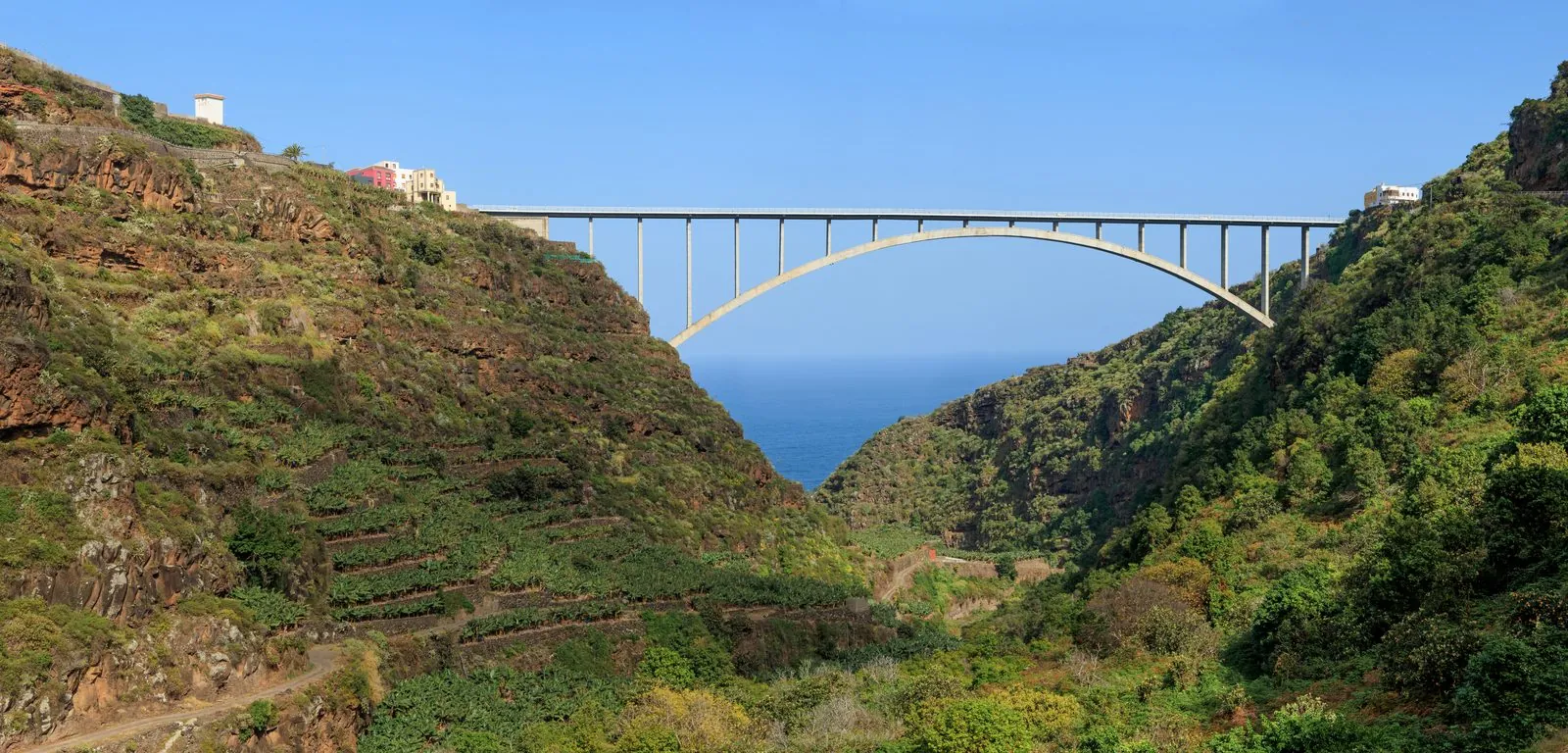
Photo: H. Zell · CC BY-SA 3.0 · Wikimedia Commons · scaled
The waterfall and visitor centre
The easiest introduction is the short stroll to the Los Tilos waterfall, just a few minutes from the car park at the head of the barranco. It tumbles down a tall mossy cliff and usually flows year-round, though it is fullest after the winter rains and thinner in high summer. There's a visitor centre near the car park explaining the forest and its wildlife, and a couple of gentler marked trails for those who just want a taste of the laurisilva without a big expedition.
Start with the easy walks. The waterfall and the short forest loops near the visitor centre give you the atmosphere of the laurisilva with minimal effort — perfect if you're short on time or travelling with children. Bring a light waterproof; it can be damp and drippy even when it isn't actually raining.
The Marcos y Cordero tunnel walk
For serious walkers, Los Tilos is the finish of one of the great Canarian hikes: the descent from the springs of Marcos y Cordero. The classic route starts high above at the Casa del Monte and drops down through the forest to Los Tilos, following an old water channel carved into the mountainside. Its trademark is a series of hand-cut tunnels bored through the rock — more than a dozen of them — that you walk through in the dark, water running at your feet, before emerging back into the green.
This is a demanding, weather-dependent route — plan it properly. You will need a torch or head-torch for the pitch-black tunnels, and shoes that cope with mud and water — many walkers get wet feet. Sections run along narrow ledges above steep drops and through areas prone to rockfall, and it becomes dangerous in heavy rain. Check the forecast, go with a guide or a booked shuttle if you can (there's no easy public transport to the start), and never attempt it in bad weather. It is a full day and not suitable for young children or nervous walkers.
Because the walk is long, one-directional and starts far up the mountain, most people arrange a 4x4 transfer up to the trailhead and then walk down to Los Tilos. It rewards the effort with some of the most beautiful forest scenery in the Canaries. If you'd like an overview of routes and grading across the archipelago, see our guide to hiking in the Canary Islands.
Combining Los Tilos with the rest of La Palma
Los Tilos sits above the town of San Andrés y Sauces in the fertile north-east, an area of banana terraces, old villages and coastal rock pools. It pairs naturally with the island's other great natural set-piece, the vast crater of Caldera de Taburiente, and with the northern loop road that takes in the pretty village of Barlovento and dramatic clifftop viewpoints. La Palma is also famous for its dark skies — after a day in the forest, the island is one of the world's best places for stargazing.
Chase the north's greenery, then the sun. The north of La Palma is greener and cloudier than the south, so pack a layer even in summer. If cloud sits low over Los Tilos, the drier west around Los Llanos and Tazacorte often stays sunny — an easy plan B for the afternoon.
You'll want a hire car to reach Los Tilos and explore the north at your own pace; the roads are good but winding, so allow time for the bends and the views.
Tree ferns, tunnels and a waterfall in a green cathedral of a gorge — Los Tilos is the ancient, dripping heart of La Palma.
Whether you simply stroll to the waterfall or tackle the full Marcos y Cordero descent, Los Tilos shows off a side of the Canaries most visitors never imagine — cool, wet and impossibly green. It's one of the finest days out on the island, and a highlight of our things to do across the archipelago.