Fuencaliente is the sunny, wine-growing town at the southern tip of La Palma, a land of black volcanic soil, terraced vineyards, dramatic craters and salt pans glinting by the sea. Known to locals as Los Canarios, it sits high on a ridge where the island narrows to its youngest, most volcanic point — the gateway to the Teneguía volcanoes, some of the freshest lava landscapes in the Canaries. For anyone who loves wine, walking and raw geology, this is one of the most rewarding corners of "La Isla Bonita".
Perched at the southern end of La Palma, Fuencaliente enjoys the island's warmest, driest weather and a landscape shaped by eruptions within living memory. Come for the volcano trails, the local wines and the wild, cinder-black coast below.
What it's like
Fuencaliente is a working country town rather than a resort — a scatter of white houses along a ridge, a modest centre with a church, bars and wine bodegas, and terraces of vines running down the dark slopes on either side. The name means "hot spring", a nod to the volcanic heat beneath, though the original spring was lost to an eruption long ago. Up here the air is warm and clear, the views run out over the Atlantic, and the pace is thoroughly local.
This is the sunniest, driest end of a famously green island, and the volcanic soil makes it prime wine country. The whole municipality is geared to the vine, the volcano and the sea, giving it a distinctive, elemental character you won't find elsewhere on La Palma.
What to see and do
The headline attraction is the Teneguía volcanic zone. A well-made trail leads across young lava fields to the craters of San Antonio and Teneguía, the latter formed in a 1971 eruption that added new land to the island — one of the most vivid volcanic walks in the Canaries. Our guide to the Volcanoes of Fuencaliente has the detail, and a visitor centre by the San Antonio crater sets the scene.
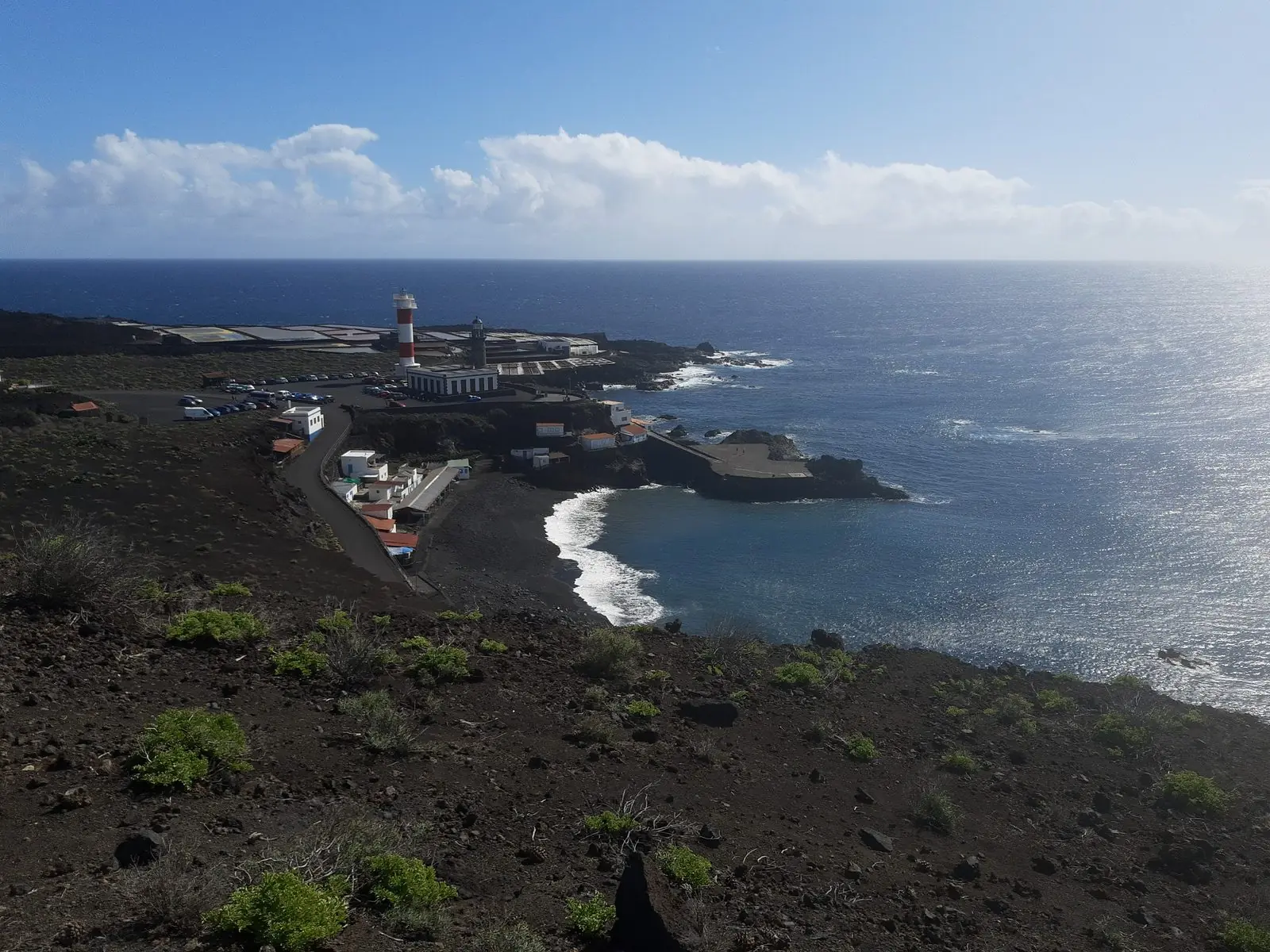
Down at the coast, the Salinas de Fuencaliente are a beautiful working sea-salt operation — a chequerboard of shallow white-and-pink pans beside a striking lighthouse, where salt is still harvested by hand from the Atlantic. It's a photogenic, peaceful spot; see our guide to the Salinas de Fuencaliente. Nearby, young black-sand beaches like Playa de Echentive were created by the 1971 lava flows. And of course, this is the place to tour a bodega and taste the local Canary wine, including the island's prized Malvasía.
The volcano trails are exposed and sun-baked with little shade — this is the hottest corner of La Palma. Carry plenty of water, wear a hat and sturdy shoes, and set off early, especially in the warmer months.
Where to stay and eat
Fuencaliente is a rural town, so accommodation is small-scale — casas rurales (country cottages), guesthouses and a few small hotels among the vineyards, ideal for walkers, wine lovers and travellers wanting quiet and character with a hire car. Our where to stay guide compares La Palma's bases.
Eating here means honest island cooking paired with the local wine: grilled fish and meats, goat's cheese, hearty stews and the ever-present papas arrugadas with mojo. The village bodegas and bars are the place to try the volcanic-soil wines at source. Our Canarian food guide has more; evenings are peaceful, built around a good dinner and a glass of Malvasía rather than nightlife.
Getting there and around
Fuencaliente is at the southern tip of La Palma, around 40 minutes' drive from the capital, Santa Cruz de La Palma, and a similar distance from the island's airport, on winding but scenic roads. A hire car is essential for reaching the volcano trails, salt pans and beaches — see our guides to car hire and getting around. Buses do serve the town, but infrequently, so a car gives you the freedom the south deserves.
Nearby
North up the west coast lie the banana town of Tazacorte and the plains around Los Llanos de Aridane, close to the 2021 Tajogaite eruption site that reshaped the island's south-west. Inland, roads climb towards the great crater of the Caldera de Taburiente and, higher still, the observatories on Roque de los Muchachos. Start with our La Palma hub to weave the volcanic south into a tour of the whole beautiful island.