Los Llanos de Aridane is La Palma's sunny, laid-back western town — and the best base for the island's wild side. Spread across a fertile valley of banana plantations beneath the island's great volcanic crater, it's the biggest town on the sunniest side of La Palma, with a pretty old centre, a plaza shaded by huge laurel trees, a growing scene of colourful street art and easy access to the Caldera, the volcanoes and the black-sand beach at Tazacorte. If you want warmth, walking and the real La Palma, this is where to stay.
What it's like
Los Llanos sits in the broad Aridane valley on the western flank of La Palma, and its position is its great advantage. This side of the island lies in the sunny rain shadow of the central mountains, so while the north and east can be green and cloudy, Los Llanos basks in dependable sunshine — one of the reasons it has quietly become the island's most popular base for visitors. It's a proper working town rather than a resort, surrounded by the banana plantations that drive the local economy.
At its centre is a charming old quarter of whitewashed houses and cobbled streets around the Plaza de España, where enormous, centuries-old Indian laurel trees cast deep shade over the cafés — a lovely, leafy spot to sit and watch island life go by. In recent years the town has gained a reputation for its street art, with large, striking murals painted across walls throughout the centre, turning an ordinary stroll into an open-air gallery.
The mood is relaxed, friendly and unpretentious — a town of walkers, nature lovers and independent travellers rather than package tourists, with a small but welcoming visitor scene woven into everyday Canarian life.
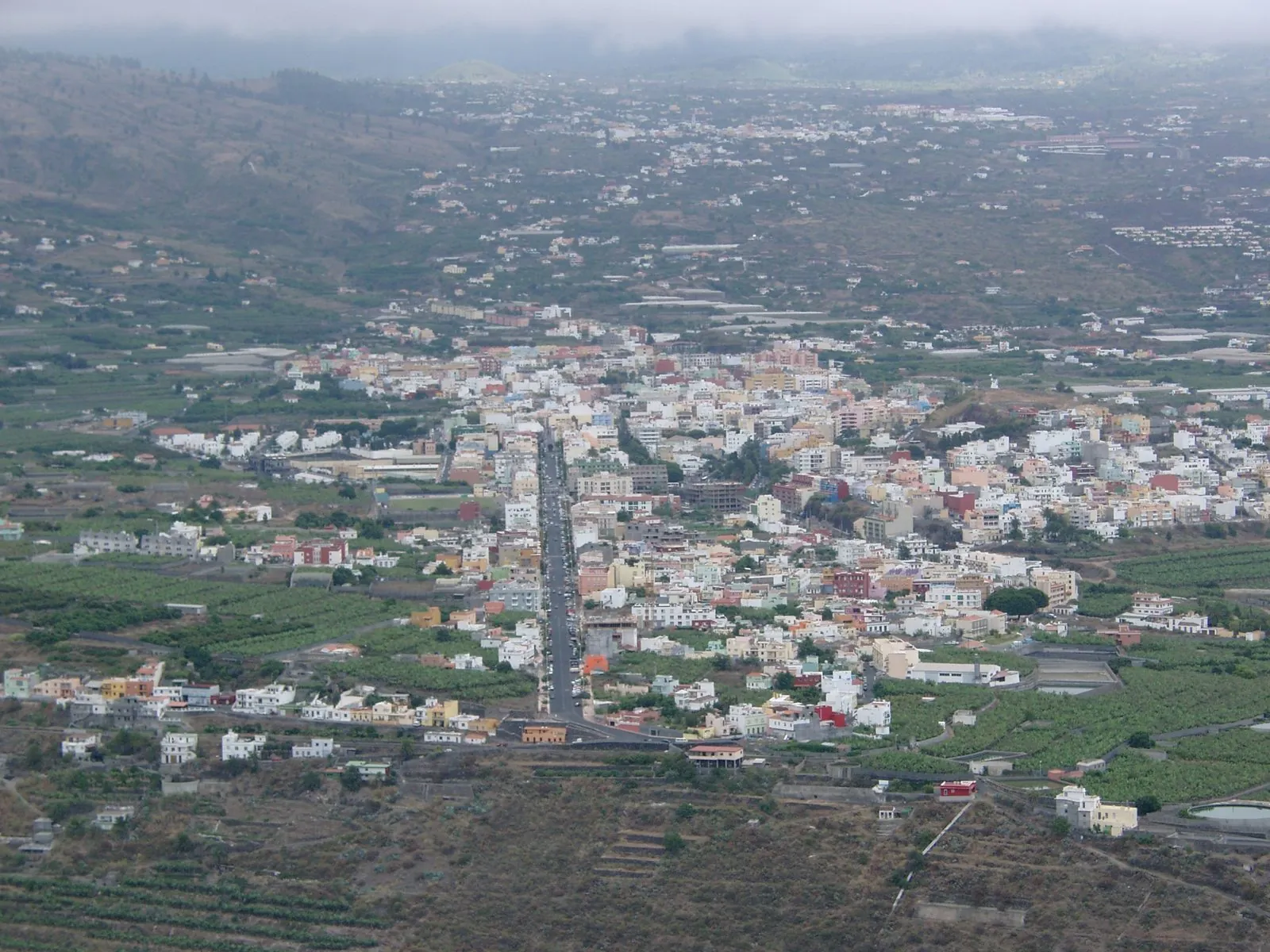
Photo: Schwenn · CC BY-SA 2.0 de · Wikimedia Commons · scaled
The best base for the Caldera and volcanoes
Los Llanos is the natural launch pad for La Palma's two headline landscapes. To the north rises the Caldera de Taburiente, an immense forested crater ringed by peaks and laced with hiking trails — one of the great walking destinations in the Canaries and the core of a national park. The town is the closest sizeable base to its main access points, making it ideal for walkers.
To the south stretches the volcanic ridge of Cumbre Vieja, where the 2021 Tajogaite eruption reshaped the landscape and buried part of the countryside in fresh lava. The island has fully reopened to visitors, and the new volcanic terrain has become a compelling, sobering thing to see — best appreciated with a local guide who can explain what happened here. Los Llanos, at the heart of the affected valley, is the obvious base for exploring it.
La Palma is famous for its dark skies and is a designated Starlight Reserve — on a clear night the stargazing from the heights above Los Llanos is exceptional. Pack a warm layer, as the mountains cool sharply after dark.
The beach at Tazacorte
Los Llanos itself is inland, but the coast is only a short drive down the valley. At the bottom lies Puerto de Tazacorte and Playa de Tazacorte, La Palma's best-known beach — a broad, sheltered crescent of dark volcanic sand backed by a little seafront of fish restaurants. It's one of the warmest, sunniest swimming spots on the island and the closest proper beach to town, making it the go-to for a lazy seaside afternoon.
Where to stay and who it suits
Accommodation is small-scale and characterful — guesthouses, apartments, rural cottages (casas rurales) and a few small hotels rather than big complexes. Los Llanos suits walkers, nature lovers, stargazers and independent travellers who want sunshine and easy access to the island's wild interior. It's the best all-round base on La Palma for an active, scenic holiday. Those after historic-town atmosphere and the ferry port may prefer the capital, Santa Cruz de La Palma, over the mountains. Our where to stay guide helps you decide.
Eating and evenings
Dining is authentic and good value — family-run restaurants and tapas bars serving fresh fish from Tazacorte, hearty Canarian dishes and produce from the surrounding valley, washed down with La Palma's respected wines. It's a fine place to try papas arrugadas with mojo and other island specialities. Evenings revolve around the shaded plaza and the old-town bars — sociable, low-key and thoroughly Canarian rather than raucous.
Getting there and around
La Palma's airport (SPC) is over on the eastern side of the island, near the capital, a scenic drive of around half an hour to three-quarters of an hour across or around the mountains. The town centre is walkable, but a hire car is really worth it here — it unlocks the Caldera, the volcanoes, the coast and the island's many walking trails. Our getting around guide covers car hire, buses and connections.
Nearby
The Caldera de Taburiente to the north and the Cumbre Vieja volcanoes to the south are the headline trips, with the beach at Tazacorte a short drive down the valley. Over the mountains lies the handsome capital, Santa Cruz de La Palma, and its ferry port. Start with our La Palma hub to plan the rest of your trip.