Santa Cruz de La Palma is one of the loveliest historic towns in the Canaries. The capital of green, mountainous La Palma, it tumbles down to a working harbour in a tangle of cobbled streets, flower-filled squares and handsome old houses with carved wooden balconies overhanging the sea. Rich from centuries of Atlantic trade, "Santa Cruz" — as everyone calls it — is a place to wander and soak up atmosphere rather than lie on a beach, and it makes a characterful base for exploring the east of the island.
What it's like
La Palma is the greenest and one of the steepest of the Canary Islands — the "Isla Bonita", or pretty island — and its capital lives up to the billing. Santa Cruz was once one of the most important ports in the Spanish Atlantic, and that history shows in its architecture: elegant merchant houses, ornate churches, cobbled lanes and a genuinely beautiful old centre that feels lived-in rather than staged. Unlike the big southern resorts on other islands, this is a real Canarian town first and a visitor destination second.
The pace is unhurried and authentically Spanish. Locals fill the plazas in the evenings, the shops are independent rather than international, and tourism here is low-key and small-scale — walkers, island-hoppers and travellers who prefer culture and scenery to sunbeds and clubs. It's a town made for strolling, with a real sense of place around every corner.
As the capital and main port, Santa Cruz is also the practical hub of the eastern side of La Palma, a natural first stop and a springboard for exploring the rest of this dramatic, forested island.
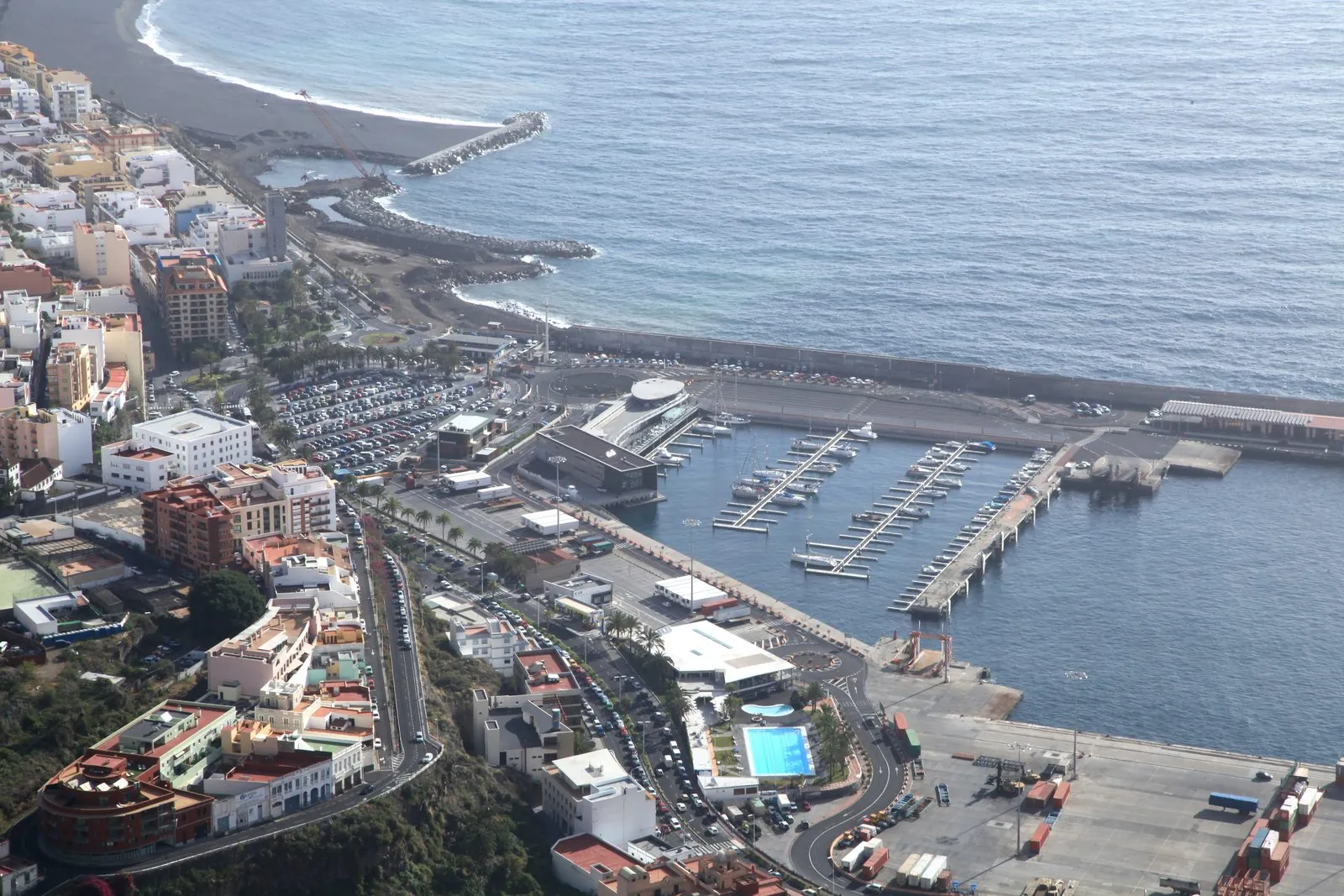
Photo: Frank Vincentz · CC BY-SA 3.0 · Wikimedia Commons · scaled
The old town and what to see
The heart of Santa Cruz is Calle O'Daly, the pedestrianised main street named after an Irish merchant family — a graceful run of colourful facades, balconies, shops and cafés that leads through the historic centre. Off it open handsome squares such as the Plaza de España, framed by Renaissance buildings and the town's main church. Down by the water, the famous row of balconied houses — timber balconies painted and weathered, hanging out over the seafront — is the town's signature image.
Santa Cruz also has a strong maritime story to tell. The Naval Museum is housed in a full-size concrete replica of a ship, the Barco de la Virgen, sitting incongruously in a square in the middle of town — a quirky, memorable landmark that reflects the island's seafaring past.
Santa Cruz is a walking town of steep cobbled streets and steps — wear comfortable shoes, and time your explore for the cooler morning or the lively early evening, when locals come out to the plazas.
The seafront and swimming
This is a port and a town rather than a beach resort, so don't come for a classic sandy holiday beach. There's a dark-sand town beach and a seafront promenade for a stroll, and the water is close at hand, but La Palma's swimming culture leans towards natural sea pools and rugged volcanic coves rather than long golden strands. For proper beach days, the island's best-known sandy stretch is over on the sunnier west coast at Tazacorte.
Where to stay and who it suits
Accommodation is small-scale and characterful — boutique hotels in restored old houses, guesthouses and apartments rather than big resort complexes. Santa Cruz suits walkers, culture lovers, island-hoppers and independent travellers who want an authentic Canarian town with history and atmosphere. It's ideal as a base for the east and north of the island. Those chasing the sunniest weather and the best beach often prefer to stay across the island in Los Llanos de Aridane. Our where to stay guide helps you choose.
Eating and evenings
Food here is proper island cooking rather than resort fare — family-run restaurants and tapas bars serving fresh fish, hearty Canarian dishes and local produce, with La Palma's excellent wines to match. Look out for regional specialities and don't miss papas arrugadas with mojo. Evenings are gentle and sociable — a wander through the lit-up old town, a drink in a plaza, a relaxed dinner — with nightlife kept to low-key bars rather than clubs.
Getting there and around
La Palma has its own airport (SPC) just south of the capital, with connections to other Canary Islands and the Spanish mainland, and the town is also the island's main ferry port. Ferries link Santa Cruz with Tenerife and the other western islands, making it a key stop for island-hopping — see our ferries between the islands guide, and viamo's route planning is handy for piecing together longer journeys. The old town is walkable but hilly; a hire car is the best way to explore the wider island.
Nearby
North and inland from Santa Cruz, La Palma's forests, volcanoes and ravines open up, including the vast crater of the Caldera de Taburiente at the island's heart. West, across the mountains, lies the sunnier valley town of Los Llanos de Aridane and the beach at Tazacorte. Start with our La Palma hub to plan the rest of your trip.