Tazacorte is La Palma's sunny banana town — a bright, flower-filled village tumbling down to a working port and one of the finest black-sand beaches in the Canaries. Claiming some of the most sunshine hours on the whole island, it sits at the mouth of the great Caldera de Taburiente ravine, surrounded by a sea of banana plantations, with a laid-back seafront made for long seafood lunches. It's a warm, unpretentious slice of the "Isla Bonita" that many visitors miss.
Split between the older upper town and the coastal district of Puerto de Tazacorte, this is one of the most appealing spots on La Palma — good beach, good food, glorious light, and a real sense of a place that lives from the land and the sea rather than from tourism.
What it's like
Tazacorte has two halves. The upper town is a pretty, traditional Canarian village of colourful houses, a fine church and steep little streets, set among the banana terraces that made the area prosperous. Below, reached by a winding road down to the coast, lies Puerto de Tazacorte — a small, colourful fishing port turned relaxed seaside village, with a palm-lined promenade, seafood restaurants and the beach.
The whole area basks in an exceptionally sunny, sheltered microclimate on the island's west coast, protected by the mountains behind. It feels genuinely local and low-key: families down for a swim, fishermen at the harbour, and visitors who've found their way to one of La Palma's quiet pleasures. There's little mass tourism here — just sun, sea and bananas.
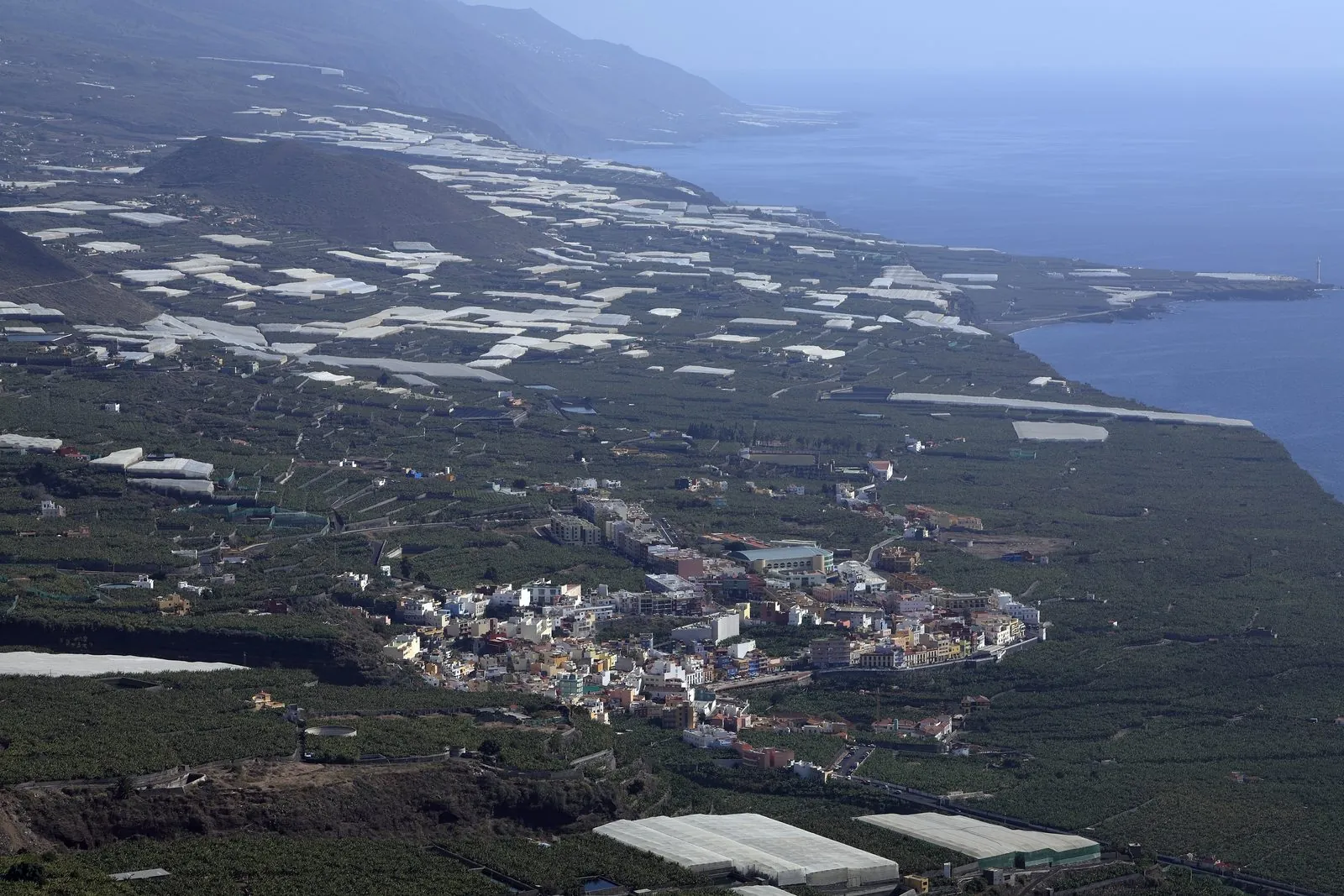
Photo: Falk2 · CC BY-SA 4.0 · Wikimedia Commons · scaled
The beach and port
Tazacorte's pride is its black-sand beach — a broad, dark, volcanic strand backed by a promenade, widely rated among the best beaches on La Palma and a rarity on an island short of easy swimming spots. Sheltered and sunny, with a breakwater giving calmer water, it's a lovely place to swim and sunbathe; our guide to Playa de Tazacorte has the detail. The dark sand and volcanic setting are natural and typical of this young volcanic island.
The port is the heart of the coastal village — a working harbour with fishing boats, a marina and the departure point for boat trips down the dramatic west coast, including whale- and dolphin-watching outings into some of the archipelago's richest waters. Our guide to whale and dolphin watching explains what you might see.
Puerto de Tazacorte is one of the sunniest corners of La Palma, but the Atlantic here is open ocean — swim within the sheltered, flagged area near the breakwater and take local advice on conditions before heading in.
Where to stay and who it suits
Accommodation is small-scale and low-key — apartments, guesthouses and rural cottages rather than big hotels — split between the port and the upper town. Tazacorte suits sun-seekers, foodies, walkers and independent travellers who want a relaxed, authentic base near a good beach, ideally with a hire car. It also pairs well with the island's main town nearby.
Many visitors base themselves in the larger nearby town of Los Llanos de Aridane, the lively hub of the western Aridane valley, and pop down to Tazacorte for the beach and seafood. Our where to stay guide compares the island's options.
Eating and nightlife
Seafood is the reason to eat here. The harbourside restaurants of Puerto de Tazacorte serve some of the best fresh fish and shellfish on the island — grilled catch of the day, prawns, limpets and octopus — best enjoyed slowly at a table by the water with a glass of local wine. Local bananas and other tropical fruit find their way into everything, and no meal is complete without papas arrugadas and mojo; our seafood and fish guide has more. Nightlife is gentle — a long dinner, a sunset drink on the promenade — with more of a scene up in Los Llanos.
Getting there and around
Tazacorte lies on the west coast of La Palma, a short drive from Los Llanos and around 30–40 minutes from the island's airport and capital, Santa Cruz de la Palma, on the far side of the mountains. A hire car is the sensible choice for exploring the island's winding, scenic roads and reaching the beach and port easily; see our guides to car hire and getting around. Most visitors fly to La Palma or arrive by inter-island ferry from Tenerife.
Nearby
Just inland is Los Llanos de Aridane and the wider Aridane valley, gateway to the island's greatest sight — the vast crater of the Caldera de Taburiente National Park, whose ravine empties out at Tazacorte. To the south the road runs through the banana coast towards the volcanic landscapes reshaped by the 2021 eruption and the salt pans and lighthouse at Fuencaliente. Start with our La Palma hub to plan a trip around this sunny western coast.