The waters off south-west Tenerife are one of Europe's best places to see whales and dolphins in the wild — and, remarkably, you can do it year-round. In the deep, sheltered channel between Tenerife and La Gomera lives a resident population of short-finned pilot whales and bottlenose dolphins, joined seasonally by other species passing through. Because these animals are here all year, a boat trip out of the southern resorts has a very high chance of a genuine wild sighting — no aquarium, no tank, just the open Atlantic and whatever swims up to say hello.
This stretch of sea, the Teno-Rasca strip, is protected as a special area for cetaceans, and choosing the right boat matters — both for your day and for the animals. Done well, it's one of the most memorable things you can do on Tenerife.
What you'll see
The two headline residents are short-finned pilot whales — stocky, dark, blunt-headed whales that rest and socialise near the surface — and bottlenose dolphins, the playful, familiar dolphins that often ride the bow wave. Between them you have a strong chance of a sighting on most trips, though nothing in the wild is ever guaranteed.
Depending on the season and luck, you might also glimpse Atlantic spotted dolphins, common dolphins, the occasional Bryde's whale, or — on rare, special days — larger whales passing on migration. Sea turtles and flying fish are common bonus sightings. The Teno-Rasca waters are home to more than 20 cetacean species recorded over the years, which is part of why the area is so celebrated.
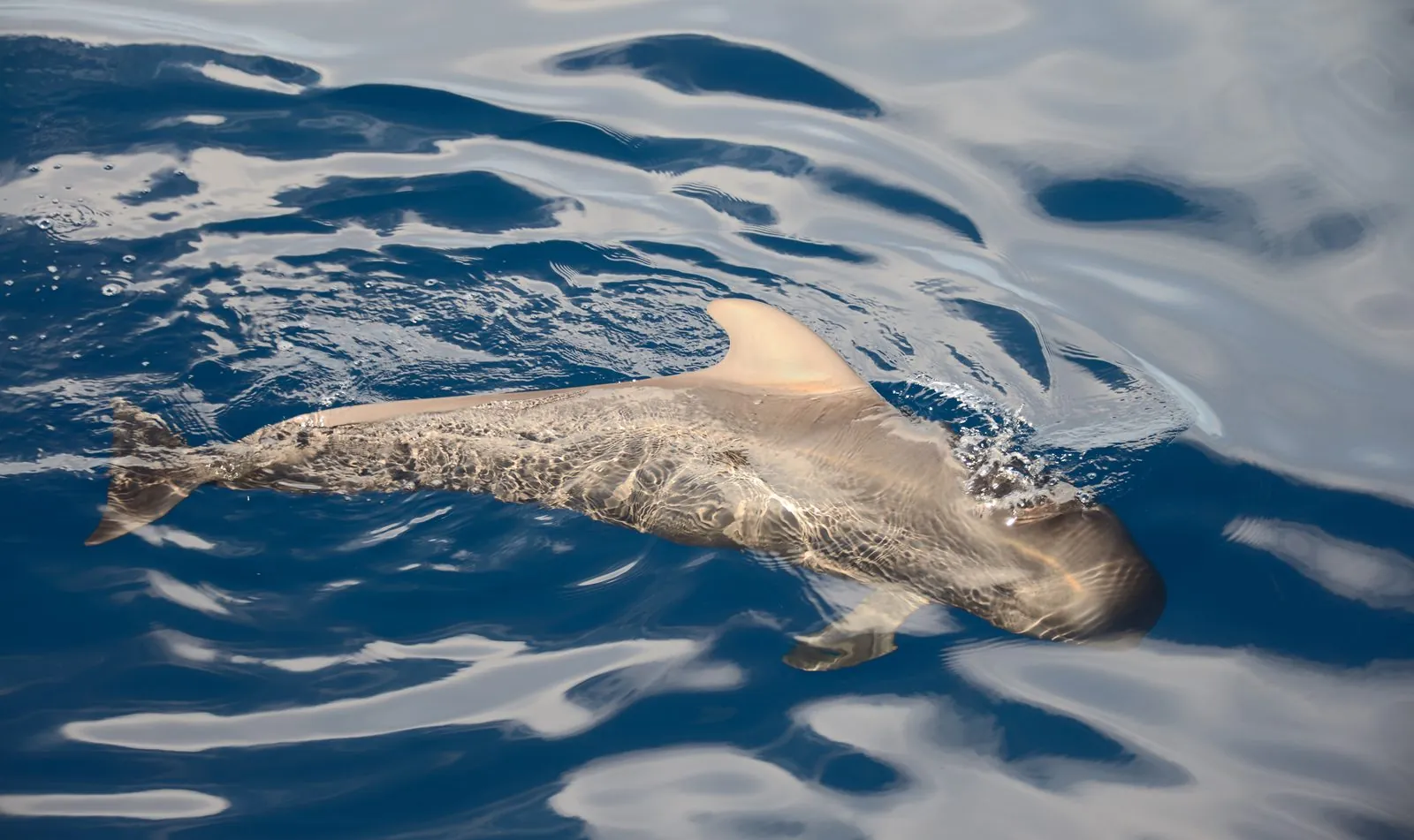
Photo: Cayambe · CC BY-SA 3.0 · Wikimedia Commons · scaled
Choosing an ethical, licensed operator
The single most important choice you'll make is which boat to book. Responsible operators keep a respectful distance, approach slowly and never chase, corner or crowd the animals; irresponsible ones do the opposite, and it stresses the whales.
Look for the blue "Barco Azul" flag. The Canary Islands government awards a blue flag and certificate — Barco Azul (Blue Boat) — to operators licensed to watch cetaceans and committed to the code of conduct: keeping their distance, limiting time near the animals and not disturbing them. Booking a Barco Azul boat is the simplest way to make sure your trip is legal, safe and kinder to the wildlife. Ask before you book, and be wary of any operator promising you can swim with or touch wild dolphins.
Beyond the flag, smaller boats with fewer passengers, an onboard guide or marine biologist, and honest "sightings likely, not guaranteed" language are good signs. Sailing catamarans and eco-catamarans tend to be calmer and quieter than fast powerboats.
Which trip, from which resort
Most tours leave from the harbours of the south-west, closest to the whales:
- Los Cristianos — a busy, traditional harbour with a wide range of boats, from big catamarans to smaller specialists; an easy departure point from the southern resorts.
- Costa Adeje (Puerto Colón) — the main marina for catamaran cruises, including lunch-and-swim trips that combine whale-watching with a swim stop and food.
- Puerto de Las Galletas and other small ports — quieter, often smaller-group options.
Trips range from short two- to three-hour spotting cruises to half-day catamaran sails with lunch, a swim stop in a sheltered cove, and drinks included. A shorter trip is plenty if seeing the whales is your main goal; the longer cruises are more of a full day out on the water. You'll also find whale and dolphin trips off Gran Canaria (from the southern resorts) and La Gomera, which shares the same rich channel.
Seasickness and comfort
The Atlantic can get choppy once you leave the harbour, and even good sailors can feel queasy on a small boat. If you're prone to seasickness, take a remedy before you board (not after), sit low and central where the movement is least, keep your eyes on the horizon, and stay out in the fresh air rather than below deck. Bigger catamarans are steadier than small powerboats. Bring water, sun cream and a light layer — it's cooler and breezier at sea.
Make the most of it
Whale-watching slots neatly alongside a wider day on the water. Many catamaran cruises double as a swim-and-snorkel trip, and the south-west is also a hub for boat trips and watersports of every kind. Pair a morning on the water with an afternoon on the beach, and you've got a perfect Tenerife day.
Best conditions: mornings are usually calmer, with lighter wind and flatter water — better for both sightings and stomachs. Book a Barco Azul boat, go early, and keep your expectations honest: it's wild, so some patience is part of the deal.
Ethical, accessible and genuinely wild, whale-and-dolphin watching off south-west Tenerife is one of the Canaries' natural highlights — choose a licensed, respectful operator with the blue flag, and you'll come home with the real thing. For more of the island, start at our Tenerife guide or browse all things to do.