Hermigua is La Gomera at its greenest — a lush valley on the island's north coast where banana terraces climb steep hillsides, waterfalls thread down the ravines, and a natural sea pool crashes against black volcanic rock. Strung out along a fertile barranco between towering slopes, it's one of the prettiest and most productive corners of a tiny, unspoilt island, and a wonderful base for walkers drawn to the misty laurel forests above.
Far from the beach resorts of the bigger islands, Hermigua offers a different kind of holiday: deep green scenery, terraced farmland, honest island food and a slow, authentic pace. It's a place to walk, to swim in the sea pool, and to breathe in one of the most beautiful valleys on La Gomera.
What it's like
Hermigua isn't a compact village so much as a long, green ribbon of hamlets and terraces spread along a valley that runs down to the north coast. The setting is lush and dramatic — banana plantations, palms, fruit trees and vegetable plots stacked on hand-built terraces, hemmed in by steep, forested ridges that catch the trade-wind clouds and keep everything watered and green. This is the wetter, cooler northern side of the island, and it shows.
The mood is deeply rural and genuinely local. There's no mass tourism here — visitors are walkers, nature lovers and independent travellers who've sought out La Gomera precisely for this unspoilt calm. You'll find traditional Canarian houses, a fine old church, small shops and a quiet dignity to daily life that feels a world away from the southern-island resorts.
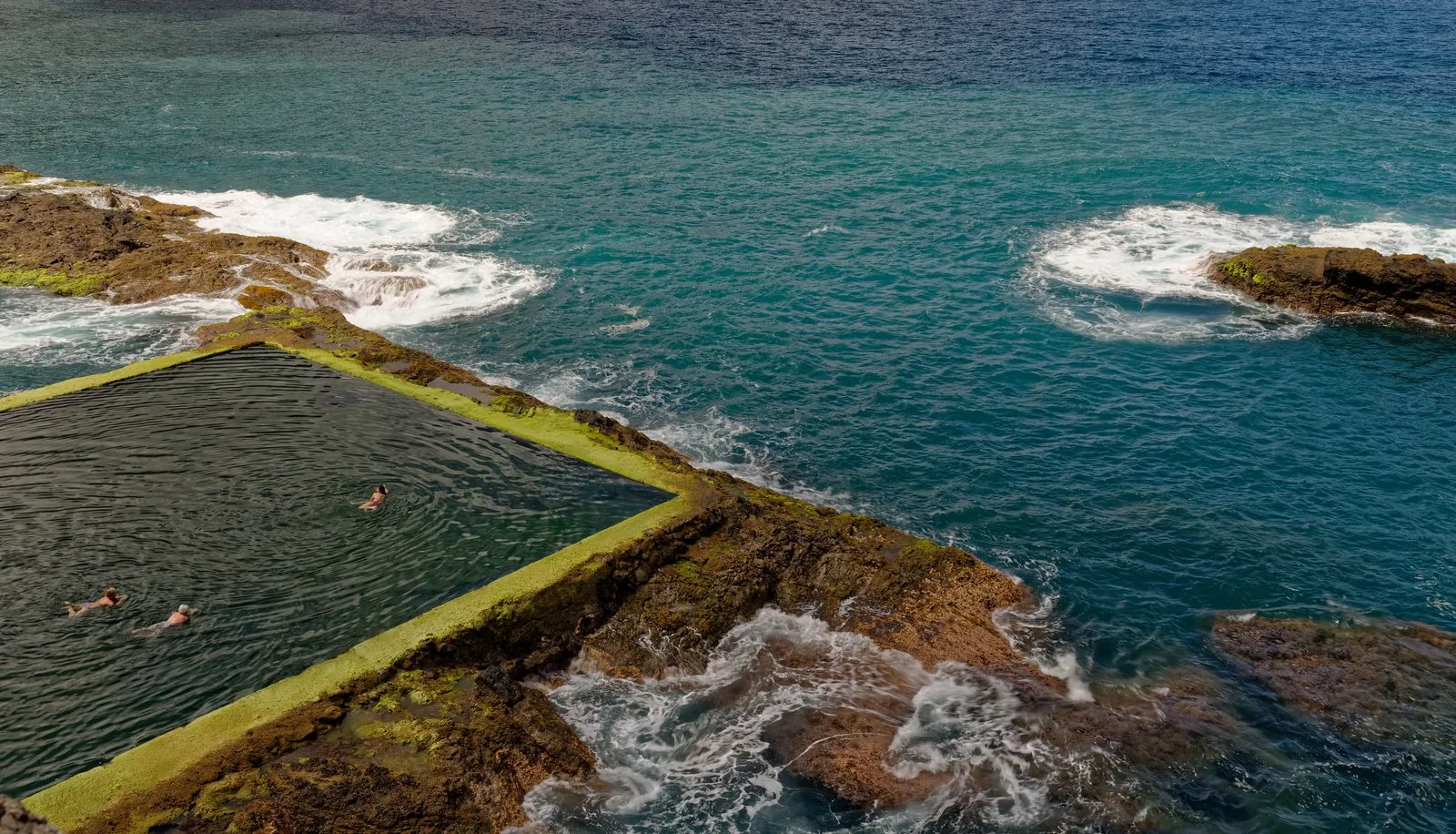
Photo: LG Nyqvist · CC BY-SA 4.0 · Wikimedia Commons · scaled
The setting: terraces, sea pool and walking
Two things define Hermigua: the banana terraces and the sea. The valley is one of the most fertile on the island, and the tiers of green climbing the hillsides are a sight in themselves. At the bottom, where the barranco meets the coast, there's a rugged black-pebble shore and — the local star — a natural sea pool (the Charco del Conde area nearby, and pools around the coast), giving safer, sheltered bathing where the open Atlantic is too wild for swimming.
Above all, this is walking country. Hermigua sits on the doorstep of the island's ancient laurel forest, and trails climb from the valley into the highlands and towards the national park. Our guide to hiking in the Canary Islands sets out what to expect — well-marked paths, big elevation changes, and scenery that ranges from banana terrace to primeval forest in a single walk.
La Gomera's north coast is rugged and the open Atlantic can be dangerous for swimming. Stick to the natural sea pools and any flagged, sheltered bathing spots, and never swim off exposed rocky shores when the sea is up.
Garajonay and the laurel forest
The great prize above Hermigua is Garajonay National Park, a UNESCO World Heritage site cloaking the island's high centre in laurisilva — a rare, misty, moss-draped laurel forest that once covered much of southern Europe and survives here in extraordinary abundance. From the valley, roads and trails climb quickly into this green, cloud-wreathed world, where walking among the ancient trees is one of the finest experiences in the Canaries.
Where to stay and who it suits
Accommodation is small-scale and characterful — rural cottages (casas rurales), guesthouses and apartments tucked among the terraces, several restored from traditional Canarian houses. Hermigua suits walkers, nature lovers, and independent travellers wanting a peaceful, scenic base with a car, rather than anyone chasing beaches, pools and nightlife. It's an ideal spot for a slow few days of hiking and unwinding. Our where to stay guide compares bases across the island.
Eating and nightlife
Food is honest, home-style island cooking. The valley's fertility means excellent local produce — bananas, tomatoes, vegetables and fruit — and restaurants serve fresh fish from the coast, goat, hearty stews and vegetable potaje. Don't miss La Gomera's own specialities: miel de palma (palm honey) drizzled over desserts, and the punchy almogrote cheese spread on fresh bread. Wash it down with a local wine; our Canarian food guide has more. Nightlife is essentially a good dinner and an early night — this is a place for stars, not clubs.
Getting there and around
Hermigua is on the north coast, around 20–30 minutes' drive from the capital and main ferry port, San Sebastián de La Gomera. Most visitors reach the island by ferry from Los Cristianos in southern Tenerife, then drive over. A hire car is invaluable here for the winding mountain roads and to reach the valley, sea pool and forest trails; see our guides to car hire and getting around. Buses (guaguas) link the main towns but run infrequently.
Nearby
The valley opens onto the whole green north of the island. West along the coast lies the beach at Playa de la Caleta and the town of Agulo, while the roads climb into Garajonay and its laurel forest. The island capital, San Sebastián de La Gomera, and the sunnier western valley of Valle Gran Rey complete a tour of this tiny, beautiful island. Start with our La Gomera hub to plan the rest.