Valle Gran Rey is La Gomera's most beguiling corner — a plunging green valley of terraces that spills down to black-sand beaches and sunset-facing sea. On the far western coast of the island, "the valley of the great king" has drawn walkers, dreamers and free spirits since the 1970s, when it became a famous hippy hideaway. It remains a laid-back, alternative sort of place, all palm groves and painted terraces and drum circles on the sand as the sun goes down — quite unlike any resort on the bigger islands.
What it's like
Valle Gran Rey is really a scattering of small villages threaded along a spectacular ravine, where centuries of farming have carved the steep hillsides into a staircase of green terraces running all the way down to the Atlantic. The setting is genuinely dramatic — sheer valley walls, banana plantations and palm groves, and a cluster of low-rise settlements around the beaches at the bottom. It sits on the sunny, sheltered western side of La Gomera, one of the greenest and least-developed of all the Canary Islands.
Since the 1970s the valley has had a distinctive alternative, bohemian character. Northern-European travellers first came here in search of an unspoilt, back-to-nature idyll, and something of that spirit lingers: a mellow, tolerant, arty atmosphere, yoga and drumming, wholefood cafés and a crowd that skews towards walkers, artists and long-stay winter escapees rather than package tourists. It's low-key and unpolished in the best way — a place to slow right down.
The pace is famously gentle. Days here are for walking, swimming, reading in a café and watching the sky change colour over the sea, and the valley draws people back year after year.
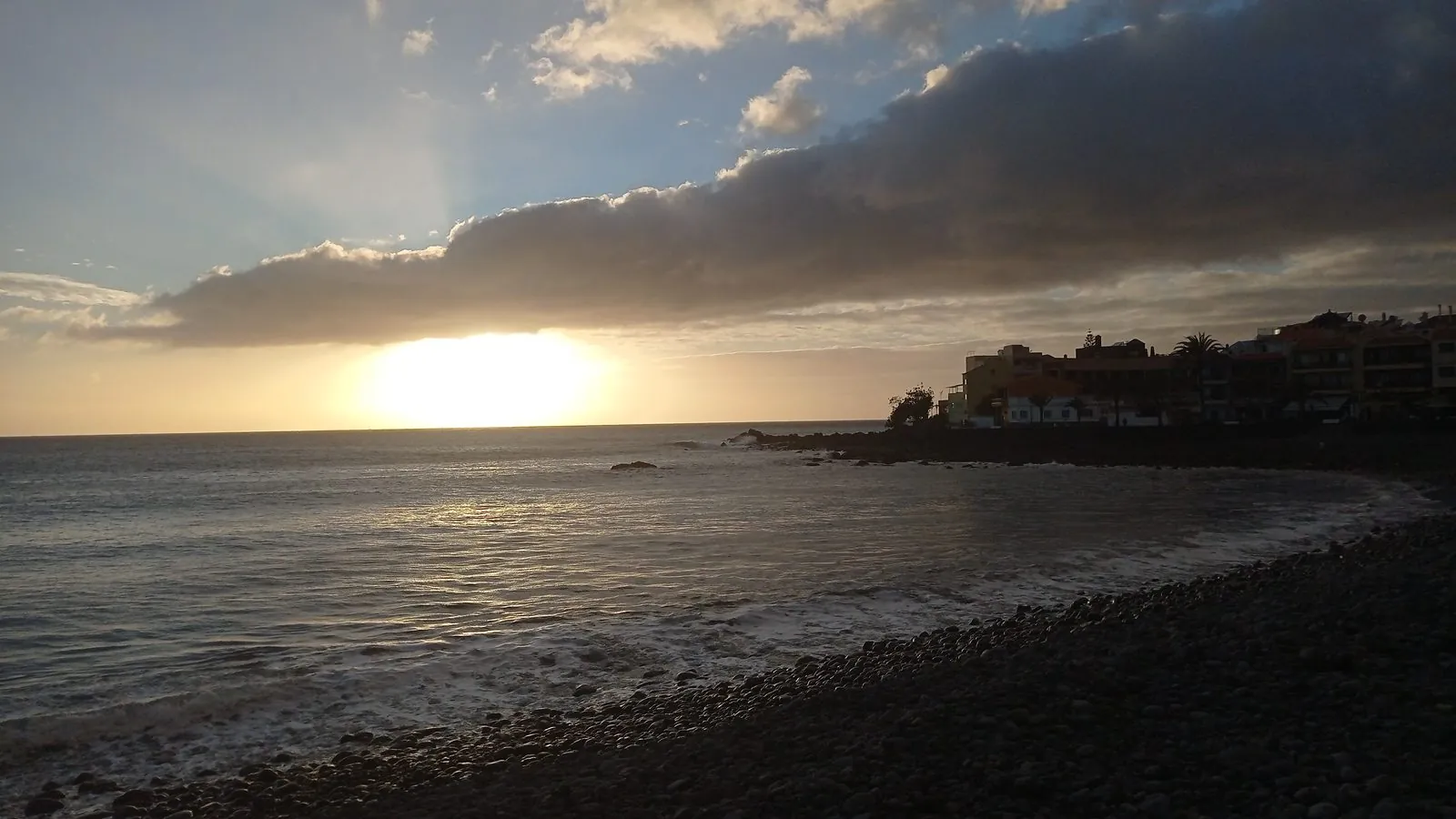
Photo: Schumi4ever · CC BY-SA 4.0 · Wikimedia Commons · scaled
The beaches
At the foot of the valley, the villages of La Playa and La Puntilla sit behind a run of black volcanic-sand beaches — the natural dark colour typical of these young volcanic islands. Playa de Valle Gran Rey and its neighbours offer a mix of open Atlantic beach and more sheltered spots, backed by palm-lined promenades and beach cafés. Because this is an exposed western coast, the sea can be lively, with currents and surf on some days.
The Atlantic here can be powerful, with strong currents on the more open beaches and few or no lifeguards outside peak times. Take local advice, watch the conditions, and stick to the calmer, sheltered coves if the swell is up.
The beaches face west, which gives the valley its other great ritual: the sunset. As the sun drops into the Atlantic, people gather on the sand — a mellow, informal nightly gathering that has become part of the valley's identity.
Walking and the great outdoors
Valle Gran Rey is one of the finest walking bases in the Canaries. Trails climb the terraced valley walls, wind between hamlets and connect up to the ancient laurel forests of Garajonay National Park higher up the island. The scenery — ravines, palms, terraces and sea views — is a constant reward, and our guide to hiking in the Canary Islands covers what to expect. Boat trips also run from the little harbour, including whale and dolphin excursions along this rich stretch of coast.
Where to stay and who it suits
Accommodation is small-scale and informal — apartments, guesthouses, holiday cottages and a few small hotels rather than big complexes, in keeping with the valley's low-rise, low-key character. Valle Gran Rey suits walkers, nature lovers, artists, yoga-and-wellness travellers and anyone after a mellow, alternative escape with black-sand beaches and spectacular scenery. It's less suited to those wanting resort facilities, big hotels or nightlife. For a more conventional island base with the main ferry port, consider the capital, San Sebastián de La Gomera. Our where to stay guide helps you choose.
Eating and evenings
The valley has a lovely, eclectic little food scene for its size — beachfront fish restaurants, tapas bars, and a strong showing of vegetarian, vegan and wholefood cafés that reflect its alternative crowd. Fresh fish, local goat's cheese, palm honey and papas arrugadas with mojo are all here, with a glass of Canary wine to match. Evenings are relaxed and sociable — sunset on the beach, dinner by the sea, live music or drumming rather than clubs.
Getting there and around
Reaching the valley is part of the adventure. Most visitors arrive on La Gomera by ferry from Los Cristianos in Tenerife to the capital, then drive or bus across the island on a winding, scenic mountain road that takes around an hour to Valle Gran Rey — see our ferries between the islands guide for the crossing. A hire car is the most flexible way to get about the island's steep, twisting roads, though buses (guaguas) do serve the valley.
Nearby
Above the valley lies the misty laurel forest of Garajonay National Park, the island's UNESCO-listed centrepiece, with walking trails linking down towards the coast. On the eastern side sits the capital and ferry port, San Sebastián de La Gomera, gateway back to Tenerife and the other western islands. Start with our La Gomera hub to plan the rest of your trip.