Valle Gran Rey is where La Gomera meets the sea in spectacular style — a deep, terraced valley that spills down to a string of black-sand bays on the island's sunny southwest coast. Framed by soaring palm-clad slopes and famous for its glorious sunsets, the valley has drawn independent travellers and free spirits for decades. It's the closest thing La Gomera has to a beach resort, yet it remains gloriously low-key, alternative and beautiful.
How to get there
Valle Gran Rey lies at the western end of the island, reached by a long, winding mountain road from the capital, San Sebastián de la Gomera, that climbs over the central heights and drops dramatically into the valley. A hire car gives you the most freedom, but the drive is slow and full of hairpins, so allow plenty of time; buses also connect the valley with San Sebastián and the ferry port. Most visitors to La Gomera arrive by ferry from Tenerife into San Sebastián, then continue overland from there.
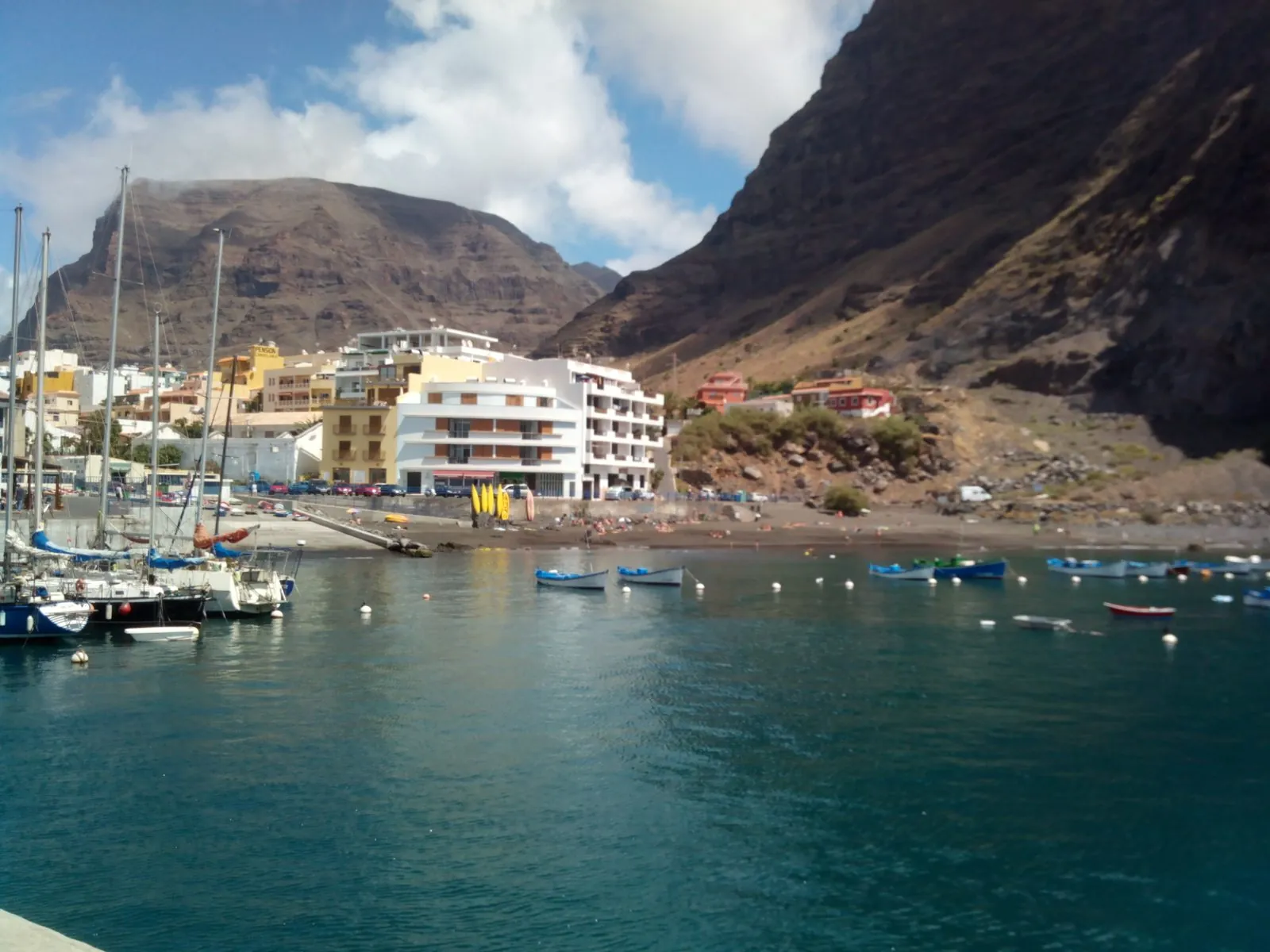
Photo: Lisbeth Hernaiz · CC BY-SA 4.0 · Wikimedia Commons · scaled
What it's like
The valley itself is the star: a vast amphitheatre of stone-walled terraces and date palms tumbling down to the coast, where several distinct beaches sit side by side. La Playa and La Calera lie towards the northern end near the villages, while Vueltas shelters by the little harbour to the south. The sand is dark and volcanic, the mood relaxed and bohemian, and the sunsets — watched from the seafront each evening — are something of an institution. Cafés, small guesthouses and a scattering of shops give it an easy, unpolished charm.
As the sun drops into the Atlantic, half the valley gathers on the seafront to watch — it's a nightly ritual worth joining.
Swimming and safety
Swimming conditions vary a lot between the different bays and from day to day. The harbour beach at Vueltas is the most sheltered and generally the calmest and safest for a swim, while the more open beaches can face a stronger swell and, at times, strong currents. There are lifeguards on the main beaches in season, but cover isn't guaranteed everywhere, so always check the flags and the sea before you go in.
Mind the currents. The open beaches at Valle Gran Rey can develop strong currents and shore break, especially when the Atlantic swell is up. For the safest swimming head to the sheltered Vueltas beach, obey the lifeguard flags, don't swim alone, and keep well within your depth.
Facilities
Spread across the valley you'll find the essentials and a bit more: showers and toilets on the main beaches, seasonal lifeguards, sunbeds in places, and a good choice of cafés, bars and restaurants along the seafronts, many serving fresh fish and vegetarian fare that reflects the valley's alternative crowd. Small supermarkets and shops cover day-to-day needs, and Vueltas harbour is the hub for boat trips and whale-watching. For where to sleep and eat across the valley, see our guide to the Valle Gran Rey resort area. It's walkable, though the valley is spread out, so a car or the local bus helps.
Best for whom
Valle Gran Rey is a dream for independent travellers, walkers, sunset-lovers and anyone drawn to a laid-back, alternative scene rather than a slick resort. Hikers use it as a base for the island's superb trails, and its restaurants and relaxed pace reward slow, unhurried holidays. It's less suited to those wanting big all-inclusive hotels, lively nightlife or guaranteed calm, sandy swimming for small children — La Gomera is an island for explorers, not package sunbathers.
Nearby
The valley is a superb springboard for the rest of the island. Boat trips run from Vueltas along the wild west coast to spot whales and dolphins, while the misty heights of the Garajonay National Park — a UNESCO laurel forest laced with ancient trails — sit just inland. The capital, San Sebastián de la Gomera, with its Columbus history and ferry links, is a scenic drive away. To plan your whole visit — how to get here, where to walk and where to stay — see our full guide to La Gomera.