San Sebastián de La Gomera is the little capital where Columbus set sail for the New World. Wrapped around a sheltered harbour on the island's sunny eastern coast, "San Seba" is a calm, handsome town of palm-lined plazas and pastel houses, best known as the arrival point for the ferry from Tenerife and the springboard for the misty laurel forests of Garajonay. It's an easy, authentic base for exploring one of the greenest and least-developed of the Canary Islands.
What it's like
La Gomera is a small, steep, wonderfully unspoilt island — a place of deep ravines, terraced hillsides and ancient forest, with almost no mass tourism — and its capital sets the tone perfectly. San Sebastián is quiet, tidy and relaxed, a real Canarian town going about its business rather than a purpose-built resort. It gathers around a natural harbour on the sheltered eastern side of the island, the sunniest and calmest coast, with a compact centre of squares, church and old streets that you can happily explore on foot in an hour or two.
The atmosphere is gentle and genuine. Visitors here tend to be walkers, nature lovers and independent travellers drawn to La Gomera's hiking and scenery rather than beaches and nightlife, and the town serves as the practical hub where everyone passes through. As the capital and main port, it has the island's best transport links, most services and a steady, unhurried rhythm of arrivals and departures at the harbour.
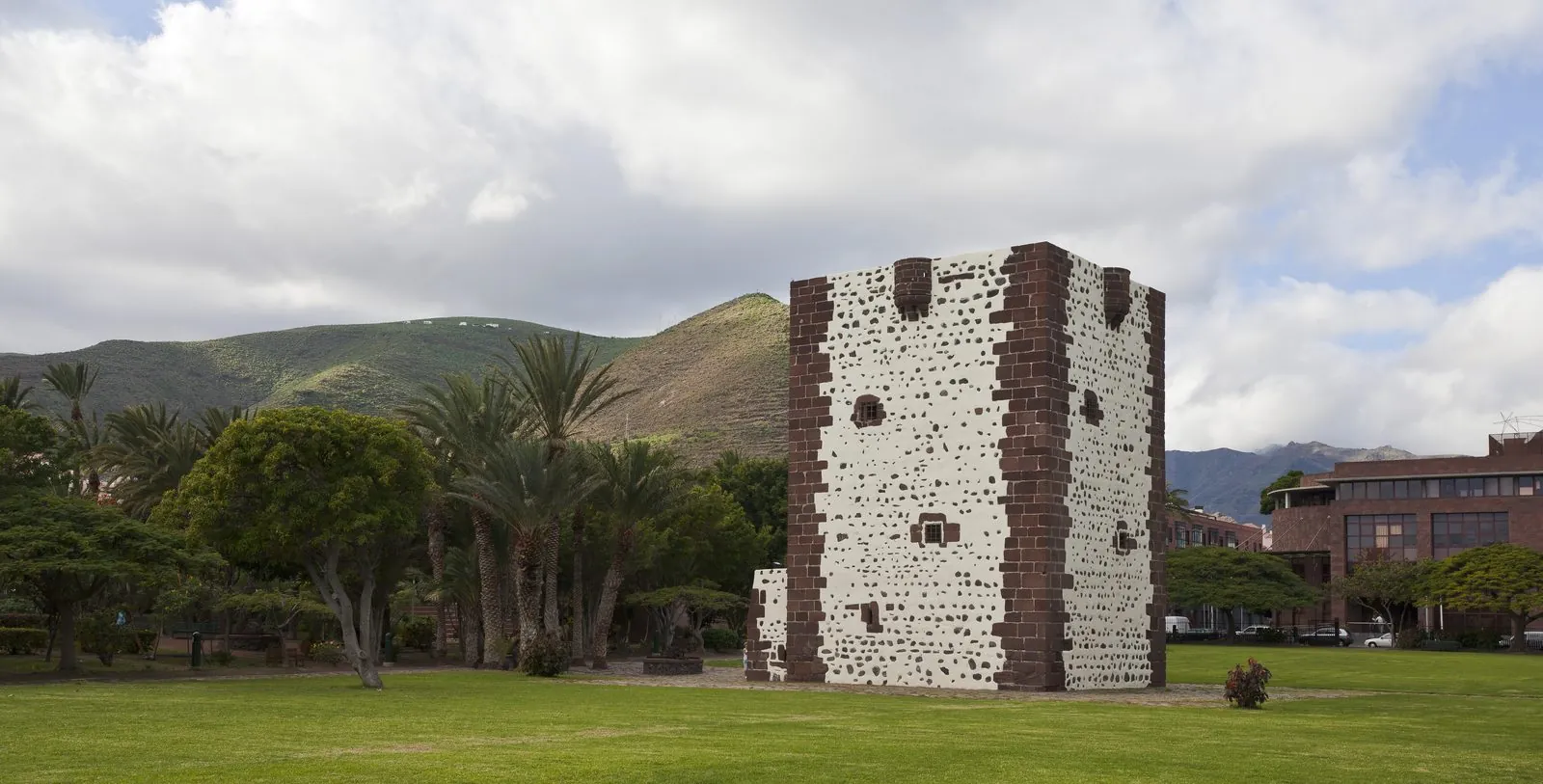
Photo: Diego Delso · CC BY-SA 3.0 · Wikimedia Commons · scaled
Columbus and the old town
San Sebastián's proudest boast is its Columbus connection. Christopher Columbus stopped here to take on water and supplies before his first voyage across the Atlantic in 1492, and the town wears the history lightly but proudly. You can visit the Casa de Colón (Columbus House), a museum in a traditional Canarian house, and see the well from which, tradition says, water was drawn "to baptise America". The nearby church of the Asunción and the Torre del Conde, a squat 15th-century fortified tower set in a park, complete the small but characterful cluster of historic sights.
La Gomera is famous for Silbo Gomero, the whistled language once used to communicate across its deep ravines and now a protected part of the island's heritage — you may catch a demonstration at local restaurants or cultural events.
The beach and harbour
Beside the town lies Playa de San Sebastián, a sheltered, dark-sand town beach right by the harbour — calm, safe and handy for a swim, though this is a working port town rather than a beach resort, so don't expect a grand golden strand. The volcanic dark sand is natural and typical of the island. The harbour itself is the heart of the town, busy with the comings and goings of the inter-island ferries and fishing boats, and pleasant to stroll around in the evening.
Gateway to Garajonay
San Sebastián is the main arrival point and natural base for exploring the island's crown jewel: Garajonay National Park, a UNESCO World Heritage site of ancient laurisilva — a primeval, moss-draped laurel forest that once covered much of southern Europe and survives here in rare, misty abundance. Trails through the park are among the finest walks in the Canaries, and our guide to hiking in the Canary Islands puts them in context. From the capital, roads climb quickly into the green interior.
Where to stay and who it suits
Accommodation is modest and characterful — small hotels, apartments, guesthouses and rural cottages — crowned by the island's Parador, a handsome state-run hotel in a traditional Canarian mansion above the town, with gardens and sea views. San Sebastián suits walkers, nature lovers and independent travellers who want a quiet, authentic base with the best ferry links. Those chasing beaches and a warmer, more alternative scene often head for Valle Gran Rey on the far west coast. Our where to stay guide compares the options.
Eating and evenings
Food here is honest island cooking — family-run restaurants and tapas bars serving fresh fish, goat, hearty stews and local produce, with La Gomera specialities such as its palm honey (miel de palma) and the local almogrote cheese spread well worth seeking out. Try papas arrugadas with mojo and a glass of Canary wine. Evenings are quiet and sociable, centred on the plazas and a good dinner rather than any nightlife scene.
Getting there and around
Most visitors arrive by ferry: fast catamarans and car ferries cross regularly from Los Cristianos in southern Tenerife in under an hour, docking right in the heart of the capital — see our ferries between the islands guide for routes and timings, and viamo's route planning is useful for joining up longer journeys. La Gomera also has a small airport, but the ferry is the main gateway. On the island a hire car is invaluable for the winding mountain roads, though buses (guaguas) do link the main towns.
Nearby
Inland and upward lies Garajonay and its laurel forest, while the roads wind on to the far west and the terraced valley of Valle Gran Rey with its black-sand beaches. Back across the water, the ferries connect to Tenerife and the other western islands for onward island-hopping. Start with our La Gomera hub to plan the rest of your trip.