Miel de palma is La Gomera's liquid treasure — a dark, glossy syrup tapped from the crown of the Canary palm, boiled down to a rich, smoky-sweet caramel that islanders drizzle over cheese, desserts and just about anything that needs a touch of magic. Despite the name (miel means honey), no bees are involved: this is pure palm sap, patiently reduced by hand. It's one of the most distinctive foods in the whole archipelago, and a delicious souvenir of the greenest little island in the Canaries.
Made in serious quantity almost only on La Gomera, where the craft has been protected and passed down for generations, palm honey is a genuine taste of place. Here's how the sap becomes syrup, and all the ways to enjoy it.
What is miel de palma?
Miel de palma is the boiled-down sap of the Canary Island date palm (Phoenix canariensis), the tall, elegant palm that is the natural symbol of the islands. The fresh sap, known as guarapo, is a pale, watery liquid that runs from the cut crown of the tree; when it's slowly cooked and reduced, it thickens and darkens into a deep amber-to-brown syrup with a warm, treacly, slightly smoky sweetness. Think of it as somewhere between maple syrup, dark honey and molasses — but with a character all its own.
It has protected status as a traditional La Gomera product, and the best of it is still made by small producers using methods that have barely changed in centuries. It's this heritage, and the skill involved, that make real miel de palma special.
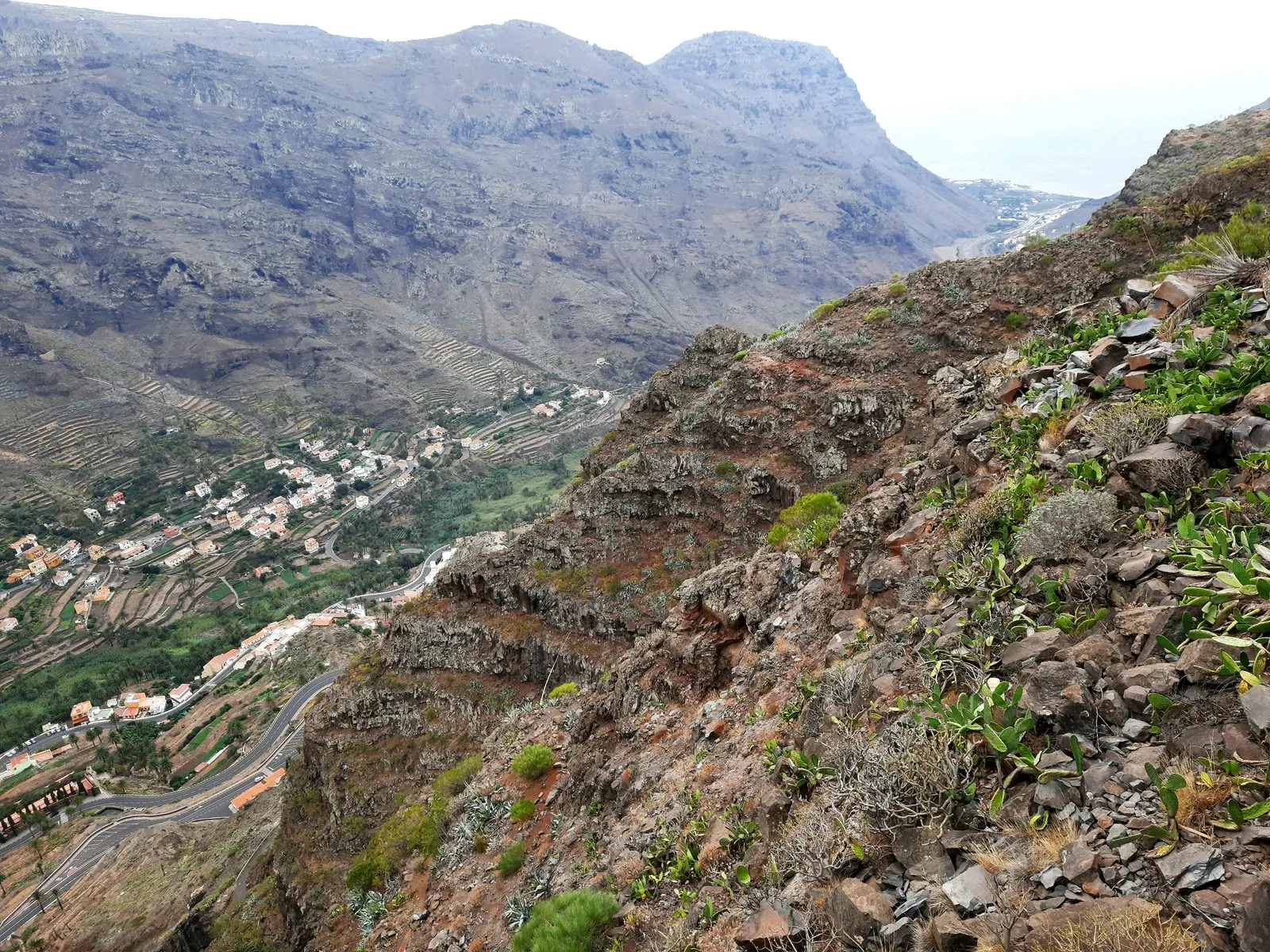
Photo: Bybbisch94, Christian Gebhardt · CC BY-SA 4.0 · Wikimedia Commons · scaled
How palm sap becomes syrup
Making palm honey is patient, expert work. In broad terms:
- Tapping the palm. A skilled tapper — a guarapero — climbs the palm and carefully cuts and scrapes the growing crown so that the sweet sap (guarapo) weeps out, traditionally collected overnight when it runs best.
- Collecting the guarapo. The fresh sap is gathered daily and is highly perishable, so it must be processed quickly before it ferments.
- Boiling and reducing. The watery sap is then slowly boiled and skimmed for hours, evaporating off the water until it concentrates into a thick, dark, glossy syrup.
- Bottling. The finished miel de palma is bottled — no additives, no bees, just reduced palm sap.
Done well, tapping doesn't kill the tree; a healthy palm can be worked in cycles and rested. It's a craft that ties the syrup closely to La Gomera's terraced valleys and its patient, land-based way of life.
Look for the words "miel de palma" and a La Gomera origin on the label, and ideally buy from a local shop, producer or market. It makes a wonderful, uniquely Canarian gift to take home — and unlike many souvenirs, it actually gets used.
How to eat it
Palm honey is wonderfully versatile, and once you have a bottle you'll find endless uses. The classic pairings:
- Over cheese. The great combination — dark, sweet syrup drizzled over fresh or semi-cured Canarian cheese, or over the island's punchy almogrote spread. The sweet-and-savoury contrast is superb.
- On desserts. Poured over leche asada (baked custard), frangollo (a milk-and-maize pudding), ice cream, fried island cheese or fresh fruit. It turns a simple sweet into something memorable — see our Canarian desserts guide for the dishes it loves best.
- With pancakes, yoghurt and toast. Use it as you would maple syrup or honey at breakfast.
- In cooking and drinks. It sweetens sauces, glazes for meat, and even cocktails; some island rums and liqueurs make use of it too.
A taste of La Gomera
More than a sweetener, miel de palma is a symbol of La Gomera itself — of its palms, its terraces, and the traditional skills that survive on a small, unspoilt island. You'll come across it in restaurants there, poured generously over local cheese or a homemade dessert to finish a meal, and in shops and markets ready to take home. It pairs naturally with the island's other specialities, from almogrote to fresh goat's cheese; our Canary cheese guide is the perfect companion.
Beware imitations. Genuine miel de palma is pure reduced palm sap and can be pricey for the work involved; very cheap "palm syrup" may be watered down or blended. Buy the real La Gomera product from a reputable source for the true flavour.
Where to find it
The natural place to try miel de palma is on La Gomera, where it's part of daily food culture and sold by producers, village shops and markets across the island — often alongside almogrote and local cheeses. You'll also spot it in gourmet and souvenir shops on the other islands and at food markets in the bigger towns. Order a dessert drizzled with it, buy a bottle to bring home, and you've captured a little of the island's sweetness. To place it among everything else worth tasting here, browse our guide to Canarian food.