The best restaurants in Lanzarote are a small set of modern Canarian kitchens around Playa Blanca, Arrecife and the island's interior, the dining rooms César Manrique designed inside his tourist centres, and the plain fish places on the harbours. When we checked the Michelin Guide's Canary Islands selection in November 2026, it listed eight restaurants on Lanzarote, and one of them, Kamezí in Playa Blanca, held a star. That is a lot for an island of this size, and it tells you that serious cooking here is no longer confined to the hotels.
The other half of the story is that the island is small. From almost any resort you can reach the best tables in under an hour, which means you do not have to stay where you eat. A hire car, or a taxi for the evening, opens up the whole map.
This page is about where to book and what kind of place you are walking into. What to order once you sit down — the dry malvasía, the limpets, the local cheese, the salt — is on our page about Lanzarote's own dishes, and we will not repeat it here.
How to read the island's restaurant map
Lanzarote's eating splits into four kinds of place, and each one rewards a different plan. The tasting-menu kitchens are few, need booking, and mostly serve dinner. The Manrique centres serve lunch inside some of the most striking rooms in the Canaries, but several of them can only be reached with an admission ticket. The harbour fish restaurants want you at lunchtime and rarely take bookings. And the resort promenades will feed you at any hour, with quality that ranges from very good to forgettable.
A sensible week takes one meal from each. Book the tasting menu before you fly, plan the centre lunches around your sightseeing, and leave the fish to chance and the weather. Restaurant names change faster than any guide can track, so we only name places that were open and listed in an official or inspected source when we checked in November 2026; for everything else we describe the kind of place and where to find it.
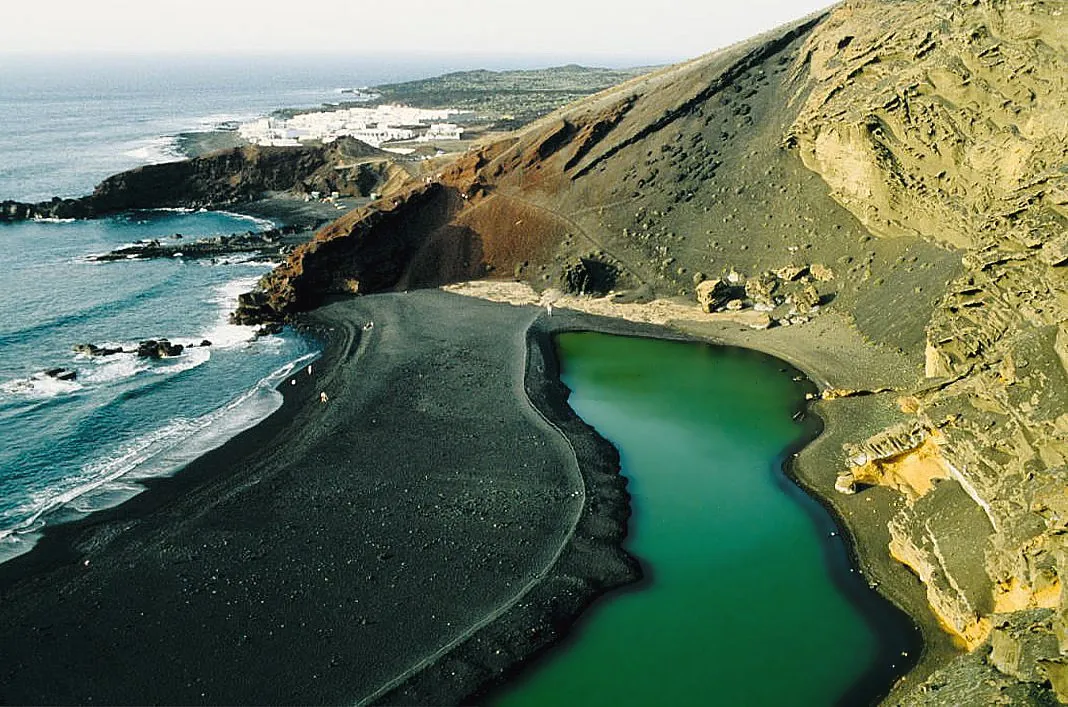
Photo: LBM1948 · CC BY-SA 4.0 · Wikimedia Commons · converted
Playa Blanca: the island's fine-dining corner
It surprises people that the sleepy southern resort of Playa Blanca is where three of Lanzarote's eight Michelin-listed restaurants sit. Kamezí, part of the Kamezí Boutique Villas complex, is the starred one: chef Rubén Cuesta cooks a single creative tasting menu built on Lanzarote and Canary produce, with a cheese trolley and a wine list that both stay inside the archipelago. Its Michelin listing showed dinner only, Tuesday to Saturday, when we checked.
A few streets away, La Cocina de Colacho is a small, couple-run place where chef Nicolás Machín — Colacho to everyone — serves one tasting menu of updated traditional cooking, partly from the restaurant's own vegetable garden. Citurna takes a different line, fusing the Colombian roots of chef Rubén Darío Rivera with island ingredients; it has an à la carte menu as well as two set menus, which makes it the easiest of the three to try without committing a whole evening.
All three are priced as special-occasion meals, but if you are staying in the south, the best kitchen on Lanzarote is a short taxi ride away rather than an expedition.
The prawn that turns up on every serious menu
Here is a detail you will not find on the promenade menus. Read the inspectors' notes for Lanzarote's top restaurants and the same ingredient keeps appearing: prawns from La Santa, the fishing village on the north-west coast best known to visitors for its sports resort. Kamezí serves them, including the deep-red cardinal prawn, and its Michelin entry credits the Oliveros family, who catch them at great depth. SeBE in Costa Teguise is praised for the same prawns, and Palacio Ico in Teguise lists gambas and carabineros from La Santa on its tasting menu.
That tells you something about how Lanzarote's new cooking works. The chefs are not importing luxury; they are leaning on a handful of very local suppliers — prawns from one village, smoked fish from Uga, cheese from the goat farms — and building menus around them. If you see La Santa on a menu, the kitchen knows where its seafood comes from. Ask, and the staff will usually tell you the boat.
Arrecife: the capital eats out
The capital is where islanders go for dinner, and it rewards visitors who skip the resorts for a night. In the Marina Lanzarote district, Lilium is the Michelin-listed choice: a glass-fronted dining room with a terrace over the moored boats and an open kitchen doing updated island cooking, à la carte or as a tasting menu. It is a good first serious meal on the island because it is not a tasting-menu-only commitment.
Two of the Cabildo's own venues are also in Arrecife. Bar Picasso – El Almacén was a meeting place for the island's artists after it opened in 1974, and since reopening in 2022 it serves a menu that reworks Canarian cooking; the tourist-centre network listed it as closed on Sundays, Mondays and public holidays. The restaurant at the Castillo de San José sits in the curved glass room Manrique added to the eighteenth-century fort, looking straight across the bay, and in late 2026 it was open daily, with evening service from Wednesday to Saturday. Around the tidal lagoon of El Charco de San Ginés, the bars are where the everyday tapas are, and it is the easiest place on the island to eat cheaply among locals.
Eating inside Manrique's buildings
Several of Lanzarote's most memorable meals happen inside the tourist centres run by the island council, and they are worth planning around because the rules differ from an ordinary restaurant.
- El Diablo, Timanfaya. On the Islote de Hilario, meat and vegetables are grilled over a well about five metres deep where, according to the centres' own website, the ground temperature reaches around 250 degrees. The circular glass dining room looks over the lava field. It works to the park's hours and needs a park ticket, which since June 2026 is sold only online for a fixed slot; our page on Timanfaya National Park covers the booking.
- Jameos del Agua. The restaurant occupies the Jameo Chico, a chamber of the La Corona lava tube, with dishes such as wreckfish with mojo and papas arrugadas. You reach it as part of a Jameos del Agua visit.
- Casa Museo del Campesino. The restaurant at the Monumento al Campesino serves traditional island cooking at lunchtime, roughly midday to four, and entry to the centre is free.
- Jardín de Cactus. The terrace serves brunch, including a vegetarian menu, in a morning slot that is booked separately and needs garden admission on top.
If you are planning to visit several centres anyway, remember that CACT no longer sells multi-centre vouchers, so the admission side is one ticket per centre; the food is always paid separately.
The volcano grill keeps the volcano's hours. El Diablo is not an evening restaurant. It follows Timanfaya's daytime opening, and with gate sales ended you cannot simply drive up for lunch. Book the park slot first, then plan the meal inside it.
Teguise, Mácher and the island's middle
The centre of the island holds two more of the Michelin-listed kitchens. La Tegala, on the main road at Mácher above Puerto del Carmen, is a panoramic restaurant now run by chef Daniel Jiménez, a Lanzarote native, with three set menus; the inspectors singled out the grilled cherne and a rabbit in salmorejo, and the cellar can be visited. In the old capital, Palacio Ico occupies a restored house in Teguise and offers a short and a long seasonal tasting menu.
Between them lies wine country. Several bodegas in La Geria run restaurants or tapas terraces among the ash pits, which is the most relaxed way to eat lunch with the island's wine; the wineries change their kitchen arrangements often, so check what is serving before you drive out, and nominate a driver.
Haría, the north and the fishing harbours
The green valley of Haría is the north's lunch stop, and its pedestrianised centre has Tacande, listed by Michelin for an updated Canarian menu with daily specials; the inspectors mention a pork dish called cochino embarrado. It is one of the less expensive of the listed restaurants and fits neatly into a day at the Mirador del Río or the lava caves.
Further up, the harbour at Órzola, where the ferry leaves for La Graciosa, has a short row of fish restaurants that do their best trade at lunchtime with people waiting for or returning from the boat. They are simple, priced by weight, and better than the setting suggests.
The same plain grilled-fish lunch is the draw on the other side of the island, at the single street of restaurants in El Golfo and the handful of tables at Playa Quemada. None of these is a booking-ahead kind of place: arrive between one and two, look at what is on the ice, ask what it will weigh, and take the waiter's advice.
The resorts: how to choose on the strip
Puerto del Carmen and Costa Teguise have long fronts of restaurants aimed at British and Irish visitors, and most of them serve competent international food at fair prices. The rules that work here are the same as anywhere: look for a short menu, fish shown rather than photographed, and a few tables of Spanish speakers. In Puerto del Carmen, the old harbour end of town is more rewarding than the long Avenida de las Playas; in Costa Teguise, SeBE on the Avenida de las Islas Canarias is the resort's Michelin-listed table, admired for its fish, seafood and rice — order the rice early, because it is cooked to order.
Booking, timing and cost
Book the tasting-menu restaurants days ahead, more in high season, and check the current days of service when you do; several close on Sundays and Mondays, and opening days in our sources were as of November 2026. Lunch runs from roughly 13:00 to 15:30 and dinner rarely starts before 19:30. The fish restaurants keep short hours and some close on Mondays.
Prices move, so take these as shapes: an inland menú del día is the cheapest proper meal, a harbour fish lunch climbs with the weight of the fish, and the Michelin tasting menus sit in a different bracket altogether. Our page on what things cost keeps the wider figures, and the archipelago's starred restaurants puts Kamezí in its Canary context.
A week of eating well on Lanzarote
If you only book one thing, book a dinner in Playa Blanca, Arrecife or Mácher at one of the island's modern kitchens, and look for La Santa on the menu. Then take one lunch inside a Manrique building — the volcano grill if you are visiting Timanfaya, the Castillo de San José if you are not — and one long fish lunch at El Golfo or Playa Quemada with no plans afterwards.
That combination covers the island's range better than any ranked list could. Lanzarote is small enough that the best table is never far away, and getting there is half the pleasure; the island guide fills in what to do between meals.