Haría is Lanzarote's greenest, gentlest village — the famous "Valley of a Thousand Palms", where a sea of date palms fills a broad northern valley and a spotless white town drowses among them. After the black lava fields that define so much of the island, arriving here feels like stepping into an oasis: palm fronds rustling, whitewashed houses shaded by trees, a pretty plaza and a slow, unhurried air. It was the place the great artist César Manrique chose to spend his final years, and it's easy to see why.
Set in the volcanic north of Lanzarote, below the island's highest ridges, Haría is a delightful contrast to the resorts and a natural stop on any tour of the north. It combines a lovely village, a fascinating artist's house-museum and a much-loved craft market into one of the island's most rewarding inland outings.
What it's like
Haría sits in a fertile valley scattered with thousands of palm trees — legend says one was once planted for every boy born, and two for every girl. The town itself is immaculate: low white houses with green shutters, flower-filled corners, a shady central square and a handsome church, all wrapped in that improbable greenery. On an island of stark volcanic beauty, it feels soft, sheltered and alive.
The mood is calm and genuinely local. This is a working village where people go about their day, not a resort built for visitors, and much of the pleasure is simply strolling the quiet lanes, sitting under the trees in the plaza, and enjoying a pace that runs slower than the coast. The strict, low-rise island architecture that Manrique championed is on lovely display here.
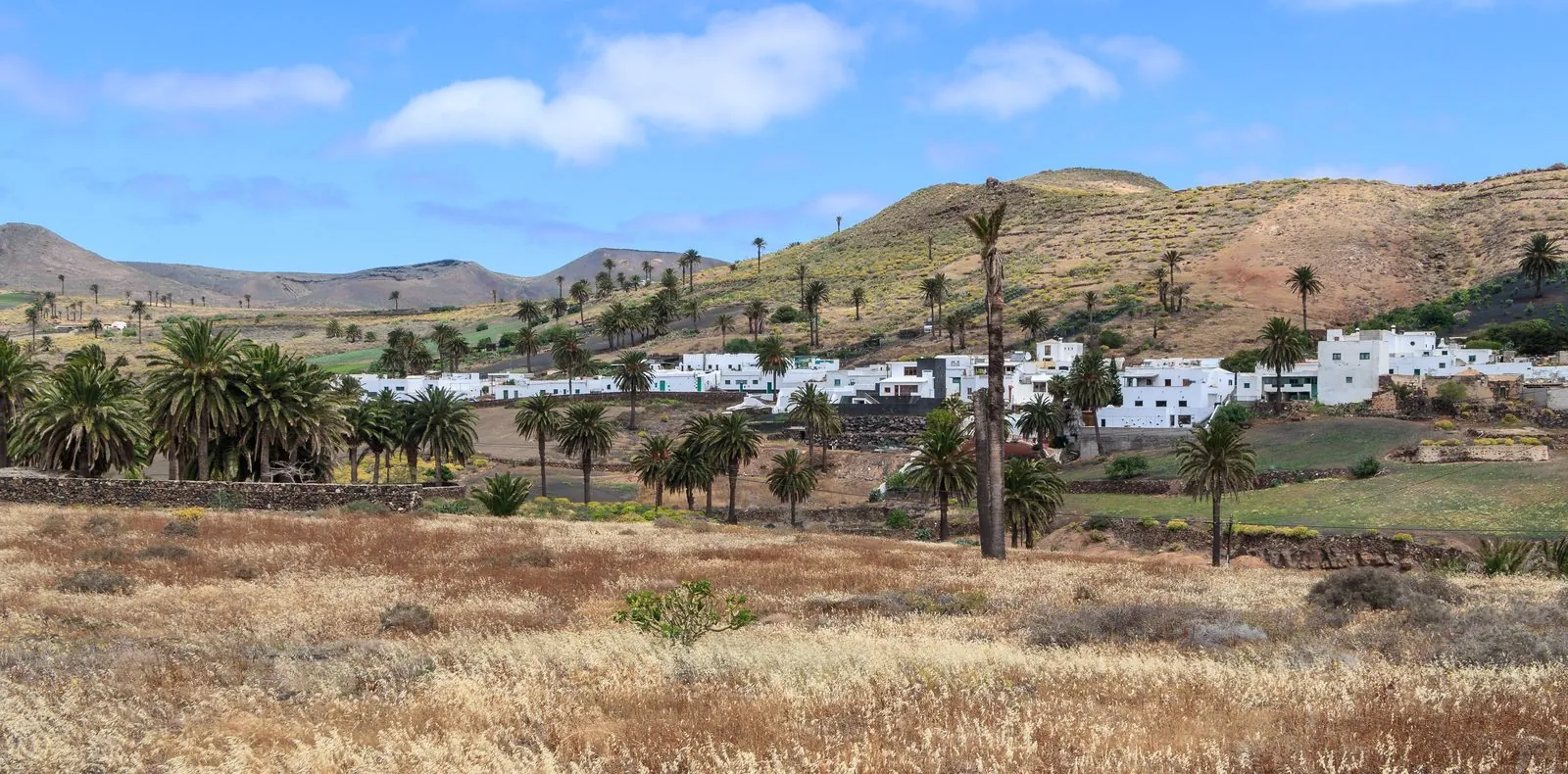
Photo: H. Zell · CC BY-SA 3.0 · Wikimedia Commons · scaled
What to see and do
Haría's most personal attraction is the Casa-Museo César Manrique, the final home of the artist and architect who shaped Lanzarote's look and fought to keep it beautiful. Left much as he lived in it, with his studio, personal effects and garden, it's an intimate companion piece to his grander creations; our guide to César Manrique on Lanzarote ties them all together.
The other highlight is the weekly Saturday craft market, when the central square fills with stalls selling local crafts, food, produce and artwork — one of the best and most authentic markets on the island, and a fine morning out. Beyond that, the appeal is the valley itself: walk among the palms, seek out the miradors, and soak up the green calm.
Time your visit for a Saturday morning to catch the craft market at its liveliest, then pair it with lunch in the village and a drive up to the northern viewpoints. The market winds down by early afternoon.
Where to stay and eat
Haría is a lovely spot for a leisurely lunch. Village restaurants and cafés cluster around the plaza and the palm-shaded streets, serving honest Canarian cooking — fresh fish, grilled meats, local cheese and papas arrugadas with mojo — with plenty of terrace tables under the trees. It's the kind of unhurried, seasonal food our Canarian food guide loves.
Accommodation is small-scale and characterful — a handful of rural cottages (casas rurales) and guesthouses in and around the valley, ideal for travellers who want a quiet, scenic base away from the coast. Most visitors, though, come on a day trip and stay in the resorts; our where to stay guide compares Lanzarote's very different bases.
Getting there and around
Haría lies in the north of Lanzarote, reached by a scenic road that winds up and over the island's central ridge — the descent into the palm valley, with the miradors along the way, is a highlight in itself. A hire car is much the best way to reach it and to link the northern sights; see our guides to getting around and car hire. From the main resorts allow around 40 minutes to an hour. Buses do serve the north but run infrequently, so a car gives you the freedom to combine several stops.
Nearby
Haría sits at the heart of Lanzarote's spectacular north. Just up the road is the Mirador del Río, Manrique's cliff-top viewpoint gazing across to the island of La Graciosa, while nearby lie his other famous creations — the Jameos del Agua and the Cueva de los Verdes lava tubes. The historic old capital of Teguise lies to the south. Start with our Lanzarote hub to build the north into your trip.