Icod de los Vinos is one of Tenerife's most characterful old towns — a handsome hillside settlement on the green north coast, famous the world over for its ancient dragon tree and for the malvasía wines that give the town its name. Cobbled streets, grand old mansions and flower-filled plazas climb between banana plantations and the flanks of Mount Teide, and at the heart of it stands a living monument thought to be over a thousand years old. This is the cultured, historic Tenerife that beach holidays too often miss.
Set amid the vineyards and volcanic soils of the island's lush north-west, Icod pairs a genuinely lovely old quarter with a trio of unmissable attractions. It's an easy and rewarding stop on any tour of Tenerife, especially alongside its beautiful neighbour Garachico just down the coast.
What it's like
Icod sits on a slope above the Atlantic, looking out to sea with Teide rising behind it. The old town is a delight to wander: steep cobbled lanes, carved wooden balconies, aristocratic town houses and a clutch of fine churches and squares, all softened by tropical greenery. The northern climate keeps everything lush — this is the greener, cooler, more agricultural face of the island, where bananas and vines thrive.
It's a real working town rather than a resort, with a strong local feel and a proud sense of its own history. The pace is gentle, the crowds are day-trippers rather than sunbathers, and much of the pleasure lies simply in strolling the streets, ducking into a wine cellar and soaking up centuries of atmosphere.
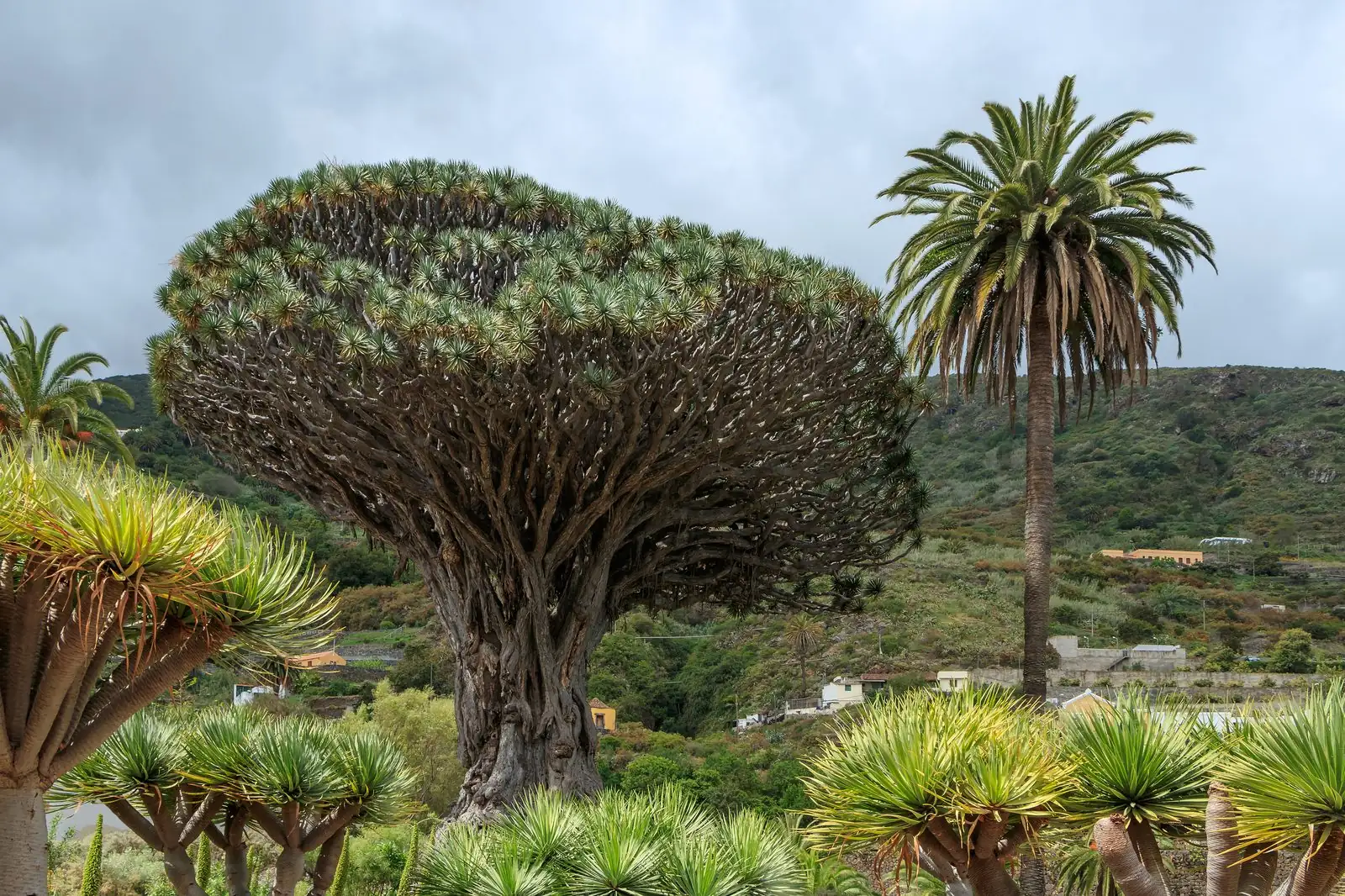
Photo: H. Zell · CC BY-SA 3.0 · Wikimedia Commons · scaled
What to see and do
The town's superstar is the Drago Milenario, a vast dragon tree (drago) said to be many hundreds of years old — possibly close to a thousand — and one of the great natural symbols of the Canaries. It towers over a park at the edge of the old town, and its strange, many-branched form and blood-red sap have inspired legends for centuries. Our guides to the Drago de Icod and to the Canarian dragon tree tell the full story.
Icod's other identity is wine. The "de los Vinos" in its name is no accident: the town has made wine since the Spanish conquest, and its sweet malvasía (malmsey) was once prized across Europe and even name-checked by Shakespeare. Small bodegas and wine shops let you taste the local drop; our Canary wine guide explains what makes these volcanic wines special.
Just outside town lies the Cueva del Viento, one of the world's longest volcanic lava tubes. Visits are by guided tour only and places are limited, so book ahead rather than turning up on spec.
Beyond the dragon tree, take time for the old quarter itself — the Plaza de la Iglesia and the church of San Marcos, the mansion-lined streets, and the viewpoints out over the banana terraces to the sea.
Where to stay and eat
Icod is northern Tenerife at its most flavourful. Local restaurants and guachinches (rustic farmhouse eateries) serve hearty island cooking — grilled meats, fresh fish, rich stews and papas arrugadas with mojo — washed down with the town's own wine. It's honest, seasonal food of the sort our Canarian food guide loves, and far better value than the resort strips.
Most visitors come to Icod on a day trip and sleep elsewhere — in Puerto de la Cruz or the busier southern resorts — though there are small hotels and rural guesthouses in and around the town for those who want to linger in the quieter north. Our where to stay guide compares the island's very different bases.
Getting there and around
Icod sits on Tenerife's north-west coast, easily reached by road from Puerto de la Cruz to the east and from Garachico just below it. A hire car is the most flexible way to explore this green corner and combine several stops in a day — see our guides to getting around and car hire. Buses (guaguas) do connect the northern towns, but a car lets you pair Icod, Garachico and the Teide road at your own pace. The old town is best explored on foot, so wear comfortable shoes for the cobbles and slopes.
Nearby
Icod pairs beautifully with Garachico, the picture-perfect coastal town just down the hill with its famous volcanic rock pools. Inland, the road climbs towards the extraordinary lunar landscapes of Mount Teide, Spain's highest peak, while eastward lies the resort town of Puerto de la Cruz. Start with our Tenerife hub to weave the historic north into a wider island trip.