Garachico is the most beautiful town on Tenerife's north coast — and the one with the most dramatic story. Once the island's richest and busiest port, it was engulfed by a volcanic eruption in 1706 that poured lava through its streets and into the sea, wiping out the harbour that had made its fortune. Astonishingly, the townsfolk rebuilt, and today Garachico is a jewel of cobbled lanes, old convents and churches, framed by the black lava that reshaped it — including the wonderful natural rock pools of El Caletón, where you can swim in the very flows that once destroyed the town.
What it's like
Tucked between the mountains and the Atlantic, Garachico is small, elegant and gloriously atmospheric. The 1706 eruption paradoxically preserved it: with its deep harbour gone, the town lost its commercial importance and was left more or less as it was, so its historic centre survives beautifully intact. Wander and you'll find handsome plazas, noble stone houses, flower-filled patios and a wonderful sense of a place that time — and lava — set gently aside.
It's a town made for slow strolling, with far more charm than crowds. Cafés and small restaurants spill onto shady squares, and the whole place is compact enough to explore comfortably on foot in a morning. For many visitors it's the prettiest and most rewarding stop on the whole north coast.
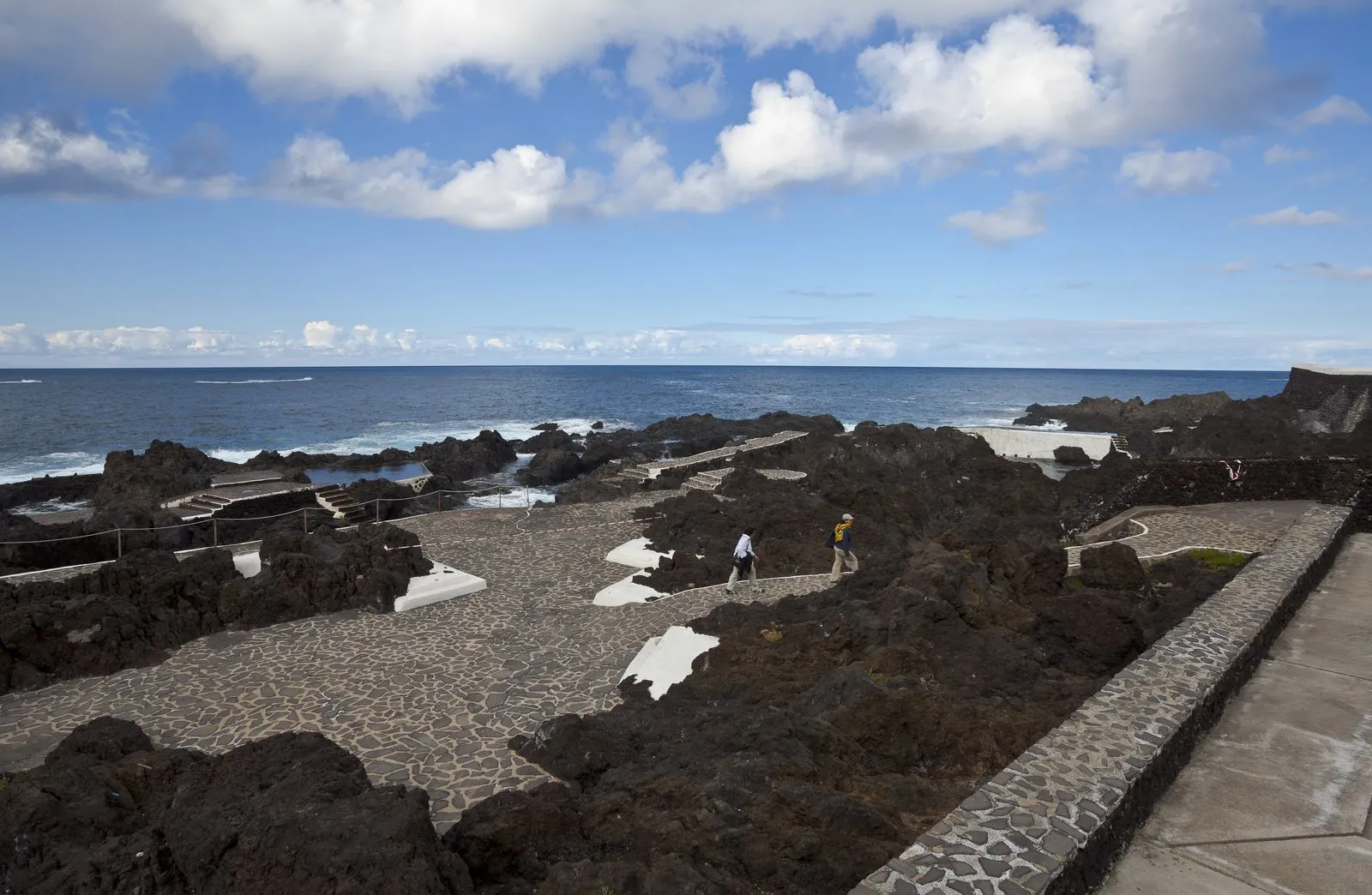
Photo: Diego Delso · CC BY-SA 3.0 · Wikimedia Commons · scaled
The 1706 eruption and its legacy
In May 1706 a fissure opened on the slopes above and sent rivers of lava down towards the coast, burying much of the port and filling in the harbour. It was a catastrophe that ended Garachico's golden age as Tenerife's main trading gateway — that role passed to Santa Cruz — but the town endured. Everywhere you look, the eruption's mark remains: black rock underfoot, lava-stone buildings, and the striking coastline of hardened flows. Understanding that history is what makes a walk here so poignant.
Look for the old gateway. Down by the waterfront, the Puerta de Tierra — an old harbour gate — now sits stranded well inland, a vivid marker of where the sea and the port used to be before the lava pushed the coastline out. It's a small detail that brings the whole story to life.
El Caletón: the natural lava pools
Garachico's star attraction is El Caletón, a series of natural swimming pools formed where the 1706 lava met the ocean and cooled into a maze of dark rock. Sheltered from the open Atlantic, the crystal-clear seawater pools are linked by little bridges and steps, making a magical (and free) place for a dip. It's one of the most photogenic spots on the coast — swimming in the very lava that once destroyed the town is an experience you won't forget.
Respect the sea. The pools are natural, not a lido — the rocks are sharp and can be slippery, and on rough or high-tide days the ocean can surge over the barriers, so bathe only in calm conditions and take local advice. Water shoes are a good idea. Facilities are limited, so this is nature swimming, not a resort pool.
Old convents, churches and streets
For a small town, Garachico is rich in history. The former Convent of San Francisco houses a local museum and a lovely cloister; the church of Santa Ana and other religious buildings survived or were rebuilt after the eruption; and up on the shore stands the small Castillo de San Miguel, a squat 16th-century fort that outlasted the lava and now hosts modest exhibitions. Between the monuments, simply losing yourself in the cobbled lanes — spotting carved balconies, quiet courtyards and bougainvillea-draped corners — is the real pleasure.
Practical tips
Garachico is an easy half-day, or a full one if you swim and take a long lunch. Bring swimwear and water shoes for El Caletón, comfortable shoes for the cobbles, and a relaxed attitude — this is a place to linger, not rush. There are plenty of cafés and small restaurants for a leisurely meal with a sea view.
The town sits on the north-west coast, reached by a scenic road that winds down the cliff from the main highway (the descent itself, with its hairpins and views, is memorable). It's best explored with a hire car, though it can also be reached by regional bus. Combine it with the coast road for a lovely day's drive.
Nearby
Garachico pairs beautifully with the other highlights of Tenerife's green north. Just inland lies the Cueva del Viento, a remarkable volcanic lava tube — among the longest in the world — where guided tours reveal how these very eruptions shaped the island underground. Further along the coast you'll find the historic hill town of La Orotava, the resort of Puerto de la Cruz, and the dramatic banana-terraced slopes that run beneath the peak of Teide.
Buried by lava, rebuilt with grace, and now home to the loveliest rock pools on the island — Garachico is Tenerife's most moving and beautiful little town.
Whether you come to swim in the lava pools, trace the story of the eruption, or simply wander streets that survived it, Garachico is one of the north's true gems — and a highlight of any tour of Tenerife beyond the beaches. Add it to your sightseeing list.