La Orotava is the grand dame of Tenerife's north — a stately hill town of cobbled streets, carved wooden balconies and aristocratic mansions, spread across a green slope above Puerto de la Cruz. This is the island's most complete historic town centre, its old quarter declared a national heritage site, and it makes a wonderful day out for anyone who wants the culture, architecture and flowers of Tenerife rather than its beaches. Come for the balconies and the gardens; time it right and you'll catch the town carpeting its streets with flowers and coloured sand for Corpus Christi, one of the most beautiful festivals in Spain.
What it's like
Perched above the lush Orotava Valley, with Mount Teide looming behind and the sea glinting below, La Orotava grew rich on sugar and wine in the centuries after the conquest, and its wealth shows. The historic centre is a steep, handsome tangle of cobbled lanes, noble houses with ornate wooden balconies, baroque churches and quiet plazas. It's genuinely lovely to wander, though be warned — this is a town built on a hillside, so expect some proper climbing between the sights.
Unlike the resort towns down on the coast, La Orotava is a real, working Canarian town: local shops, traditional bakeries, students and workers going about their day. That authenticity is a big part of its charm. Pair it with a stroll and a coffee and you have the perfect antidote to a beach-heavy holiday.
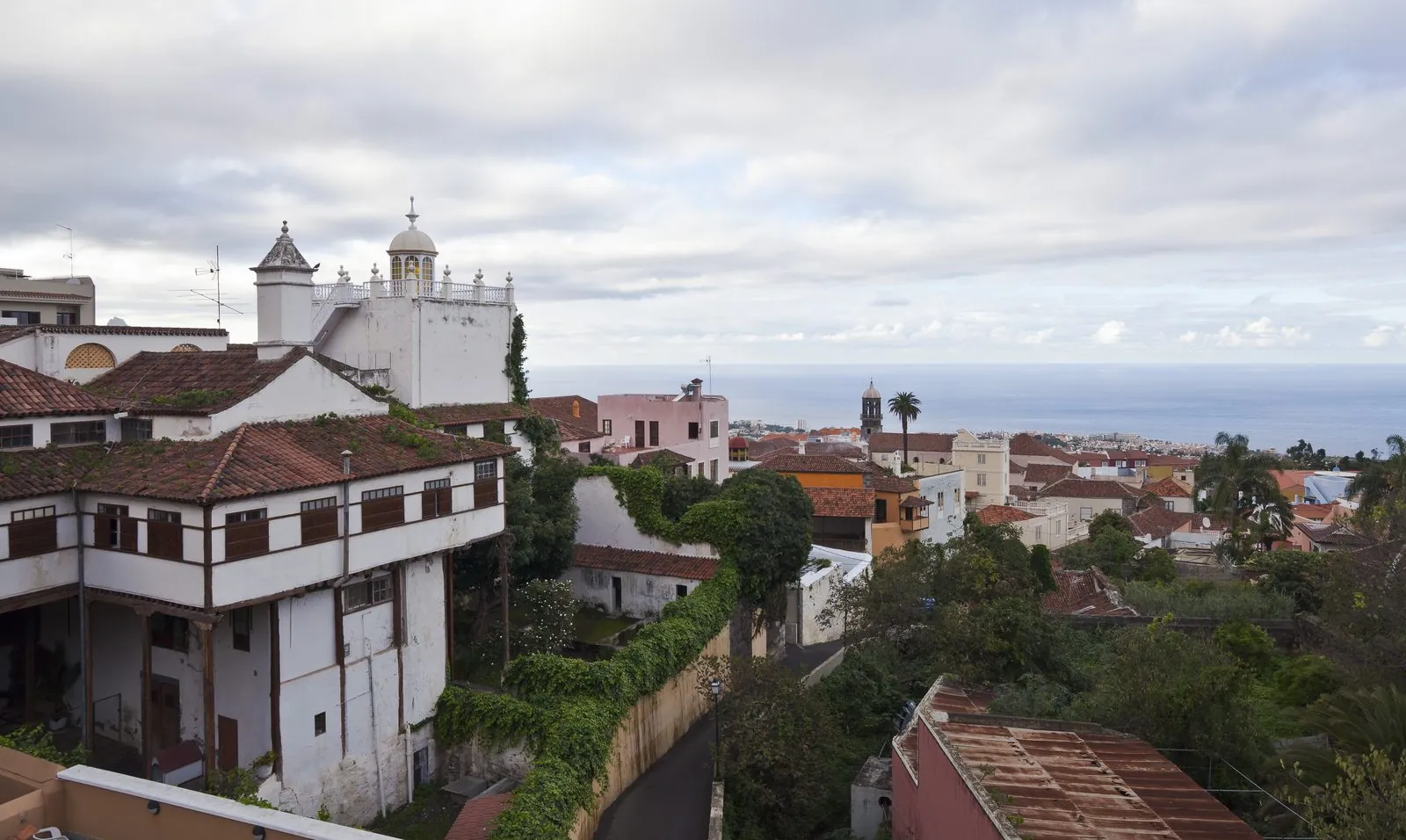
Photo: Diego Delso · CC BY-SA 3.0 · Wikimedia Commons · scaled
What to see
Casas de los Balcones
The town's signature sight is the Casas de los Balcones, a pair of 17th-century mansions famous for their exquisite carved Canarian-pine balconies and a beautiful galleried courtyard. Inside you'll find traditional craft displays — especially the intricate calados (drawn-thread embroidery) for which the town is known — and shops selling local crafts and produce. It's touristy but genuinely gorgeous, and the balcony-lined courtyard is one of the most photographed spots in the north.
Churches and mansions
Don't miss the soaring baroque church of Nuestra Señora de la Concepción, one of the finest in the Canaries, and the elegant town hall square. Wander the surrounding streets to spot grand doorways, cloistered patios and viewpoints looking out over the valley to the ocean. A short, self-guided loop of the old town takes in most of the highlights in a couple of hours.
Gardens
La Orotava is a town of gardens. The Hijuela del Botánico, a small botanical garden right in the centre, packs an astonishing variety of exotic plants into a compact, free-to-enter green oasis — a lovely, shady pause between the mansions. The wider Orotava Valley has long been celebrated for its fertility and greenery, which is exactly why the wealthy built their estates up here.
Wear good shoes and take it slowly. The old town is steep and cobbled, and the best views come from the higher streets. Start at the top and work downhill, and reward yourself with a coffee and a slice of local cake in one of the plaza cafés.
Corpus Christi: the flower and sand carpets
La Orotava's most magical moment comes in late spring, around Corpus Christi (the date moves with the church calendar, usually late May or June). The whole town spends days creating extraordinary alfombras — carpets laid across the streets and the town-hall square using flower petals and, most spectacularly, coloured volcanic sand and earth brought down from the slopes of Teide. The results are vast, intricate works of art, only to be walked over and swept away when the religious procession passes. It's a proud local tradition and a stunning spectacle.
Dates and crowds vary. The Corpus Christi carpets are tied to a moveable religious date and draw big crowds, so check timings before planning a trip around them. For the full picture of the island's celebrations, see our guide to festivals and carnival. Even outside festival season, La Orotava is well worth visiting for its everyday beauty.
Practical tips
La Orotava sits just above Puerto de la Cruz, so the two make a natural pairing — many visitors combine a morning in the historic town with an afternoon by the sea. The old centre is compact but hilly; allow two to three hours to do it justice. Parking in the narrow streets can be tricky, so use a car park on the edge of the centre and walk in.
Getting here is easy: it's a short hop by bus or hire car from Puerto de la Cruz, and not far from the island capital. If you're driving, the town also sits on one of the scenic northern approaches up to Teide National Park, so it slots neatly into a bigger day out.
Nearby
The green, cultured north of Tenerife has plenty to string together: the seaside charm and botanical garden of Puerto de la Cruz, the historic university city of La Laguna (a UNESCO World Heritage site), the wild laurel forests of Anaga Rural Park, and of course the long climb up to Mount Teide. La Orotava is the perfect cultured centrepiece for a day exploring this side of the island.
Carved balconies, baroque churches and streets carpeted in flowers — La Orotava is the historic heart of Tenerife, and the north's most rewarding town to walk.
Whether you catch the Corpus Christi spectacle or simply wander the cobbles on an ordinary morning, La Orotava shows you a richer, older Tenerife — one that too many beach holidays miss. Fold it into your plans and you'll thank yourself.