The Canary Islands know how to throw a party — and the calendar is packed with them. These islands celebrate hard and often, from the world-famous Carnivals that turn whole cities into all-night street parties, to solemn Easter processions, streets carpeted in flowers, and hillside pilgrimages that end in wine, folk music and grilled meat. Many fiestas are deeply local, rooted in the old farming and fishing year, and stumbling into one is one of the great joys of travelling here. This guide runs through the big set-pieces, when they roughly fall, and how to time a trip around them — bearing in mind that many dates shift each year.
Almost every date below moves from year to year — Carnival and Easter in particular follow the church calendar and can land weeks apart depending on the year. Always check the exact dates with the local town hall (ayuntamiento) or tourist office before you book around a fiesta.
Reyes — Three Kings, 6 January
The Canary festive season doesn't peak on Christmas Day but on the eve of the Epiphany. On the evening of 5 January the Cabalgata de Reyes — the Three Kings parade — winds through towns across the islands, with the Magi tossing sweets to children from elaborate floats. The next morning, 6 January, is the traditional day for exchanging presents. It's a warm, family-focused celebration and a lovely, gentle introduction to island life if you're visiting in the quiet early days of the year.
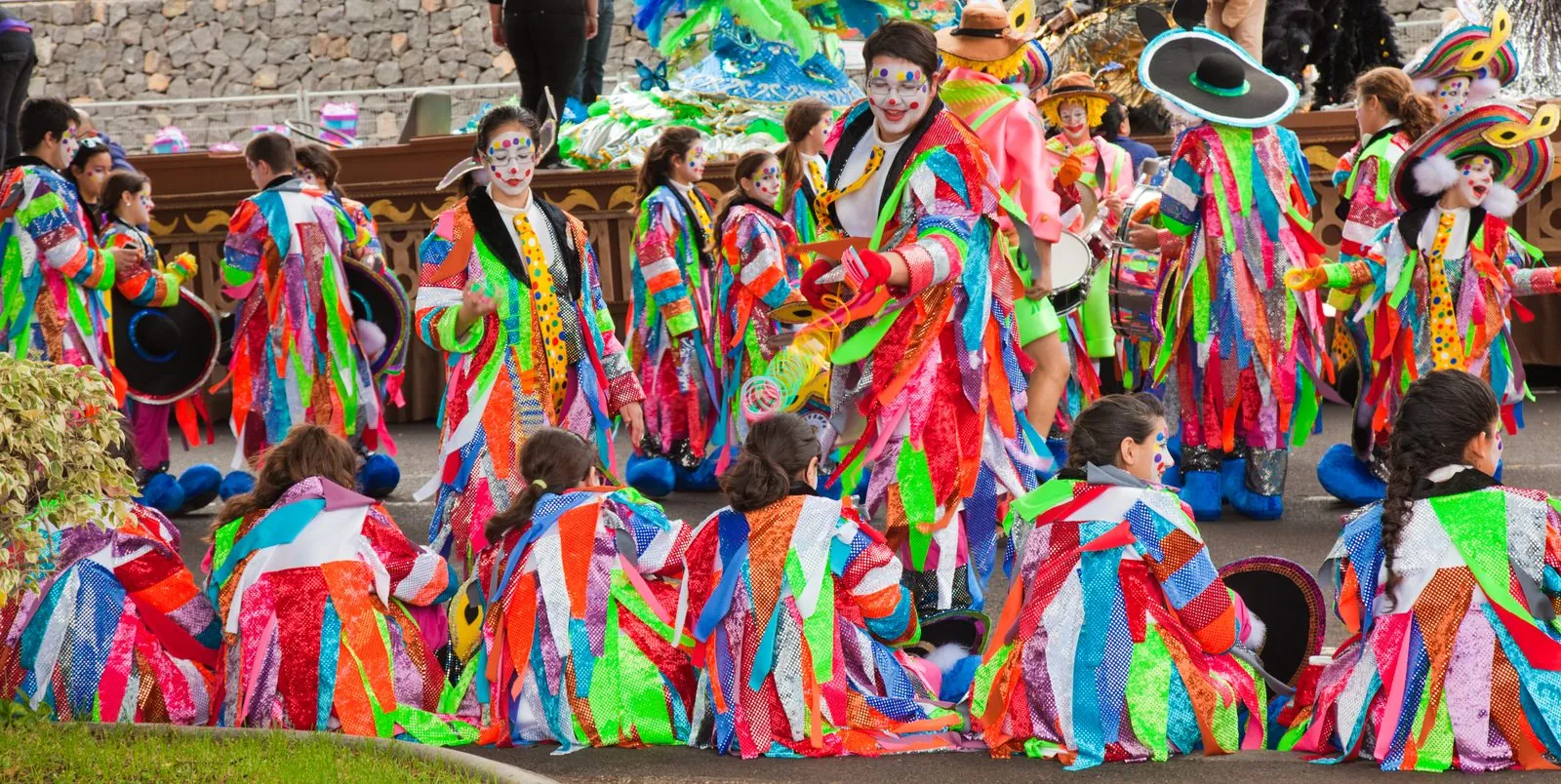
Photo: Tamara Kulikova · CC BY-SA 4.0 · Wikimedia Commons · scaled
Carnival — the islands' wildest weeks
If there's one thing to build a trip around, it's Carnival. Usually falling in February and sometimes spilling into early March, it's the biggest, most exuberant event of the year, and the Canaries do it on a scale that rivals anywhere on earth. The Carnival of Santa Cruz de Tenerife is the giant — one of the largest carnivals in the world, famous for its towering feathered costumes, the crowning of the Carnival Queen, drag galas and days of parades and street parties. Across the water, Las Palmas de Gran Canaria stages its own enormous, equally beloved Carnival. Both fill hotels and push prices up, so book far ahead.
Every island and many towns hold their own versions, each with local quirks. A classic closing ritual is the Entierro de la Sardina — the mock "Burial of the Sardine", a gloriously theatrical funeral procession that ends with a giant papier-mâché fish going up in flames. The historic university town of La Laguna on Tenerife is another lively spot to catch the festivities.
Want the spectacle without the crush? Base yourself a little outside the host city and travel in for the big parade nights, or catch one of the smaller town Carnivals — same spirit, far easier to find a bed and a spot to watch.
Semana Santa — Holy Week
In the run-up to Easter, the mood turns from riotous to reverent. Semana Santa brings solemn, atmospheric processions through the old towns, with religious brotherhoods carrying ornate floats to the beat of drums. La Laguna and the northern towns of Tenerife are among the most striking places to witness it. Easter is a major Spanish holiday, so expect busy roads and higher prices, particularly over the long weekend — our best time to visit guide flags this as one of the year's spikes.
Corpus Christi — the flower carpets of La Orotava
In late spring or early summer, the town of La Orotava on Tenerife becomes the setting for one of the islands' most photographed traditions. For Corpus Christi, its streets are covered in intricate alfombras — vast, detailed "carpets" made from coloured volcanic sand, flower petals and leaves, depicting religious and artistic scenes. They take days of painstaking work and last only until the procession walks over them. It's a magical thing to see, and worth planning a day trip around if your visit coincides.
Summer romerías and patron-saint fiestas
Through the warm months, nearly every town honours its patron saint with a fiesta, and the most charming form is the romería — a folk pilgrimage where locals dress in traditional island costume, parade ox-carts laden with food and wine, dance to timple music and hand out generous helpings to onlookers. They're joyful, welcoming and utterly authentic; if you see one advertised, go. Coastal towns also celebrate the Virgen del Carmen, patron of fishermen, around mid-July, carrying her statue out to sea on flower-decked boats.
Bajada de la Virgen — La Palma, every five years
Some fiestas are so grand they only come round occasionally. On La Palma, the Bajada de la Virgen de las Nieves is a month-long extravaganza held just once every five years, when the island's patron Virgin is brought down from her mountain sanctuary to the capital, Santa Cruz de La Palma. Its highlight, the surreal Danza de los Enanos (Dance of the Dwarves), is a beloved island institution. If your trip falls on a Bajada year, it's an unforgettable, once-in-a-lustrum spectacle worth reorganising plans for.
A rough festival calendar
Use this as a broad guide to plan around, not a fixed timetable — the movable feasts shift every year.
| When (roughly) | Festival | Where |
|---|---|---|
| 5–6 January | Reyes (Three Kings) | All islands |
| February (into March) | Carnival | Biggest in Santa Cruz de Tenerife & Las Palmas |
| March / April | Semana Santa (Holy Week) | La Laguna & historic towns |
| May / June | Corpus Christi flower carpets | La Orotava (Tenerife) |
| Around 16 July | Virgen del Carmen (fishermen's fiesta) | Coastal towns, all islands |
| Summer | Romerías & patron-saint fiestas | Towns across every island |
| Every 5 years (summer) | Bajada de la Virgen | Santa Cruz de La Palma |
| December – 6 Jan | Christmas & festive season | All islands |
Planning around the fiestas
Festivals are one of the best reasons to visit, but they fill the islands fast — Carnival and Easter especially sell out hotels and push up prices, while local fiestas can mean road closures, packed buses and shops shutting for the day. Book accommodation early, keep your plans flexible, and check dates locally before committing. Time it right, and you'll come home with far more than a tan. To pin down your dates, read our best time to visit guide, then dive into the islands' capitals at Las Palmas and historic La Laguna, two of the finest places to catch the party.