La Palma is the greenest Canary Island — so lush it's nicknamed "la Isla Bonita" — closely followed by La Gomera with its ancient laurel forest and the misty green north of Tenerife, while the desert islands of Lanzarote and Fuerteventura sit at the arid opposite end. If your mental picture of the Canaries is bone-dry lava fields, the western and northern islands will surprise you: there are cloud forests dripping with moss, banana plantations, pine woods and terraced green valleys. Here's where to find the archipelago at its most verdant.
Why some Canary Islands are green and others are desert
The difference comes down to height and rain. The taller, western islands rise high enough to catch the moisture carried on the north-east trade winds, which condenses into cloud against their northern slopes and feeds dense forests. The low, flat eastern islands — Lanzarote and Fuerteventura — barely interrupt the wind, so almost no rain falls and the landscape stays desert-dry. It's the same weather system that decides where the sun shines, explained in our Canary Islands weather guide. The upshot: green means high, western and northern.
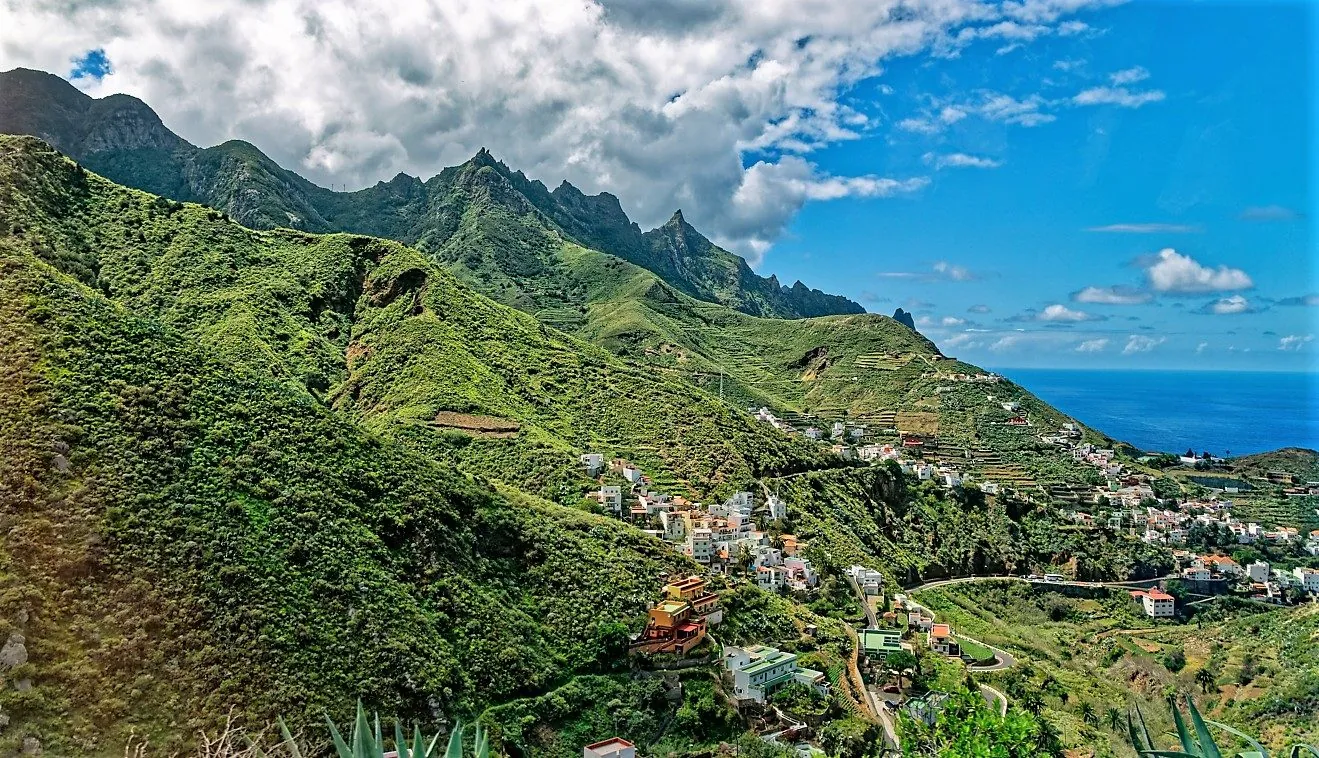
Photo: Holger Uwe Schmitt · CC BY-SA 4.0 · Wikimedia Commons · converted
The islands ranked by greenery
| Island / area | Greenery | Signature landscape |
|---|---|---|
| La Palma | Greenest overall | Pine forest, craters, banana terraces |
| La Gomera | Superbly lush | Ancient laurel cloud forest |
| North Tenerife (Anaga) | Very green | Laurel forest, deep ravines |
| North Gran Canaria | Green and fertile | Terraced valleys, mountain villages |
| El Hierro | Green pockets, wind-blasted | Juniper woods, misty ridges |
| Lanzarote & Fuerteventura | Arid — the desert isles | Volcanic and sandy, minimal vegetation |
La Palma: "the Beautiful Island"
No island earns its nickname more than La Palma. Steep and thickly forested, it's a place of pine woods, the vast green amphitheatre of the Caldera de Taburiente, tumbling waterfalls and endless banana plantations along the coast. It's a walker's paradise — see hiking in the Canaries — and, thanks to that same clean, moist air, one of the world's great stargazing spots by night. If pure green is what you're after, start here.
La Gomera and the laurel forest
The star of La Gomera is Garajonay National Park, a UNESCO World Heritage site protecting one of the finest surviving laurisilva laurel forests — a prehistoric type of cloud forest that once covered much of southern Europe. Wandering its damp, moss-hung, fog-wreathed trails feels like stepping back millions of years. A short ferry from Tenerife makes it an easy addition to a bigger-island trip.
Tenerife's green north: Anaga
Tenerife is best known for the volcanic moonscape around Teide, but its north-eastern tip is astonishingly green. The Anaga Rural Park is a labyrinth of razor-back ridges cloaked in the same ancient laurel forest, laced with walking trails and tiny hamlets, all a short drive from Santa Cruz. The green north around Puerto de la Cruz is a different world from the arid southern resorts of the same island — see the Tenerife hub.
Gran Canaria's fertile interior
Called "a continent in miniature", Gran Canaria packs deserts, mountains and green valleys into one island. Head into the mountainous, wetter north and centre and you find terraced farmland, pine forest, reservoirs and pretty villages — a lush contrast to the dunes and sunshine of the southern coast. It's a reminder that greenery on the big islands is a question of which way you drive.
The desert islands — and why that's not a bad thing
At the other extreme, Lanzarote and Fuerteventura are near-treeless and proud of it. Lanzarote's vineyards grow in black volcanic gravel and its landscapes are stark and sculptural; Fuerteventura is all endless beaches, dunes and big empty skies. If it's greenery you want, they're not the pick — but their arid beauty is a genuine draw in its own right, and they're far sunnier and drier for a beach holiday. It's the classic Canarian trade-off: sunshine for scenery.
El Hierro: green against the odds
Often overlooked, El Hierro is greener than its remote, wind-blasted reputation suggests. The smallest of the main islands is a UNESCO Biosphere Reserve where ancient junipers grow bent almost horizontal by the trade winds, misty ridges catch the cloud, and terraced smallholdings cling to the slopes. It's not lush in the La Palma sense, but it's a world away from the deserts of the east — and, because so few visitors make the journey, you'll often have its green trails entirely to yourself.
The best way to see the green islands
Greenery here is best experienced on foot. The laurel forests of Garajonay and Anaga, the pine woods and craters of La Palma and the terraced valleys of northern Gran Canaria are all threaded with well-marked walking trails, from gentle strolls to full-day hikes. A hire car gets you to the trailheads, since public transport into the hills is thin; see getting around the Canaries. Spring, when the hillsides flower after the winter rains, is the greenest and prettiest time of all.
Green means cloudier — plan for it
One honest caveat: the green comes from cloud and rain, so the lushest islands and coasts are also the cloudiest and coolest. La Palma, La Gomera and the northern coasts see more grey days than sun-baked Maspalomas or Costa Adeje. Pack a layer and a light waterproof for the forests, and don't expect an all-day tan in the laurisilva. Our best time to visit guide explains the seasonal detail.
The bottom line: which is the greenest Canary Island?
La Palma takes the crown for sheer, island-wide greenery, with La Gomera's laurel forest a magical close second and the green north of Tenerife and Gran Canaria offering lush escapes within the bigger islands. Lanzarote and Fuerteventura are the arid opposites — brilliant for beaches, not for forests. Choose by whether you're chasing cloud forests and hiking trails or sunshine and sand; our which Canary Island should you choose guide helps you decide.