Perched on a hillside high above Maspalomas, Mundo Aborigen is a life-sized open-air recreation of a pre-Hispanic Canarian village — the world of the Guanches who lived here long before the Spanish arrived. Spread across a rocky ravine with sweeping views down to the coast, it uses more than a hundred figures and reconstructed stone dwellings to tell the story of the island's aboriginal people. It makes a genuinely interesting, breezy contrast to a day on the sand, and an easy trip up into the hills from the resorts of southern Gran Canaria.
Who were the ancient Canarians?
When Europeans reached the archipelago in the 15th century they found the islands already inhabited by a people usually called the Guanches (strictly the term for Tenerife's natives, though it is now used loosely across the Canaries). On Gran Canaria they were farmers and herders who lived in caves and stone houses, ground toasted grain into gofio, buried and sometimes mummified their dead, and were governed by chieftains and councils of elders. Their culture was gradually absorbed after the conquest, but it survives in place names, foods and traditions all over the island. Mundo Aborigen sets out to bring that vanished everyday life back into focus.
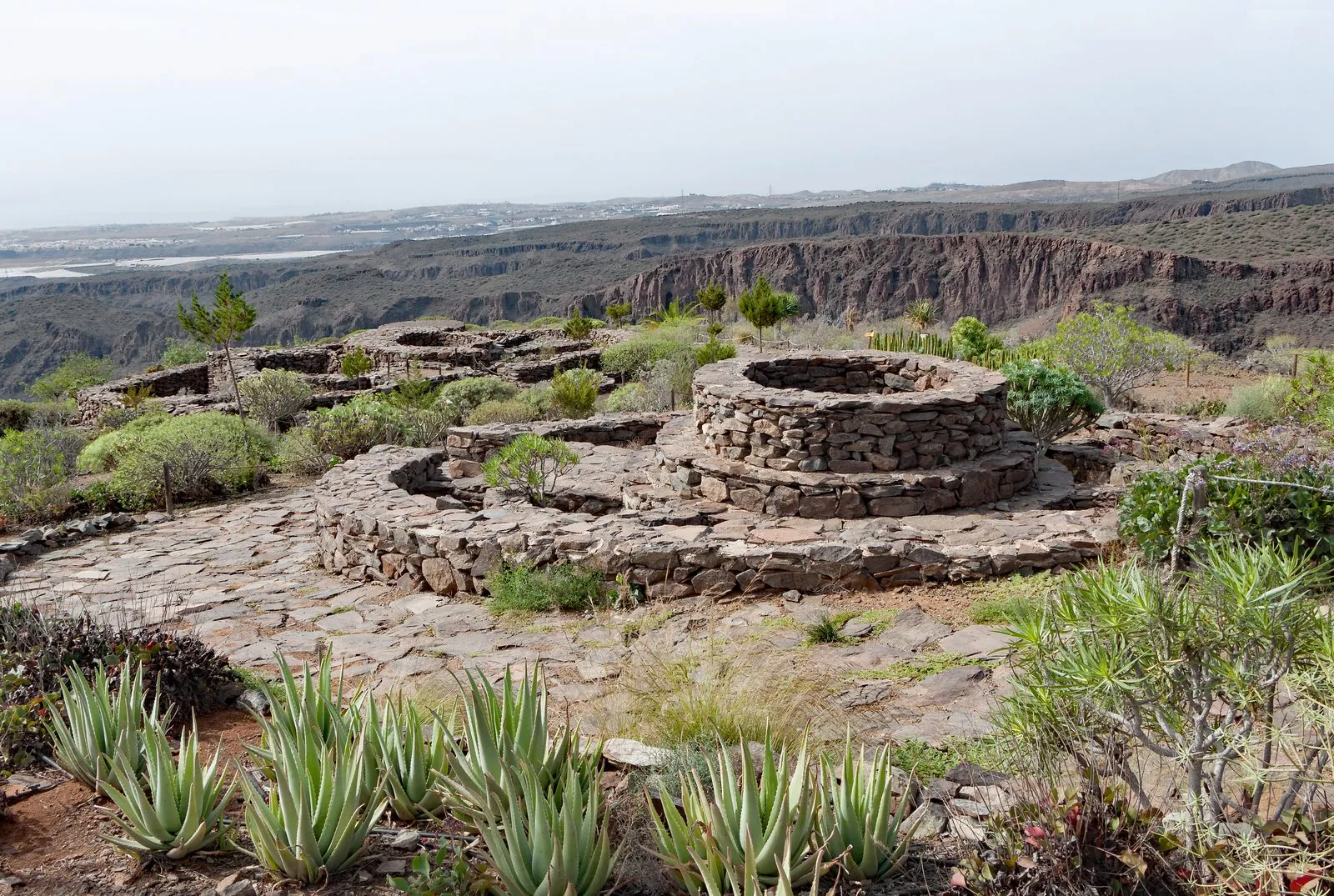
Photo: H. Zell · CC BY-SA 4.0 · Wikimedia Commons · scaled
Walking the village
The site is laid out as a self-guided trail that winds down and around a small barranco. Along the way you pass reconstructed homes, grain stores, a chieftain's house, tanning and grinding areas, and scenes of daily life — cooking, farming, justice, medicine, even burial rites — each peopled with realistic figures and captioned in several languages. It is part museum, part film set, and children in particular tend to enjoy spotting what each tableau is showing. Allow around an hour to an hour and a half at a gentle pace.
Wear proper shoes and bring water. The route follows rough stone paths with steps and slopes, and there is little shade on a hot afternoon. Sturdy footwear, a hat and sun cream make the visit far more comfortable, especially in high summer.
Because the whole village clings to the side of the ravine, the setting does much of the work. You get a real sense of how these communities used the terrain — tucking homes into the rock, terracing the slopes and keeping a lookout over the land below.
The views over Maspalomas
One of the quiet highlights is simply the panorama. From its perch inland, Mundo Aborigen looks out across the ravine and down toward the coast, with the pale sweep of the Maspalomas dunes and the Atlantic shimmering in the distance on a clear day. It is a reminder of how quickly Gran Canaria climbs from beach to mountain, and a lovely spot for photographs.
The attraction sits on the winding road up toward Fataga and the island's interior, so it pairs naturally with a scenic drive. Many visitors combine it with the palm-filled Fataga valley, the market town of San Bartolomé de Tirajana, or a longer loop up into the central highlands.
Tickets and practicalities
Mundo Aborigen is a privately run attraction with a straightforward entrance fee; as of 2026 adult tickets are modest — roughly in the low tens of euros, with reductions for children — but prices and opening hours change, so check the official site before you go. It is open daytime hours most of the week. There is a car park, a small bar-kiosk and a shop at the entrance.
This is an outdoor site with uneven ground. The sloping stone paths and steps mean it is not well suited to wheelchairs, buggies or anyone with serious mobility difficulties. If that is a concern, take a look at our guide to an accessible Canary Islands break for gentler alternatives.
Getting there
The easiest way to visit is with a hire car. From Maspalomas and Playa del Inglés it is only a short but climbing drive up the GC-60 toward Fataga — allow perhaps 15–20 minutes. The road is scenic and well surfaced, though it twists as it gains height, so take it steadily. If you would rather not drive, some organised island tours include a stop here, and taxis from the resorts are an option for a there-and-back trip.
Making a day of it
Mundo Aborigen works best as one ingredient in a day exploring the "other" Gran Canaria beyond the beaches. To dig deeper into the same aboriginal history, head across the island to the cave-riddled Barranco de Guayadeque, where ancient Canarians stored grain and buried their dead in the cliffs and where you can still eat lunch inside the mountain. Together the two give a rounded picture of the world that existed here before the resorts — and of just how much more there is to the island than sun-loungers.
A reconstructed Guanche village on a hillside above the dunes — Mundo Aborigen is a window onto Gran Canaria's oldest story, with one of the island's best views thrown in.
Set aside a couple of hours, come early or late to dodge the midday heat, and pair it with a drive into the mountains. For more ideas across the island, browse our full list of things to do.