The Maspalomas dunes are Gran Canaria's most surprising sight — a genuine golden desert rolling right down to the sea. Covering some four square kilometres at the southern tip of Gran Canaria, this protected Special Nature Reserve of shifting sand feels transplanted from the Sahara, all sculpted crests and shadowed hollows that shift shape with every wind. Walk out into them and the tower blocks vanish behind you; it's just sand, sky and the distant glint of the Atlantic. It's the defining image of the south, and it's completely free to explore.
A protected desert by the sea
Since 1987 the dunes and their surrounding wetland have been a legally protected Special Nature Reserve (Reserva Natural Especial de las Dunas de Maspalomas). That status matters: this is a living, fragile ecosystem, not a beach playground, and much of it is fenced off for good reason. The reserve knits together three distinct habitats — the mobile dune field, the palm-fringed La Charca lagoon, and a pocket of coastal scrub — into one of the most important protected landscapes in the Canaries.
How the dunes formed
Despite appearances, the sand isn't blown in from Africa. It's largely organic — ground-up shells, coral and marine deposits washed ashore and then piled inland by the near-constant trade winds. The result is a "mobile" dune system in slow, perpetual motion, the crests marching gradually across the reserve as the wind reshapes them year after year. Because the supply of new sand has dwindled, the dunes are studied closely by scientists — another reason to tread lightly.
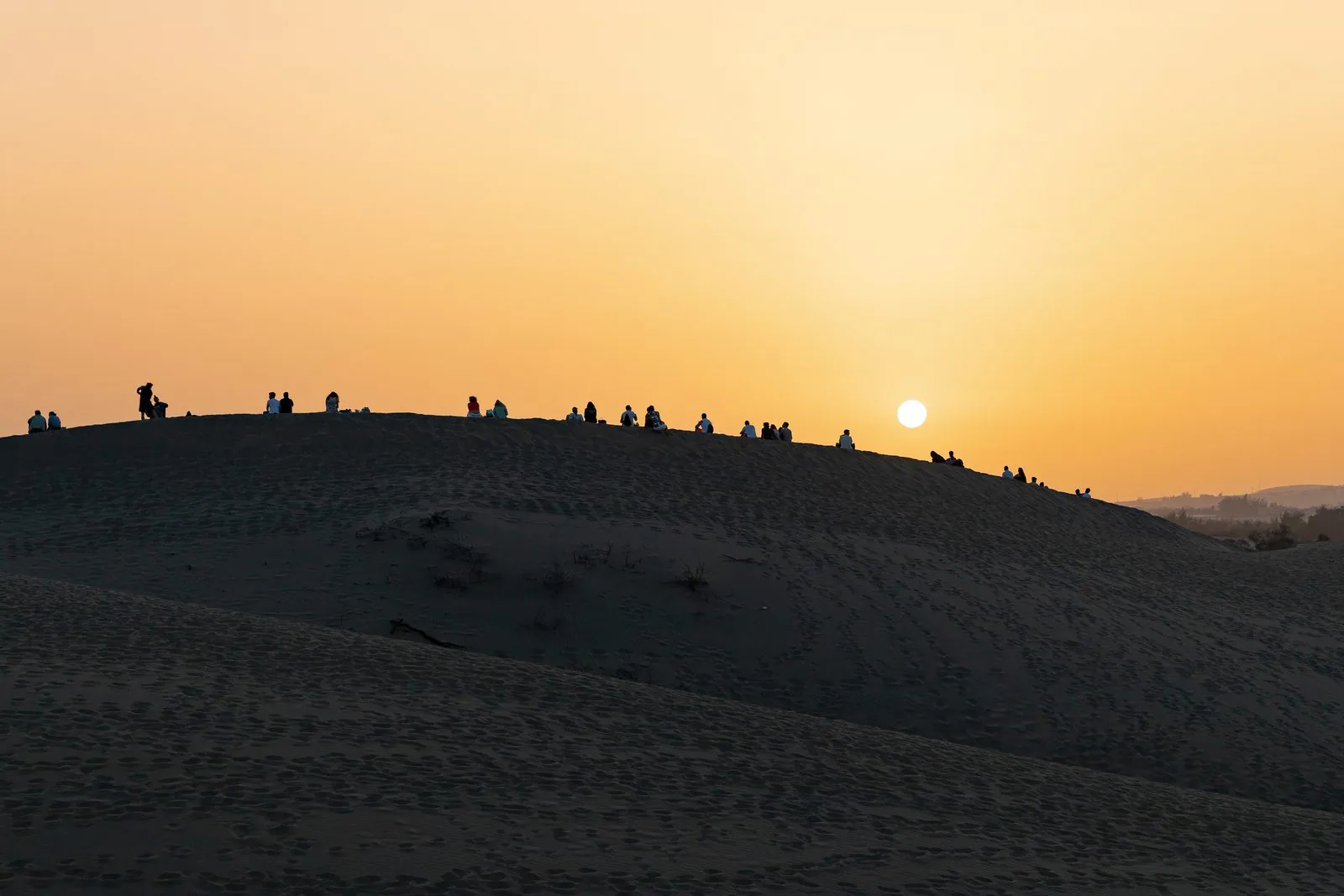
Photo: Krzysztof Ziarnek, Kenraiz · CC BY-SA 4.0 · Wikimedia Commons · scaled
Walking the dunes responsibly
You're welcome to walk into the dunes, and the crossing between Playa del Inglés and the lighthouse is a wonderful hour or two on foot. But this is a nature reserve, so a little care goes a long way toward keeping it intact for the next visitor.
Stay on open sand and out of marked-off areas. Fenced and roped sections are closed to let vegetation and nesting birds recover — never climb into them. Don't pick or trample the hardy plants that anchor the sand, take all litter away with you, and remember there's no shade or water out in the dunes. In summer the sand gets fiercely hot underfoot and the sun is punishing, so carry water, wear sun cover and set off early or late in the day.
Give yourself time and you'll be rewarded with a landscape that changes by the metre — sharp wind-rippled ridges, soft bowls of shadow, and long views that make the resorts feel a world away.
The lighthouse and La Charca lagoon
At the seaward edge of the reserve stands the handsome 19th-century Faro de Maspalomas lighthouse, a landmark that anchors a smart promenade of restaurants and cafés — the perfect place to end a dune walk with a cold drink and a sea view. Beside it lies La Charca, a brackish lagoon backed by palms that is the reserve's wildlife jewel: a vital resting and feeding site for migrating and resident birds. Grab the boardwalk and binoculars and you may spot herons, egrets, waders, kingfishers and a shifting cast of migrants, especially around dawn and dusk. It's a tranquil, birdwatcher's corner right next to one of Europe's busiest holiday coasts.
The beach and naturist areas
The dunes tumble down to the broad, golden sweep of Maspalomas beach, which curves round to meet Playa del Inglés — kilometres of open sand with room for everyone. The central stretch, back among the dunes and away from the promenaded ends, is a long-established naturist area, one of the best known in the Canaries, and it's also a historic focal point for the island's LGBTQ+ scene. Clothing is optional there and perfectly relaxed; the family-friendly serviced beaches with sunbeds and lifeguards sit at either end, so everyone finds their spot. It pays to know the lie of the land before you wander in.
Best light, fewest crowds: come at sunrise or in the last hour before sunset, when the low sun rakes across the sand, the ridges glow amber and the heat eases. It's also the coolest, kindest time to walk the dunes and the best window for birdlife at La Charca.
Getting there and staying nearby
The dunes are the beating heart of the Maspalomas resort area, so most visitors simply walk in from their hotel — access points run along the back of Playa del Inglés, from the RIU hotel area, and from the lighthouse promenade. There's no charge and no ticket; you just stroll onto the sand. If you're based elsewhere on the island, frequent buses (guaguas) serve the southern resorts, and there's paid parking near the lighthouse and along the Playa del Inglés seafront.
With the dunes, the lagoon, the lighthouse and one of Gran Canaria's best beaches all in one compact corner, this stretch is reason enough to base a whole holiday in the south. Add the family attractions inland and the fishing-village charm of nearby Puerto de Mogán and you've the makings of a brilliant week — see our guide to things to do in Gran Canaria to build it out.
A shell-sand desert marching to the Atlantic, alive with birds and shaped by the wind — the Maspalomas dunes are a small wonder hiding in plain sight.