The Barranco de Guayadeque is one of Gran Canaria's loveliest surprises — a deep, green ravine cutting inland from the dry south-east, where people still live in caves carved into the rock. Shared between the towns of Agüimes and Ingenio, this "ravine of the running water" is a place of aboriginal history, rare plants and famously good cave restaurants. It is an easy, atmospheric half-day out from the resorts, and a window onto the older, gentler side of Gran Canaria.
A green ravine full of history
Guayadeque slices down from the island's central heights toward the coast near Agüimes, its steep walls softening from bare rock into palms, fruit trees and terraces the deeper you go. It is one of the richest spots on the island for endemic Canarian flora, and the birdsong and greenery feel a world away from the sun-baked plains around it. A single winding road follows the valley floor, so it is wonderfully easy to explore by car — though it is popular at weekends, when locals come up for lunch.
Long before mass tourism, this was a stronghold of the island's aboriginal people, the ancient Canarians, who buried their dead and stored their grain in the cliffs. Wandering the valley today you are walking through one of the most important archaeological landscapes in the Canaries.
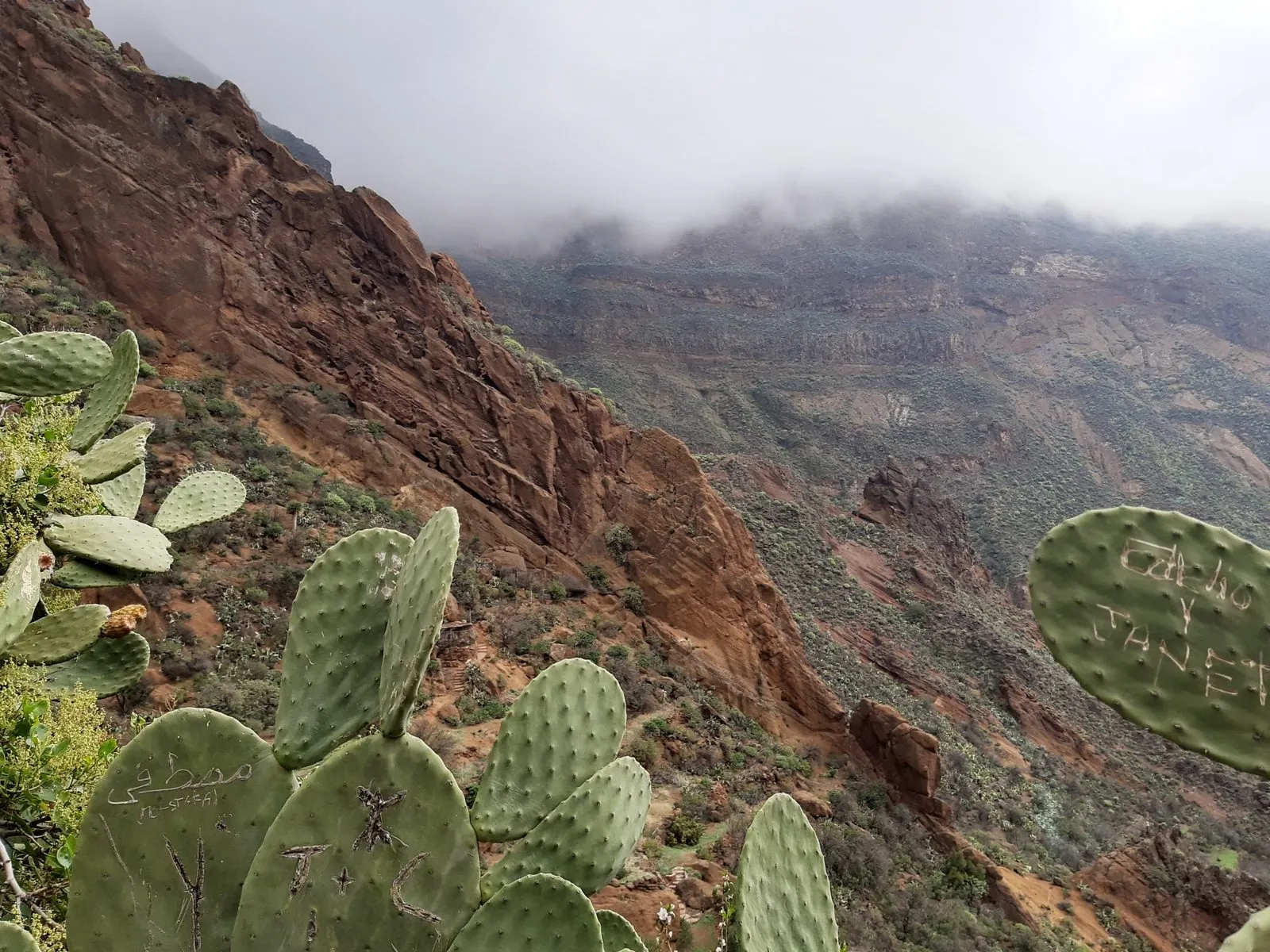
Photo: Gerda Arendt · CC BY-SA 4.0 · Wikimedia Commons · scaled
Cave dwellings, old and new
The most striking thing about Guayadeque is that people never really stopped living in the rock. The cliffs are honeycombed with cave houses — some ancient aboriginal grottoes, others simple whitewashed homes with doors, windows and chimneys set straight into the hillside. A number are still inhabited today, while others have become rural-holiday homes or restaurants. It is a living tradition, not a museum piece, and it gives the valley a character quite unlike anywhere else on the island.
Look, but respect people's homes. Many of the caves you pass are private residences. Enjoy the views and photograph the scenery, but don't wander into gardens or peer through windows — treat it as you would any village where people actually live.
The cave chapel and interpretation centre
Two stops help make sense of it all. Near the mouth of the valley, the Centro de Interpretación de Guayadeque is built — fittingly — into the rock, and explains the geology of the ravine and the way of life of the ancient Canarians who sheltered here. It is a good first stop to set the scene before you drive on up the valley.
Further in stands the tiny cave chapel, the Ermita de San Bartolomé, carved out of the cliff complete with a little bell. It is one of the more charming corners of the barranco and the focus of a lively local pilgrimage and fiesta each year. Between the two you get both the archaeology and the living faith of the valley — a neat summary of what makes Guayadeque special.
Lunch in a cave restaurant
For many visitors the highlight is a long, unhurried lunch inside the mountain. Guayadeque is famous for its cave restaurants, dining rooms hollowed into the rock where the temperature stays cool and even all year. This is the place to try honest Canarian country cooking — hearty stews, grilled meats, local cheese and, of course, papas arrugadas with mojo — washed down with a glass of island wine. It is one of the most memorable meals on the island, as much for the setting as the food.
Book ahead for weekends. The cave restaurants are well known and get busy, especially for Sunday lunch when local families fill the tables. Reserve ahead if you can, and go hungry — portions are generous and the mood is relaxed.
If the valley whets your appetite for the island's food traditions, our guide to Canarian food explains the dishes you'll meet all over Gran Canaria, from gofio to fresh goat's cheese.
Walking the barranco
You can enjoy Guayadeque entirely from the car, but it also rewards those who stretch their legs. Footpaths climb from the valley floor up onto the ridges and terraces, offering big views back down the green ravine, and the road itself ends at a cluster of caves and a restaurant from where trails continue on foot. It is gentler and shadier than much of the island's mountain walking, though sturdy shoes and water are still sensible. Keen walkers can find far tougher routes across the interior — see our overview of Roque Nublo and the central highlands for the island's signature hikes.
Getting there and making a day of it
Guayadeque is easiest with a hire car. It sits just inland of the GC-1 motorway, roughly 20–30 minutes from the airport and around 40 minutes from the southern resorts around Maspalomas. The single valley road is well surfaced but narrow and winding higher up, so take it steadily.
Pair the ravine with the handsome old town of Agüimes at its foot — a beautifully restored historic centre with a great sandstone church — or with the craft town of Ingenio, and you have a rounded day that mixes nature, history and a proper Canarian lunch. It is one of the best ways to see the "other" Gran Canaria beyond the beaches, and a lovely change of pace from a holiday spent on the coast.
Cave homes in the cliffs, a chapel in the rock and lunch inside the mountain — Guayadeque is Gran Canaria with the volume turned down and the history turned up.
Set aside a morning or afternoon, come with an appetite, and you'll leave with a real feel for how islanders lived long before the first sun-seekers arrived. For more ideas across the island, browse our full list of things to do.