Gofio is the oldest food in the Canary Islands — toasted, finely milled grain that the islands' first people ate long before Europeans arrived, and which Canarians still eat today with quiet pride. It's nutty, wholesome and endlessly versatile: stirred into fish broth, kneaded into little loaves, spooned into desserts and even churned into ice cream. Once you understand gofio, you understand something essential about how these islands eat.
To a first-time visitor it can look unremarkable — a soft, tan-coloured flour in a paper bag. But gofio carries thousands of years of history, and it turns up in more corners of the Canarian table than almost any other ingredient. Here's what it is, where it comes from, and the dishes to look out for.
What exactly is gofio?
Gofio is grain that has been toasted first and then milled — the reverse of ordinary flour, where the grain is milled raw. That toasting is the whole secret: it gives gofio its warm, biscuity, faintly smoky flavour and means it needs no further cooking. You can eat it straight from the bag stirred into liquid.
Traditionally it was made from wheat, barley or roasted maize (millo), and today you'll also find blends and versions made with chickpeas or other grains. Wheat gofio is milder and paler; toasted-maize gofio is sweeter and more golden. The grain is roasted in a drum, sometimes with a pinch of salt, then ground between stone mills — historically in small watermills and windmills dotted across the islands, some of which still turn.
Because it's just toasted whole grain, gofio is genuinely nourishing — rich in fibre, slow-release energy and minerals. For the Guanches, the aboriginal Canarians, it was the staple that kept them going, carried in a leather pouch and mixed with water, milk or whatever was to hand. That everyday, keep-you-going quality has never left it.
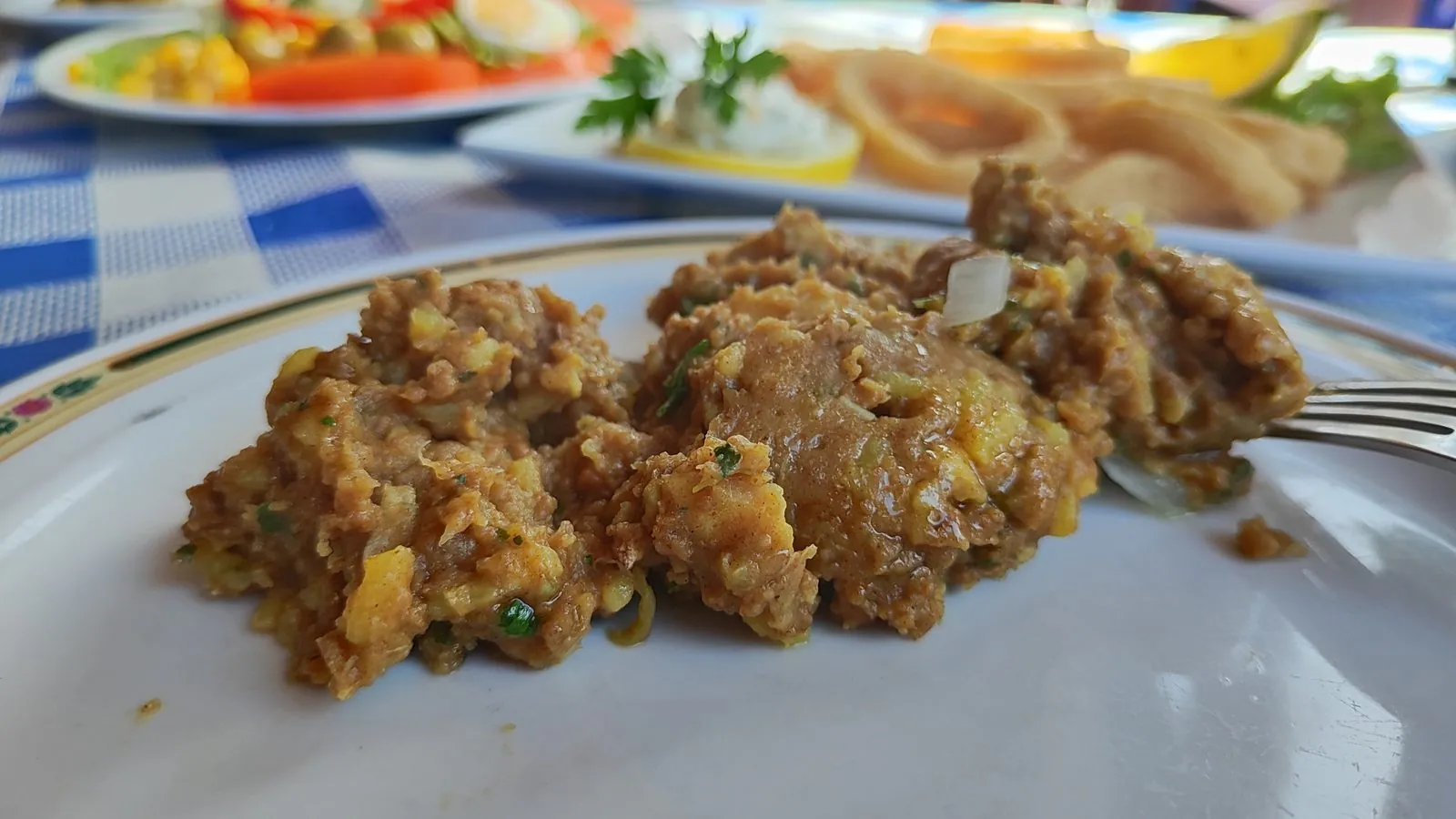
Photo: Mentxuwiki · CC BY-SA 4.0 · Wikimedia Commons · scaled
Escaldón — the classic way to try it
If you order one gofio dish on your trip, make it escaldón (or escaldón de gofio). It's gofio scalded with hot fish or meat broth and stirred into a thick, warming, porridge-like mass, usually served in a wooden or earthenware bowl and eaten communally — often scooped up with a raw onion wedge instead of a spoon. Comforting and deeply savoury, it's peasant food at its best and a fixture in traditional taverns and guachinches.
It's the natural companion to a bowl of hearty island soup or stew, and it sits perfectly alongside other rustic classics like papas arrugadas con mojo. A glass of local Canary wine completes the picture.
Escaldón is meant to be shared and eaten while hot, straight from the middle of the table. Don't wait for a spoon each — grab a piece of onion, scoop, and dig in the way locals do.
Gofio amasado and everyday uses
The other everyday form is gofio amasado — gofio "kneaded" with a little water, oil, and sometimes honey, dates, banana or almonds into a soft, malleable dough. It's rolled into small loaves or balls and eaten as a filling snack, a side to a stew, or a quick bite for hikers and field workers. Simple, portable and satisfying, it's gofio at its most elemental.
Beyond these, gofio slips quietly into countless island recipes:
- In soups and stews — a spoonful stirred in thickens and enriches broths, from potaje vegetable soups to hearty meat pucheros.
- With milk — mixed into warm or cold milk (and sometimes coffee) for a nourishing breakfast, a habit that goes back generations.
- For babies and convalescents — gentle, easily digested gofio-and-milk has long been a first food and a pick-me-up.
- As a coating or garnish — dusted over dishes for extra nuttiness and body.
Gofio in desserts and ice cream
Gofio isn't only savoury. Its toasty, malt-like flavour makes it a wonderful sweet ingredient, and Canarian pastry cooks have long used it in puddings, mousses and cakes. Look for it folded into mousse de gofio, whipped with honey and cream, or baked into biscuits and sponge.
The showstopper for many visitors is gofio ice cream — helado de gofio — a pale, caramel-tinged scoop that tastes a little like toasted cereal, malt and butterscotch all at once. It's a genuine local speciality, sold in island gelaterias and worth seeking out. For the full sweet picture, see our guide to Canarian desserts, where gofio makes more than one appearance.
Craving a souvenir that actually tastes of the islands? A bag of gofio travels well, keeps for ages and costs very little. Stir it into your morning milk, yoghurt or smoothies back home for a taste of the Atlantic.
A product with protected status
Gofio matters enough to the islands that "Gofio Canario" carries EU protected geographical status, recognising it as a distinctive regional product tied to Canarian methods and know-how. That protection is a mark of authenticity: it means the gofio you buy under the label is made in the islands, the traditional toasted-then-milled way, rather than being an imitation from elsewhere.
It's a fitting honour for a food this old and this loved. Gofio survived the Guanches, the conquest and centuries of change, and it remains woven through daily Canarian life — humble, healthy and quietly delicious.
How to enjoy gofio on your trip
Start with a bowl of escaldón in a traditional tasca or a rural Tenerife guachinche, then work outwards: gofio in your morning milk, a scoop of gofio ice cream on a warm afternoon, a spoonful thickening a bowl of island stew. It's on menus across Gran Canaria and every other island, usually for pocket change. To place it in the wider context of the islands' cooking, read our overview of Canarian food — gofio is where that whole story begins.