The Canary Islands are one of Europe's easiest warm-weather destinations for travellers with reduced mobility or other access needs. Year-round warmth means no icy pavements and no need to wrestle with heavy winter clothing; the big resorts are largely flat, with long, smooth seafront promenades; and a growing number of beaches now offer amphibious wheelchairs, boardwalks and assisted bathing. Attractions, hotels and transport have improved steadily, and Spain's accessibility standards are among the better ones in Europe. This guide sets out what to expect and how to plan — but access details change, so always confirm the specifics with each provider before you book.
Accessibility features come and go with refurbishments and seasons — a beach chair may be out of service, a lift under repair. Ring or email hotels, beach services and attractions directly to confirm current provision before you commit.
Why the climate helps
The subtropical weather is more than a comfort — it's a genuine accessibility asset. Warm, dry days almost all year mean stable, dry surfaces underfoot and comfortable sea temperatures for assisted bathing even in winter. There's no snow or ice, rain is rare in the resort areas of the south, and the mild "coolest" months make the islands a superb off-season escape when much of Europe is hard going. For more on timing, see our best time to visit guide.
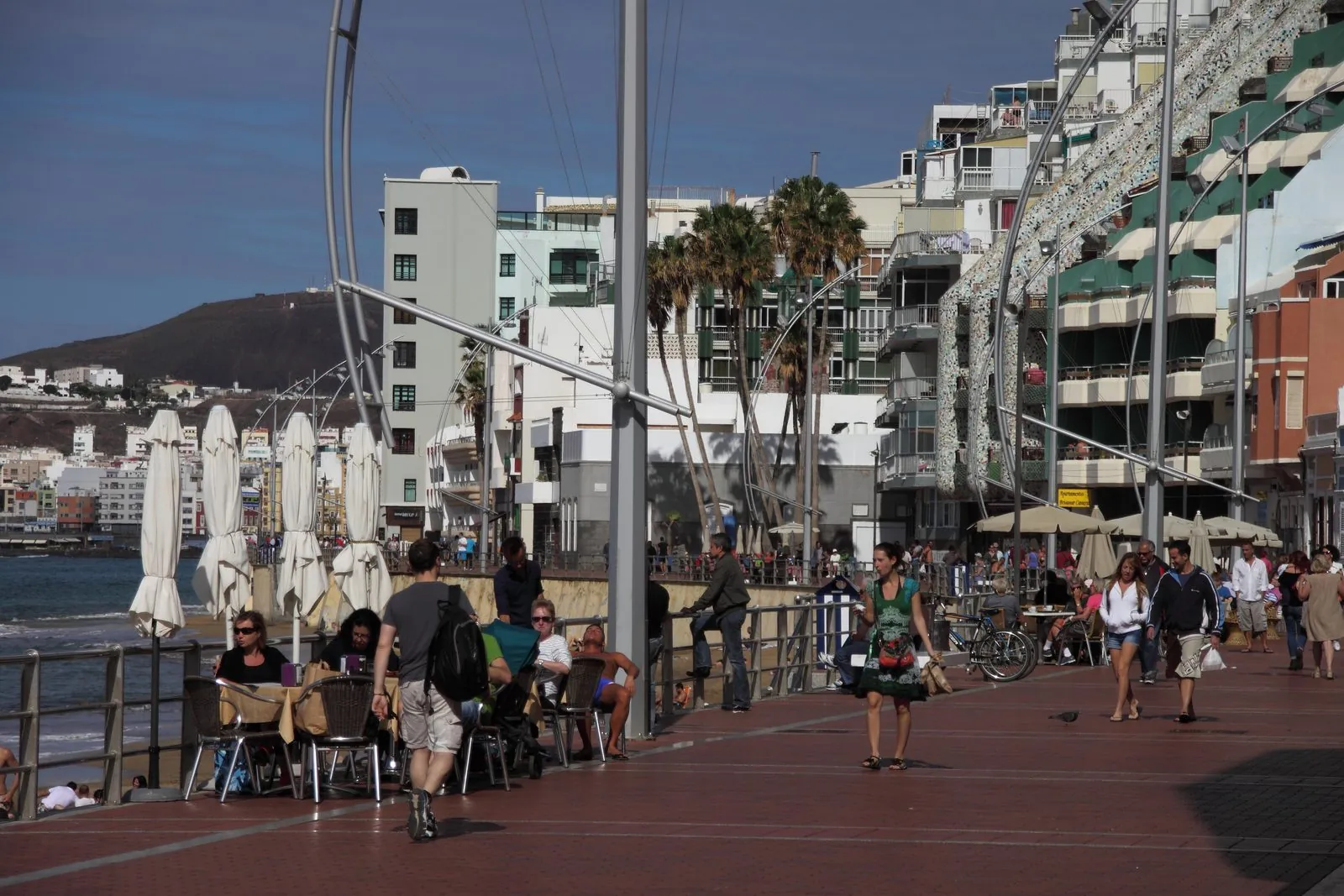
Photo: Matthias Bethke · CC BY-SA 4.0 · Wikimedia Commons · scaled
Flat resorts and smooth promenades
Many of the purpose-built southern resorts were laid out on flat coastal land, which makes them easy to navigate on wheels. Long, level seafront promenades — ideal for a roll or a gentle stroll — link beaches, cafés and shops. Los Cristianos on Tenerife is a long-standing favourite for accessible holidays, with flat streets, an accessible beach and a good stock of adapted accommodation. Nearby Costa Adeje is smooth and well-serviced, while on Gran Canaria the promenade linking Playa del Inglés and Maspalomas offers kilometres of level going. Older town centres, cobbled streets and steep villages inland are naturally harder, so base yourself on the coast and day-trip out.
Adapted beaches
Several Canarian beaches provide assisted-bathing services: amphibious wheelchairs that float or roll into the sea, timber boardwalks across the sand, accessible showers and toilets, and trained staff during set hours in season. Two of the best known:
- Playa de las Vistas (Los Cristianos, Tenerife) — a broad, calm town beach widely regarded as one of the archipelago's most accessible, with boardwalks and an assisted-bathing point.
- Playa de las Canteras (Las Palmas, Gran Canaria) — the long city beach has boardwalks and adapted-bathing facilities along parts of its promenade.
Other resort beaches increasingly offer boardwalks and amphibious chairs; you'll often find them run by the local Red Cross or lifeguard service during posted hours. Browse our beaches section and check locally for what's available on the day.
Amphibious chairs and assisted bathing usually operate only during staffed hours and can pause in bad weather or low season. Never assume the service is running — check timings that morning, and arrive within the window.
Accessible attractions
Many of the islands' big-ticket attractions have made real efforts on access. The large theme and animal parks — the likes of Loro Parque and Siam Park — generally have step-free routes, accessible toilets and adapted facilities, though the waterpark rides themselves vary. Some natural sights are surprisingly reachable: parts of the volcanic landscapes and viewpoints can be seen from coach tours or paved miradors, and the cable car area on Mount Teide has some step-free access at the base station (the high-altitude summit trails are not accessible). Wilder places — the forest trails of Anaga or Garajonay — are largely unpaved, so pick paved viewpoints and visitor centres instead. Always check each attraction's own access page for lifts, ramps and adapted-toilet details.
Step-free accommodation
The larger resort hotels are where you'll find the most adapted rooms: roll-in showers, grab rails, wider doorways, lower fittings and pool hoists at some properties. Because "accessible" can mean different things, spell out exactly what you need — turning space, bed height, roll-in versus low-step shower — when you book, and ask for photos. Ground-floor or lift-served rooms near an accessible pool make a big difference. Our where to stay guide helps you choose the right area; then contact hotels directly to confirm the room's specifics rather than relying on a booking-site tick box.
Hiring mobility equipment
You don't have to bring everything with you. In the main resort areas, specialist companies hire out wheelchairs, mobility scooters, hoists, shower chairs, profiling beds and other equipment, often delivering to and collecting from your hotel. Booking ahead is wise in peak season, and it saves lugging heavy kit through the airport. If you do fly with your own wheelchair or scooter, tell the airline in advance and label it clearly — see getting to the Canary Islands for more on the journey out.
Getting around
Local buses on the busier islands increasingly use low-floor, ramp-equipped vehicles, and accessible taxis (adapted for wheelchairs) operate in the main resorts, though numbers are limited so it's worth pre-booking. If you're hiring a car, adapted vehicles and hand controls can sometimes be arranged with notice. For the full picture on buses, taxis and transfers, read our getting around the Canary Islands guide, and for the logistics of stitching transfers together, our sister site is a useful planner for working out how to get from A to B.
| Need | What's available | Plan ahead? |
|---|---|---|
| Getting from the airport | Adapted taxis and pre-booked accessible transfers | Yes — book in advance |
| Local travel | Low-floor buses on busier islands; accessible taxis in resorts | Pre-book taxis where possible |
| Equipment | Wheelchair, scooter and hoist hire, hotel delivery | Yes, especially in peak season |
| Beach bathing | Amphibious chairs and boardwalks at adapted beaches | Check staffed hours that day |
Planning an accessible trip
The winning formula is simple: choose a flat coastal resort with an adapted beach nearby, book a hotel room whose access you've confirmed in detail, arrange equipment hire and accessible transfers before you fly, and check each attraction's own access information. With that groundwork done, the Canaries' warmth, level promenades and improving facilities make for a genuinely relaxing holiday. For where to base yourself, see where to stay; for the journey, getting there. When in any doubt about a specific facility, ask ahead — a quick email now saves a difficult surprise later.