Tejeda is Gran Canaria's most beautiful mountain village — a cluster of whitewashed houses perched high in the volcanic heart of the island, ringed by pine forest, almond groves and some of the most spectacular scenery in the Canaries. In late winter the almond trees blossom pink and white across the slopes, in summer the air is cool and clear, and on any clear night the stars come out in astonishing numbers. This is the island as few package holidaymakers see it: dramatic, green-grey and wonderfully unhurried.
Officially rated one of Spain's prettiest villages, Tejeda sits amid a vast eroded crater the poet Miguel de Unamuno famously called a "petrified storm". It's the natural base for the island's greatest landmark, the towering rock of Roque Nublo, and a highlight of any trip into the centre of Gran Canaria.
What it's like
At around 1,000 metres above sea level, Tejeda feels a world apart from the beaches. The village tumbles down a ridge in tidy tiers of white houses with terracotta roofs, a handsome church at its heart, and viewpoints at every turn gazing across a great bowl of mountains, ravines and volcanic plugs. The air is fresh and pine-scented, the pace slow, and the light — sharp and clean up here — makes the whole landscape glow at dawn and dusk.
This is a real mountain village, not a resort. The people who live here farm almonds and fruit, keep bees, and welcome the walkers, cyclists and day-trippers who wind up the mountain roads. It's the kind of place where you sit on a terrace with a coffee, look out over the crater, and feel your holiday pulse slow right down.
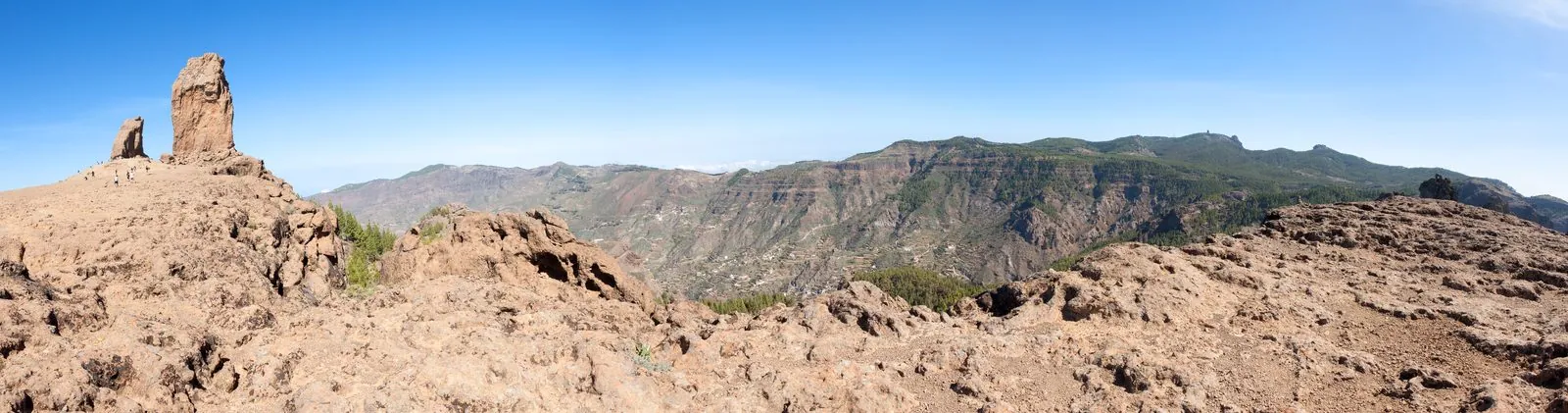
Photo: H. Zell · CC BY 3.0 · Wikimedia Commons · scaled
Roque Nublo and the setting
Tejeda's crowning glory is the view — and the walking. The iconic Roque Nublo, an 80-metre volcanic monolith sacred to the island's ancient inhabitants, rises from a plateau a short drive and a gentle walk from the village; it's one of the great symbols of Gran Canaria and an unmissable outing, covered in full in our Roque Nublo guide. From the surrounding miradors (viewpoints) you can often see across to the pointed peak of Teide on neighbouring Tenerife, floating above the clouds.
The whole area is a paradise for walkers. Well-marked trails thread through pine forest and along crater rims, linking Tejeda with high points like Pico de las Nieves, the island's summit. Our guide to hiking in the Canary Islands puts the routes in context — bring proper footwear and layers, as the mountains are cooler and can turn cloudy fast.
Come in late January and February for the almond blossom, when the slopes around Tejeda turn pink and white and the village holds its Almond Flower festival. It's one of the loveliest times to visit the island's interior.
Stargazing
High, dry and far from coastal light pollution, the centre of Gran Canaria has some of the clearest skies in Europe. On a moonless night the Milky Way arcs overhead in a way most visitors never see at home, and the surrounding peaks host designated viewpoints for astronomy. Wrap up warm, drive up to a mirador after dark, and let your eyes adjust — our guide to stargazing in the Canary Islands explains where and when to go, and why these islands are world-famous for their night skies.
Where to stay and who it suits
Accommodation is small-scale and characterful: rural hotels, guesthouses and casas rurales (traditional country cottages) in and around the village, several with knockout crater views. Tejeda suits walkers, nature lovers, cyclists, stargazers and anyone wanting a peaceful, scenic contrast to the coast — ideally with a hire car. It's a superb one- or two-night mountain interlude between beach days, or a day trip from the resorts if time is short. Our where to stay guide compares the island's very different bases.
Eating and nightlife
Mountain food here is hearty and warming — a world away from beachfront fare. Look for rich stews and potaje (vegetable soup), roast and grilled meats, local goat's cheese, and dishes built around the village's prized almonds, which turn up in cakes, sweets and the local bienmesabe almond dessert. Wash it down with a robust Canary wine or a warming coffee, and try the mountain honey. It's proper Canarian cooking; our Canarian food guide has more. Nightlife is essentially a good dinner and a starlit sky — this is not the place for bars and clubs, and all the better for it.
Getting there and around
Tejeda sits at the geographic centre of the island, reached by winding but scenic mountain roads. A hire car is all but essential — the drive up is part of the experience — and confident driving on bends is a must; see our guides to car hire and getting around. From the southern resorts allow around 1–1.5 hours; from Las Palmas a little less. Public buses reach the village but are infrequent, so a car gives you the freedom the mountains deserve.
Nearby
The whole central highlands unfold from Tejeda: Roque Nublo, the peak of Pico de las Nieves, and viewpoints in every direction. West and down towards the coast lies the green Agaete valley with its coffee farms and fishing port, while the pilgrimage town of Teror and the capital Las Palmas lie to the north-east. Start with our Gran Canaria hub to pair a few mountain days with the beaches below.