Santa Lucía de Tirajana is a palm-filled mountain town cradled in one of the most dramatic craters in Gran Canaria, high above the southern beaches yet a world away in mood. White houses gather beneath a striking domed church, date palms sway in the ravines, and all around rise the sheer walls of an ancient volcanic caldera. It's a wonderful escape into the island's rugged interior — cooler, greener and steeped in the culture of the Canaries' first inhabitants.
Perched in the highlands above the resorts of southern Gran Canaria, Santa Lucía makes a superb day out or a peaceful overnight base for exploring the caldera country. Come for the scenery, the palm groves and a genuine sense of the island beyond the coast.
What it's like
Santa Lucía sits in a broad, palm-dotted basin ringed by mountains, and the setting steals the show. The town is tidy and whitewashed, its lanes climbing gently between gardens and terraces, and its most photographed landmark is the domed Iglesia de Santa Lucía, whose white cupola gleams against the dark crater walls. Date palms cluster in the ravines and around the town, giving the whole place a lush, almost oasis-like feel that's a surprise after the arid south.
Up here at altitude the air is fresher and the pace slower. This is a real Canarian town, not a resort — you'll find local bars, a couple of small museums and shops, and the easy rhythm of highland life. It's the kind of place to wander, take in the views and eat well, rather than to tick off big attractions.
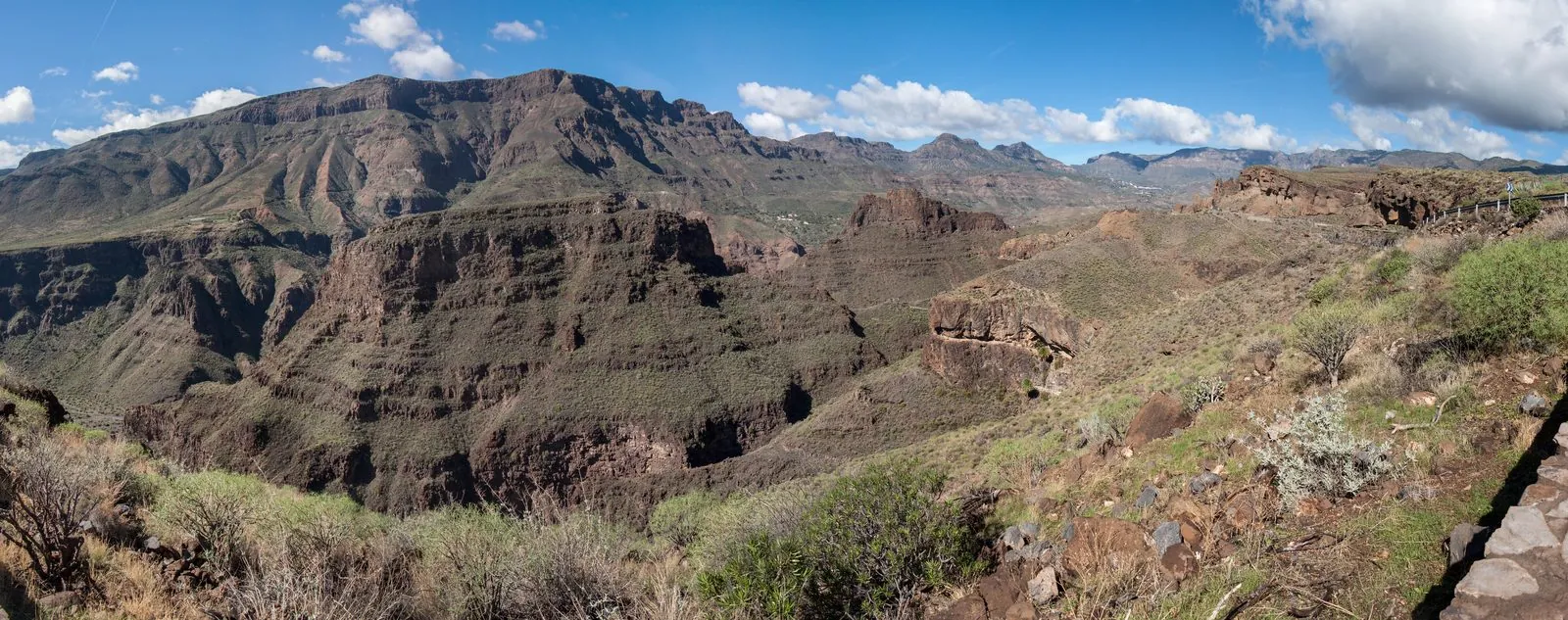
Photo: H. Zell · CC BY-SA 3.0 · Wikimedia Commons · scaled
What to see and do
The great backdrop is the Caldera de Tirajana, a vast eroded crater whose sheer walls and pinnacles dominate every view. Miradors around the town look out over the palms and cliffs, and walking trails thread through the caldera for those who want to get among the scenery — see our guide to hiking in the Canary Islands.
The area is rich in the heritage of the island's ancient people. Above the town, the flat-topped rock of Fortaleza de Ansite was one of the last strongholds of the aboriginal Canarians, with an interpretation centre nearby telling the story of the conquest. Santa Lucía's own small museum displays local archaeology. From here it's also an easy drive to the extraordinary Barranco de Guayadeque, a green ravine famous for its cave houses and cave restaurants — one of the most atmospheric excursions on the whole island.
Bring a light layer even in summer: at altitude the mountain air is noticeably cooler than the coast, and evenings up in the caldera can turn quite fresh once the sun drops behind the crater walls.
Where to stay and eat
Santa Lucía is a rural town rather than a resort, so accommodation is small-scale — a few guesthouses and casas rurales (country cottages) that suit walkers and travellers wanting a quiet, scenic base with a hire car. Most visitors stay on the coast and drive up for the day; our where to stay guide compares the island's very different bases.
Local food is a genuine pleasure. The town is known for hearty highland cooking and, thanks to its palm groves, for products of the date and the palm — including the celebrated palm honey (a sweet sap syrup). Look for rich stews, roast and grilled meats, local cheese and the usual papas arrugadas with mojo, washed down with a robust Canary wine. It's proper Canarian cooking, covered further in our Canarian food guide.
Getting there and around
Santa Lucía sits in the mountains a scenic drive up from the southern coast, roughly 30–45 minutes from the resorts around Maspalomas on winding roads. A hire car is by far the best way to reach it and to link it with the caldera, Fortaleza and Guayadeque — see our guides to car hire and getting around. Buses (guaguas) do climb up from the coast, but a car gives you the freedom the interior deserves.
Nearby
Below the town lies its neighbour, the market town of Vega de San Mateo's southern cousin Agüimes, and the mouth of the wonderful Barranco de Guayadeque. Push deeper into the mountains and you reach the island's spectacular centre, where the monolith of Roque Nublo and the beautiful village of Tejeda await. Start with our Gran Canaria hub to pair a caldera day with the beaches down below.