When the rest of Europe pulls on a coat, the Canary Islands quietly carry on in shirt sleeves. From November to March these Atlantic islands are the continent's most dependable winter-sun escape — warm enough for the beach by day, bright enough to feel like a proper holiday, and close enough for a short flight from the UK and Ireland. This guide explains why the islands stay so mild through the dark months, which coasts and resorts catch the most sun, what stays open, and how warm the sea really is when you fancy a swim.
Why the islands stay warm all winter
Two things keep the Canaries balmy while northern Europe freezes: latitude and the ocean. The islands sit off the coast of northwest Africa, on roughly the same line as the Sahara and southern Florida — far enough south that the winter sun still climbs high and strong. Wrapped around them is a vast body of Atlantic water that changes temperature slowly, storing summer's warmth and releasing it gently through winter. That sea acts like a giant radiator, smoothing out the extremes so nights stay soft and days stay pleasant. The result is a coast where December feels less like deep winter and more like a mild European spring. For the fuller picture of trade winds and microclimates, see our guide to the Canary Islands weather.
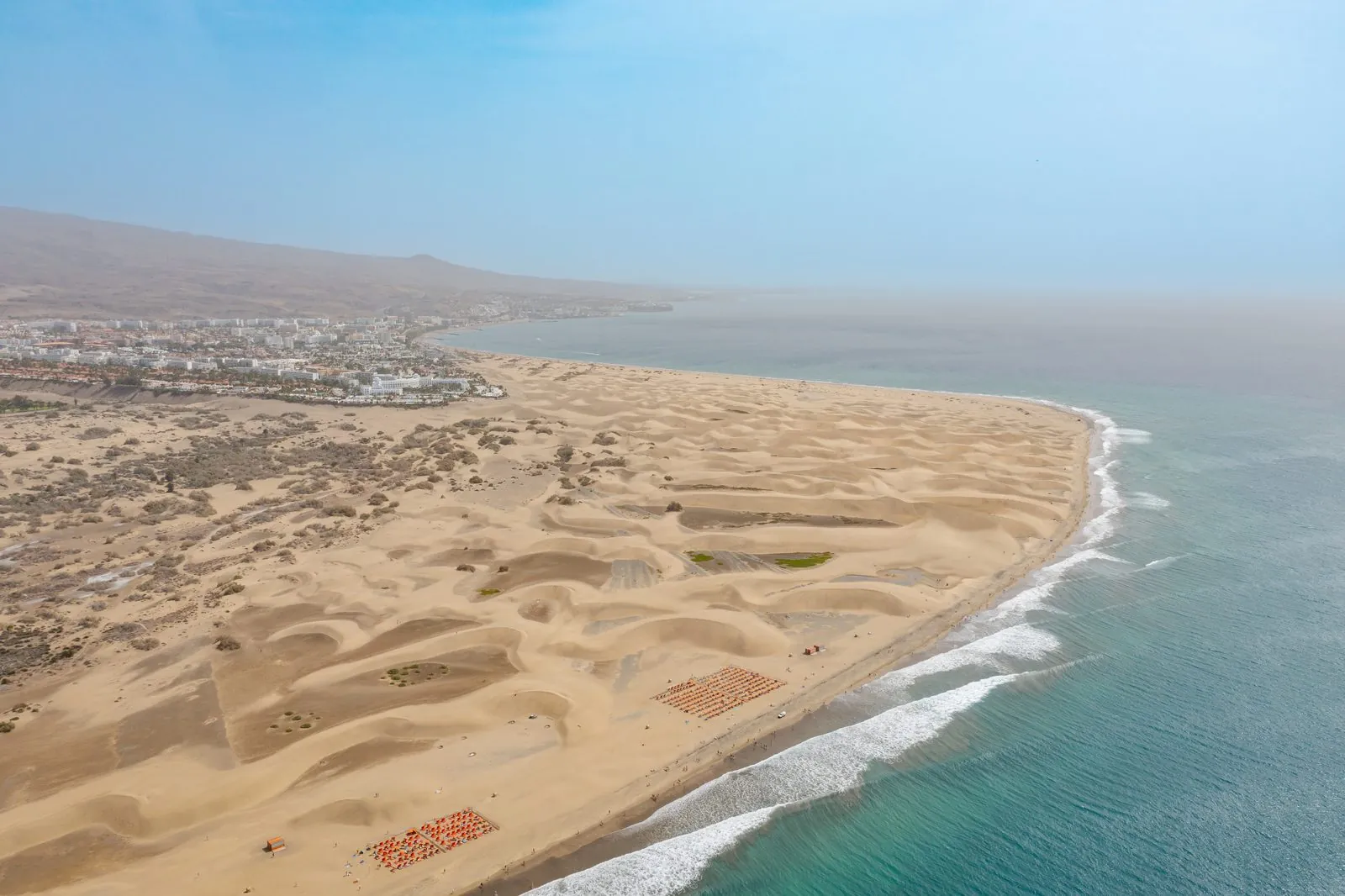
Photo: Marc Ryckaert ( MJJR ) · CC BY 3.0 · Wikimedia Commons · scaled
How warm is it, really?
Coastal daytime temperatures in winter are comfortably mild — think light layers you can peel off by mid-morning rather than heat that flattens you. Mornings and evenings turn cooler and you'll want a jacket after dark, especially away from the sheltered south. The sun sits lower than in summer, so the burn is gentler, but it's still strong enough to catch you out on a clear afternoon. Up on the high ground it's a different world entirely: the summit of Mount Teide can wear snow in winter while sunbathers lie on the beach far below. Treat any single figure as a broad guide, not a promise — the point is that the coastal resorts stay reliably wearable-in-a-T-shirt warm when almost nowhere else in Europe does.
Pack for two climates: beach gear for sunny afternoons on the south coast, plus a fleece or light jacket for cooler evenings and any trip up into the mountains. Our what to pack guide has the full list.
The sunniest islands and resorts
The single most important thing to grasp is that each island has a sunny side and a cloudier side. The northeast trade winds push moist cloud against the northern coasts and mountains, while the south sits in the rain shadow — drier, brighter and warmer. That's exactly why the big beach resorts nearly all face south. For guaranteed winter sun, aim there.
- South of Gran Canaria — the classic winter-sun coast, from Playa del Inglés and the dunes of Maspalomas round to Puerto Rico, one of the sunniest, most sheltered spots of all.
- Southwest of Tenerife — Costa Adeje, Playa de las Américas and Los Cristianos bask while the green north catches the cloud.
- Fuerteventura — low, flat and desert-dry, so it's sunny almost everywhere; the resorts around Corralejo, Caleta de Fuste and the southern Jandía beaches are winter favourites.
- Playa de la Palma and the sheltered west of La Palma — the greenest island still has warm, sunny corners on its leeward side around Tazacorte and Los Llanos.
- Lanzarote — also low and dry, so sun is reliable across the island, from Playa Blanca to Puerto del Carmen.
| Winter-sun base | Island | Why it works in winter | Best for |
|---|---|---|---|
| Maspalomas / Playa del Inglés | Gran Canaria | South coast, big dunes, long sunny days | Beach, buzz, everything open |
| Puerto Rico / Amadores | Gran Canaria | Amphitheatre bay, very sheltered | Calm swimming, families |
| Costa Adeje | Tenerife | Sunny southwest, polished resorts | Comfort, restaurants, day trips |
| Corralejo / Jandía | Fuerteventura | Desert-dry, sun almost guaranteed | Endless beaches, watersports |
| Playa Blanca | Lanzarote | Low, dry, south-facing | Relaxed sun, ferry to Fuerteventura |
Shorter days and the odd northern shower
Winter does bring two honest caveats. First, the days are shorter — the sun sets in the early evening, so you get a good beach day but not the endless golden light of July. Second, the north of each island sees more cloud and the occasional rain shower in winter; a grey morning over Las Palmas or Puerto de la Cruz is normal, even as the south stays bright. Rain, when it comes, tends to arrive in short bursts rather than settling in for days. The upside of the two-climate rule is that a cloudy start needn't spoil anything: drive to the other side of the island and the sky often changes completely.
The green north (Anaga, La Orotava, the hills of La Palma and La Gomera) is at its most lush in winter but also its wettest and coolest. Lovely for walking, less so for guaranteed sunbathing — plan those areas as day trips rather than your beach base.
What's open in winter?
Almost everything. Because winter is the Canaries' peak season, resorts, restaurants, water parks, boat trips and attractions all run at full tilt — unlike Mediterranean resorts that shutter for the cold months. In fact this is the liveliest, busiest time of year, building to a Christmas and New Year peak when sun-starved northern Europeans flood south and prices climb. Book festive weeks well ahead. It's also festival season: the Three Kings parades in early January and the build-up to the world-famous Carnival keep the calendar full.
Can you swim in the sea?
Yes — with a caveat. The Atlantic is cooler than the summer sea but stays swimmable through winter for anyone who doesn't mind a brisk first few seconds; it's at its coolest in late winter and early spring. Plenty of visitors happily swim all winter, especially in sheltered south-coast bays like Amadores or Puerto Rico, where the water is calmer and warms in the sun. If you prefer your dips genuinely warm, note that the sea is at its most inviting in autumn rather than mid-winter — see our best time to visit guide. Hotel pools are widely heated, and many people simply sunbathe by day and save serious swimming for the warmest hours.
The bottom line
For dependable winter sun, come between November and March and base yourself on a south coast — the south of Gran Canaria, southwest Tenerife, or almost anywhere on sun-soaked Fuerteventura and Lanzarote. You'll get warm, bright days, everything open, and a proper holiday feel while home stays grey. Sort the practicalities next with our guides to where to stay and the wider island weather, and you're set for the easiest winter escape in Europe.